Spinach and Feta Flatbread: Soft, Cheesy and Perfectly Golden from the Pan
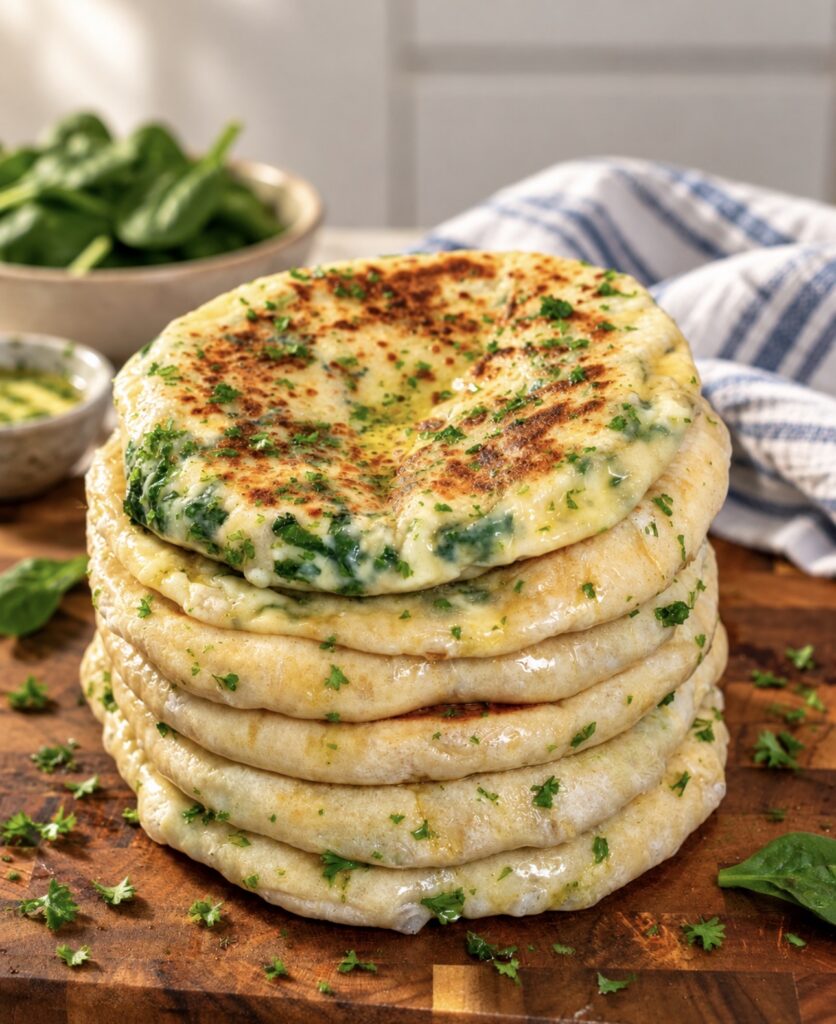
There is something incredibly satisfying about tearing into a warm homemade flatbread and discovering a generous layer of cheese hidden inside. This Spinach and Feta Flatbread combines a soft, freshly made yeast dough with salty feta, tender spinach and melted mozzarella, all cooked directly in a frying pan until beautifully golden. No oven is needed, making it a brilliant recipe when you want homemade bread without switching on the oven or when you simply fancy something warm, comforting and freshly cooked. The combination of spinach and feta gives the filling plenty of savoury flavour, while mozzarella adds that irresistible melted, stretchy centre. If homemade breads are your thing, you will also love my Four Cheese Pesto Focaccia and Spinach and Feta Puff Pastry Rolls.
Scroll down or tap ‘Jump to Recipe’ for the full printable recipe card with exact measurements and instructions.
Simple Ingredients, Big Flavours
This stuffed flatbread uses familiar ingredients, but each one has an important job. The yeast gives the dough its soft, light texture, bread flour provides enough structure for shaping and filling, and olive oil adds tenderness. Inside, the combination of feta, spinach and mozzarella creates a creamy, savoury filling that works beautifully against the warm bread. It is the same simple approach to homemade dough that makes recipes such as my Easy No-Knead Ciabatta (4 Ingredients) and Overnight Olive and Thyme Focaccia (No-Knead) so rewarding.
Bread flour – Gives the flatbread enough strength and elasticity to hold the filling while still producing a soft, chewy texture.
Lukewarm water – Hydrates the flour and creates the right environment for the yeast to activate. Make sure the water feels comfortably warm rather than hot.
Instant yeast and sugar – The yeast gives the dough its rise, while a small amount of sugar helps get the fermentation started.
Salt – Essential for flavour and also helps strengthen the dough structure.
Olive oil – Adds softness and richness to the dough and is also used to finish the freshly cooked flatbreads.
Spinach – Wilted and finely chopped spinach brings colour, freshness and a gentle earthy flavour. Drain it well before mixing the filling so excess moisture does not make the dough difficult to seal.
Feta – Crumbly, salty feta gives the filling its distinctive Mediterranean flavour. Because feta can vary considerably in saltiness, taste it before adding any additional seasoning.
Mozzarella – Adds mild creaminess and gives the centre its lovely melted, stretchy texture.
Fresh parsley – Finely chopped parsley scattered over the warm flatbread gives the finished bread a fresh, colourful final touch.
How to Make Spinach and Feta Flatbread
Preparing the Dough
Combine the lukewarm water, sugar and instant yeast in a bowl and stir well. Leave the mixture to stand for around 10 minutes to give the yeast time to activate. Meanwhile, sift the bread flour into a large mixing bowl. Add the salt and stir so it is evenly distributed through the flour. Pour in the prepared yeast mixture and begin stirring with a spoon until the ingredients come together and a rough dough starts to form.
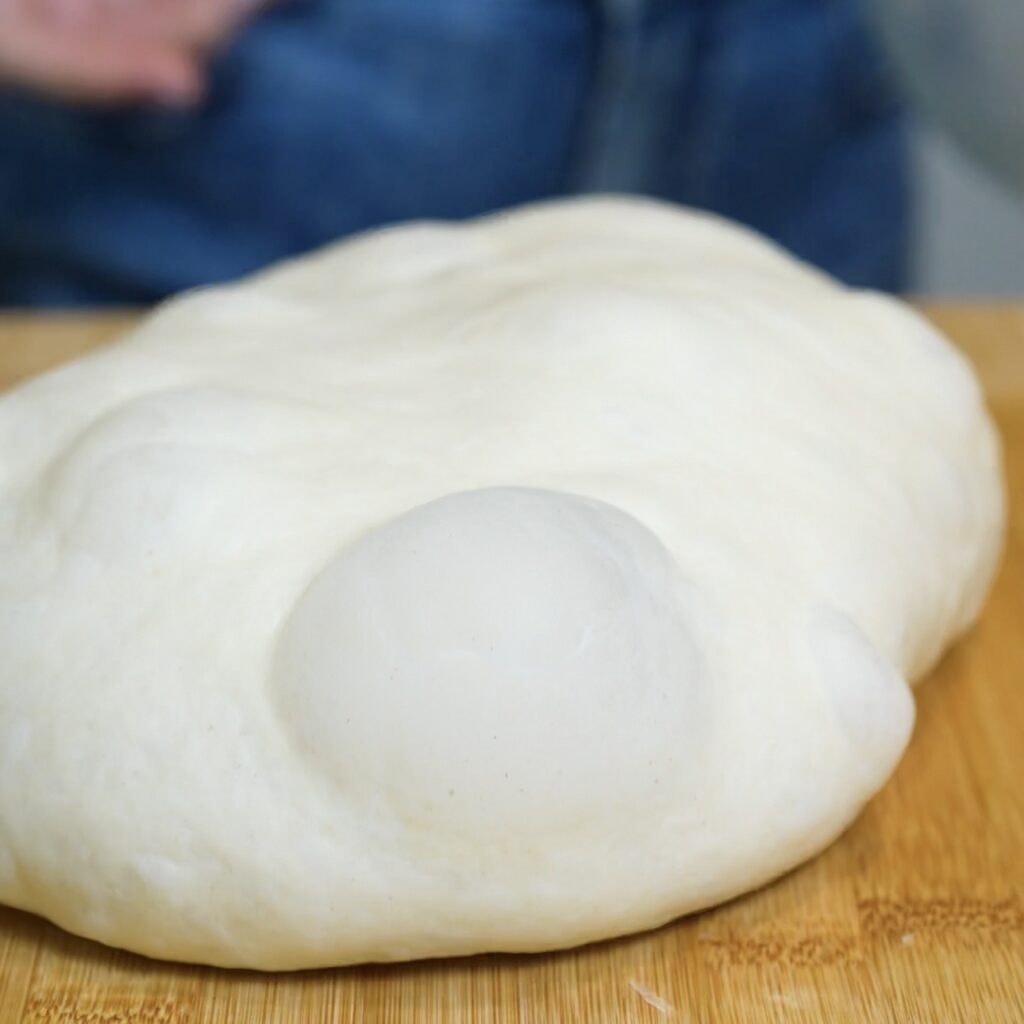
Transfer the dough to a clean work surface and knead it for a few minutes until it becomes smoother and more elastic. The dough may feel slightly sticky at first, but avoid adding extra flour, as this can make the finished flatbreads heavier and drier. Add the olive oil and continue working the dough briefly until it is evenly coated. Shape it into a ball, place it back into the bowl and cover. Leave the dough to proof in a warm place for approximately 1 hour, or until it has noticeably increased in size and feels light and airy.
Soft, risen dough ready to be divided, filled and shaped into Spinach and Feta Flatbreads.
Preparing the Spinach and Feta Filling
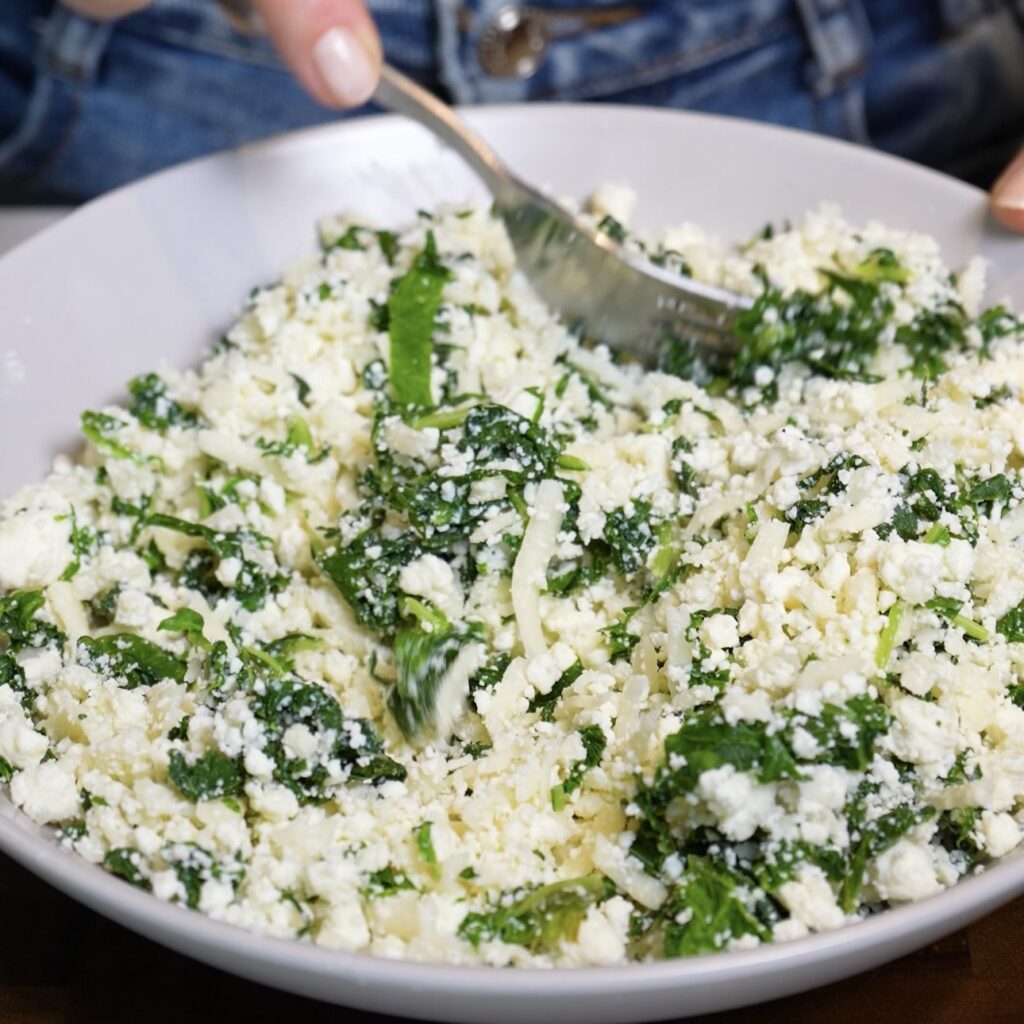
Place the fresh spinach in a large heatproof bowl or colander and pour boiling water over it until all the leaves have wilted. Rinse the spinach immediately under cold running water to stop the cooking process and cool it down. Gather the cooled spinach in your hands and squeeze firmly to remove as much excess water as possible. This step is important, as too much moisture can make the filling watery and make the flatbreads more difficult to seal. Once well drained, finely chop the spinach. Transfer the chopped spinach to a bowl and add the crumbled feta and shredded mozzarella. Mix everything together until the spinach and cheeses are evenly distributed. Divide the filling roughly into six equal portions so that each flatbread gets a similar amount.
Mixing spinach, crumbled feta and shredded mozzarella for the cheesy flatbread filling.
Dividing and Filling the Dough
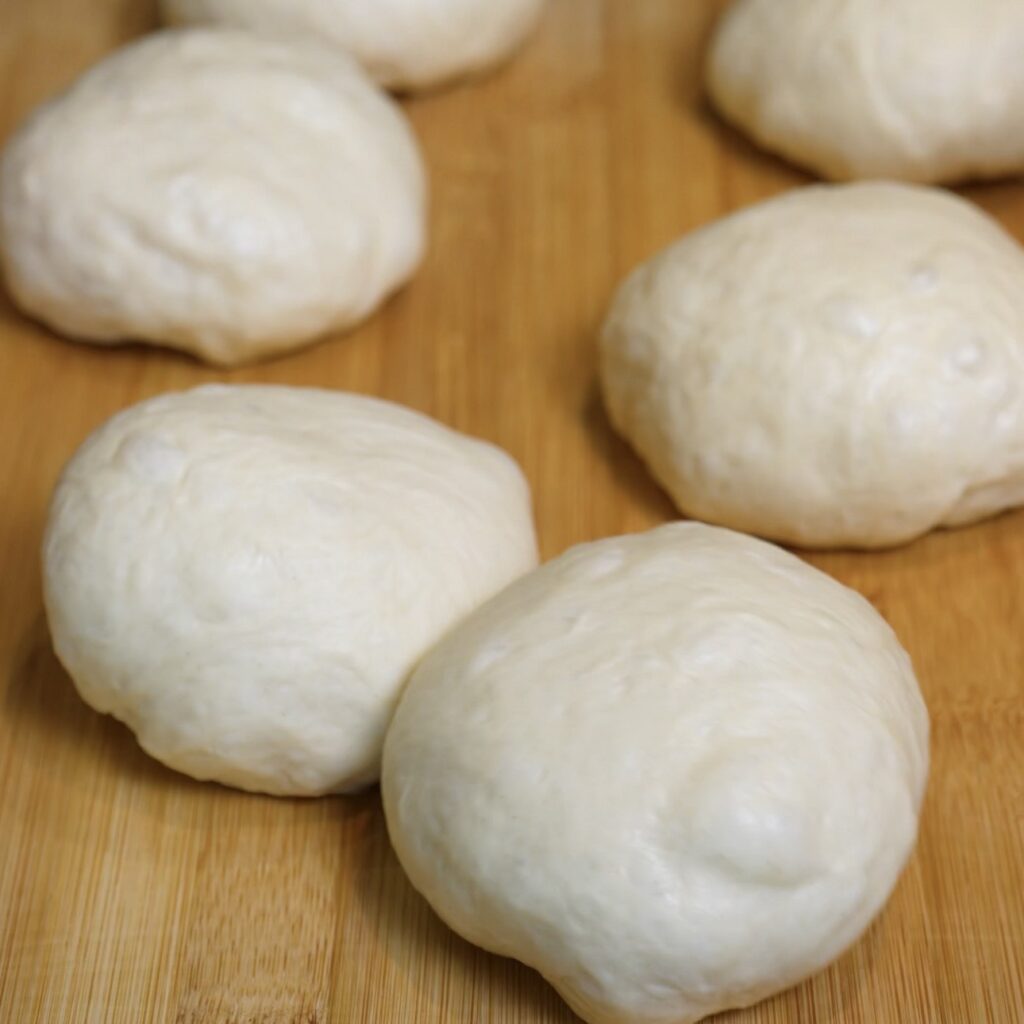
Once the dough has finished proofing, gently transfer it onto a clean work surface. Divide it into six equal pieces and shape each portion into a smooth ball.
Risen flatbread dough divided into six portions and shaped into balls, ready for filling.
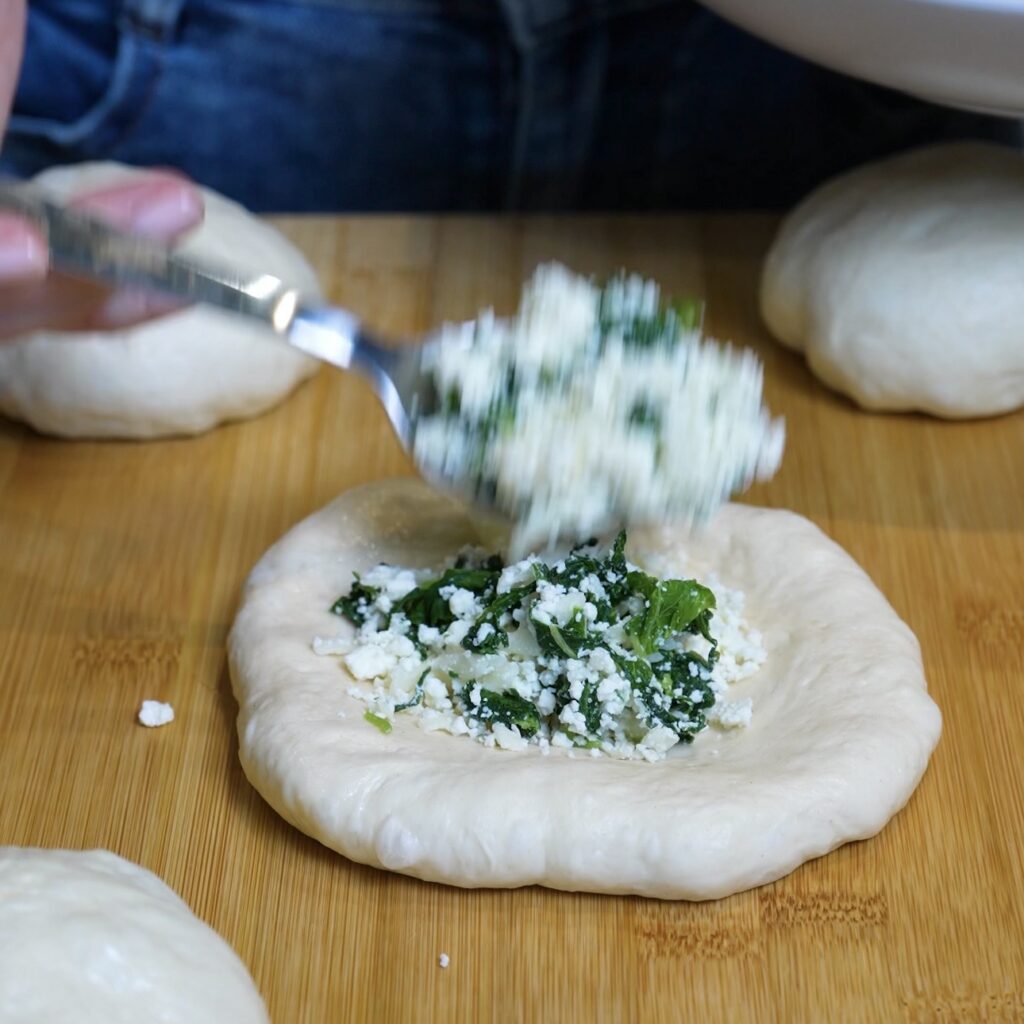
Working with one portion at a time, gently flatten or roll the dough into a small round. Place one portion of the spinach and cheese filling in the centre, keeping the mixture away from the edges so the dough can be sealed properly.
Adding the spinach and cheese filling to the centre of the prepared flatbread dough.
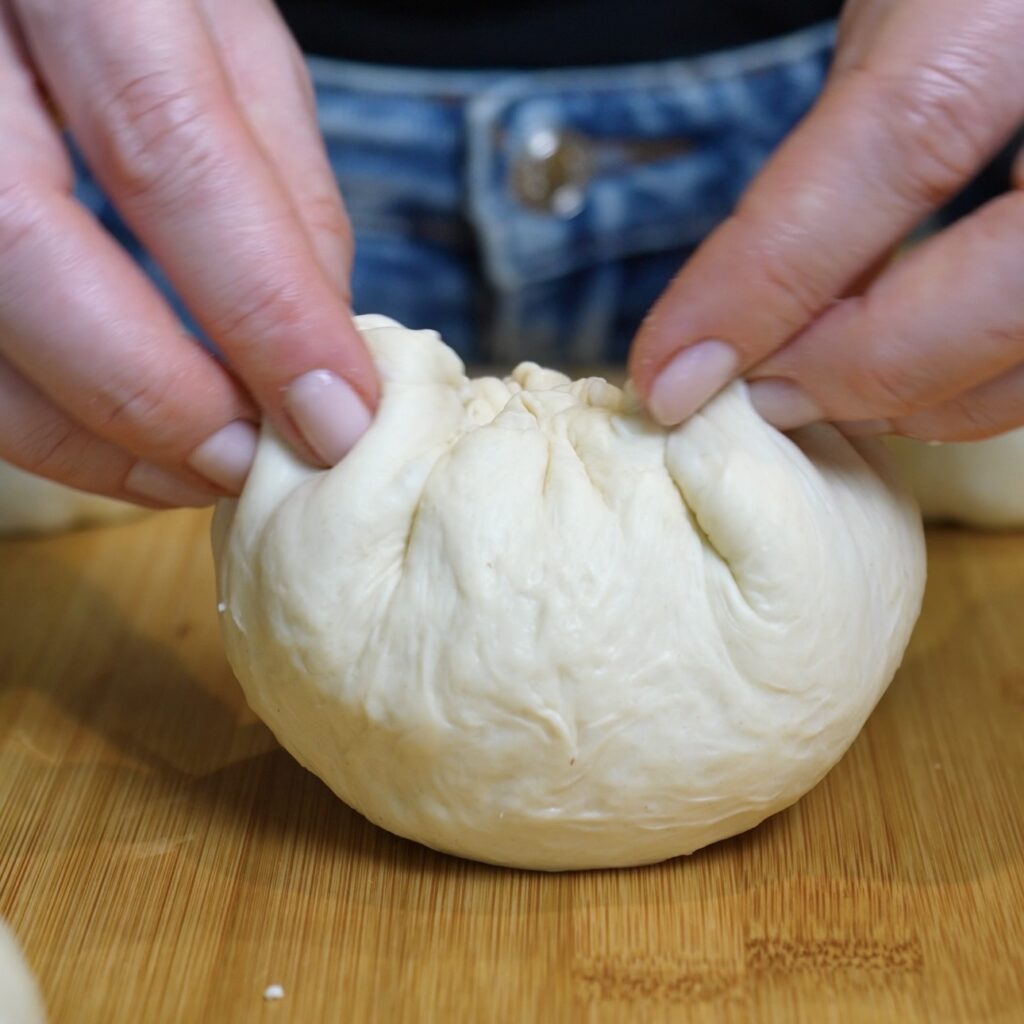
Bring the edges of the dough up and over the filling towards the centre. Pinch them together firmly to completely enclose the filling, making sure there are no gaps where the cheese could escape during cooking.
Sealing the filled dough and shaping it into a smooth ball before flattening.
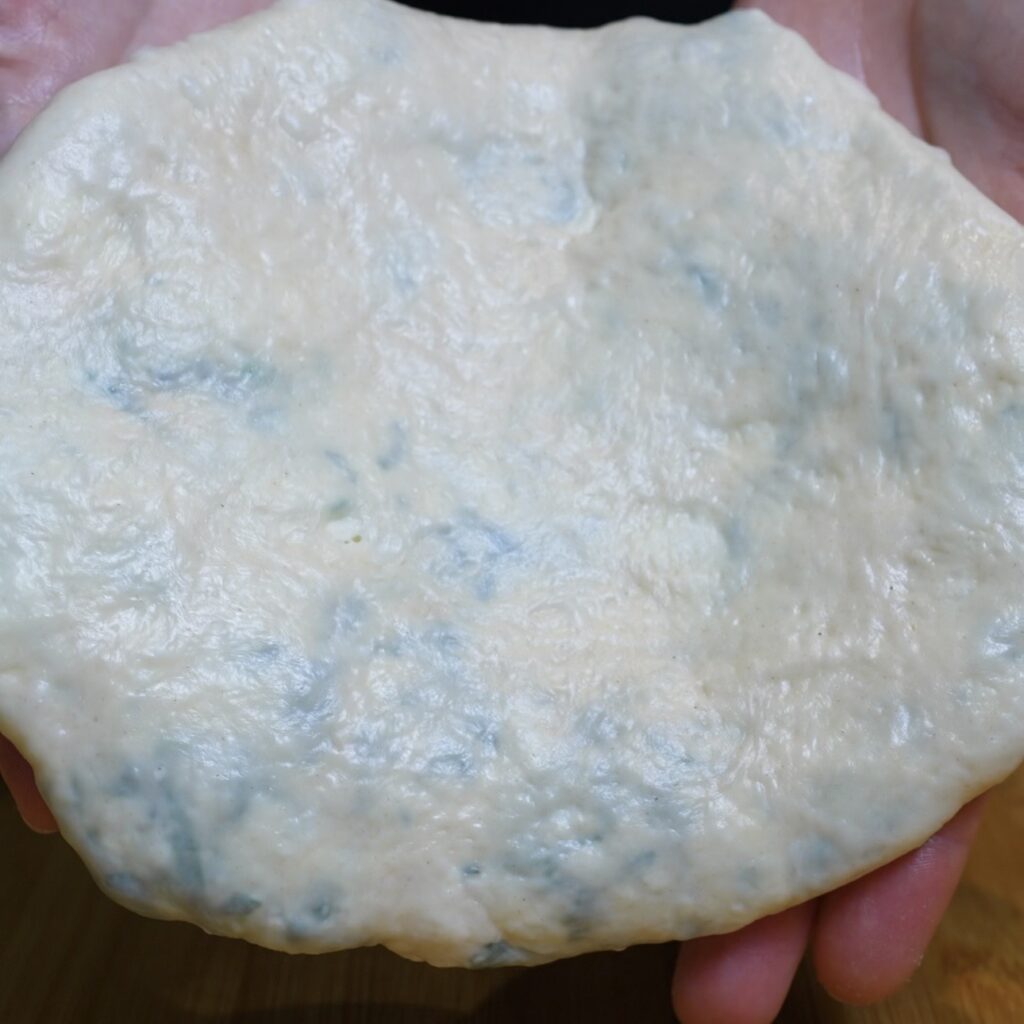
Turn the filled dough seam-side down. Using a rolling pin, gently flatten it into a round flatbread approximately 18-20 cm (7-8 inches) in diameter. Work carefully and avoid pressing too firmly, as this can tear the dough and expose the filling. Repeat with the remaining dough and filling until all six flatbreads are shaped.
Filled flatbread dough gently flattened into a round and ready for the pan.
Cooking the Flatbreads
Heat a dry frying pan over medium-low heat. There is no need to add any oil to the pan. Place one flatbread into the hot pan and cook for a few minutes on the first side, until golden-brown patches begin to form underneath. Carefully flip it over and cook the second side until golden and the dough is cooked through.
Flipping the flatbread once the first side is golden and cooked.
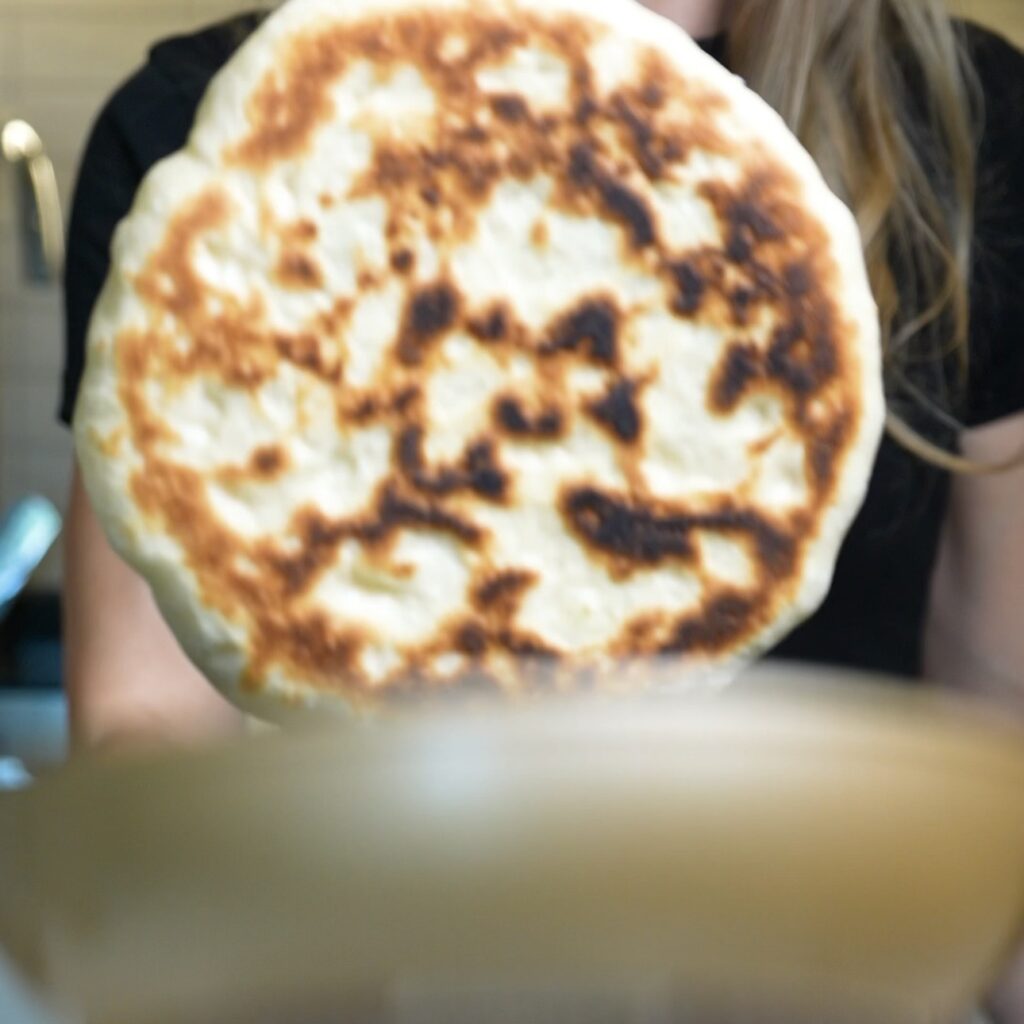
Keep the heat at medium-low rather than turning it too high. This gives the dough enough time to cook all the way through and allows the cheese inside to melt without the outside becoming too dark. The exact cooking time can vary depending on the thickness of the flatbread and the heat of your pan, so use the appearance of the bread as your guide. Both sides should be evenly cooked with golden-brown patches, and the bread should feel soft but no longer doughy. Continue cooking the remaining flatbreads in the same way.
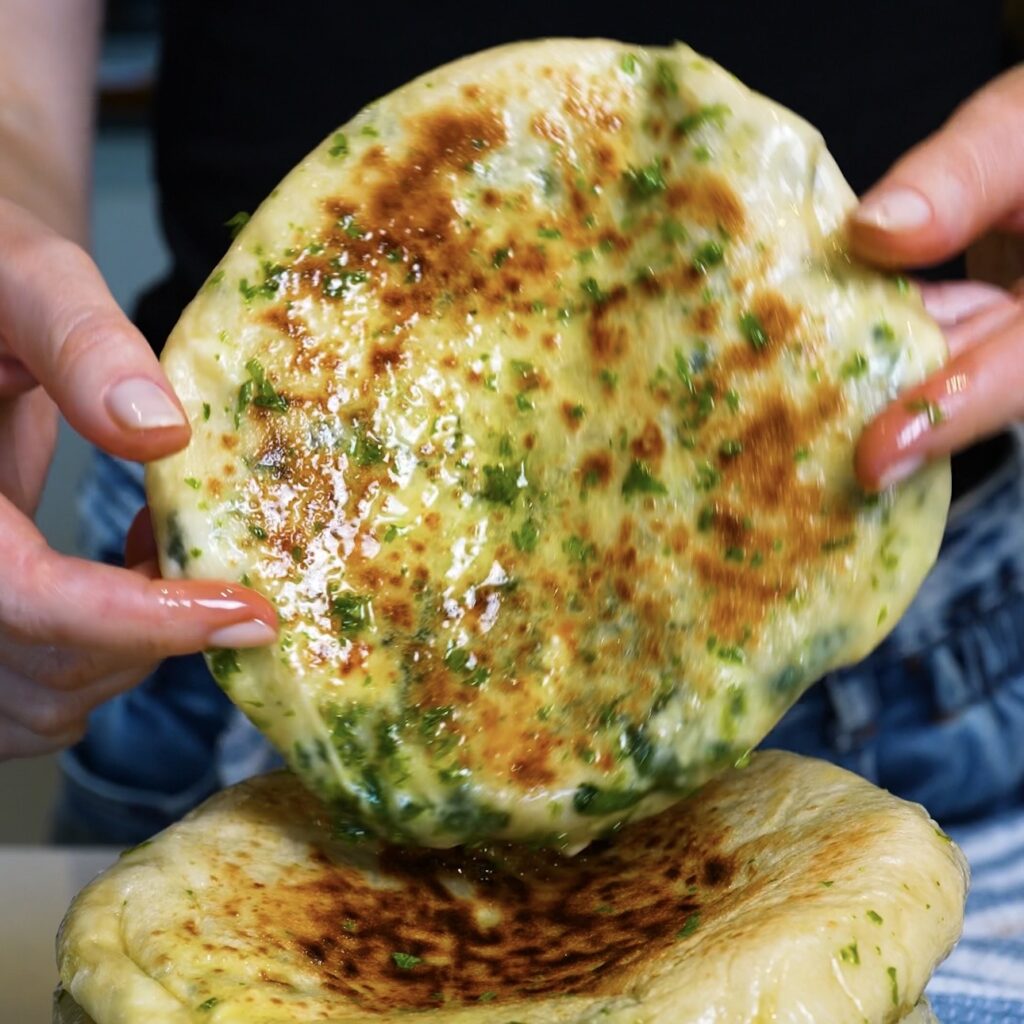
Freshly cooked Spinach and Feta Flatbread held in hands before serving.
Finishing the Flatbreads
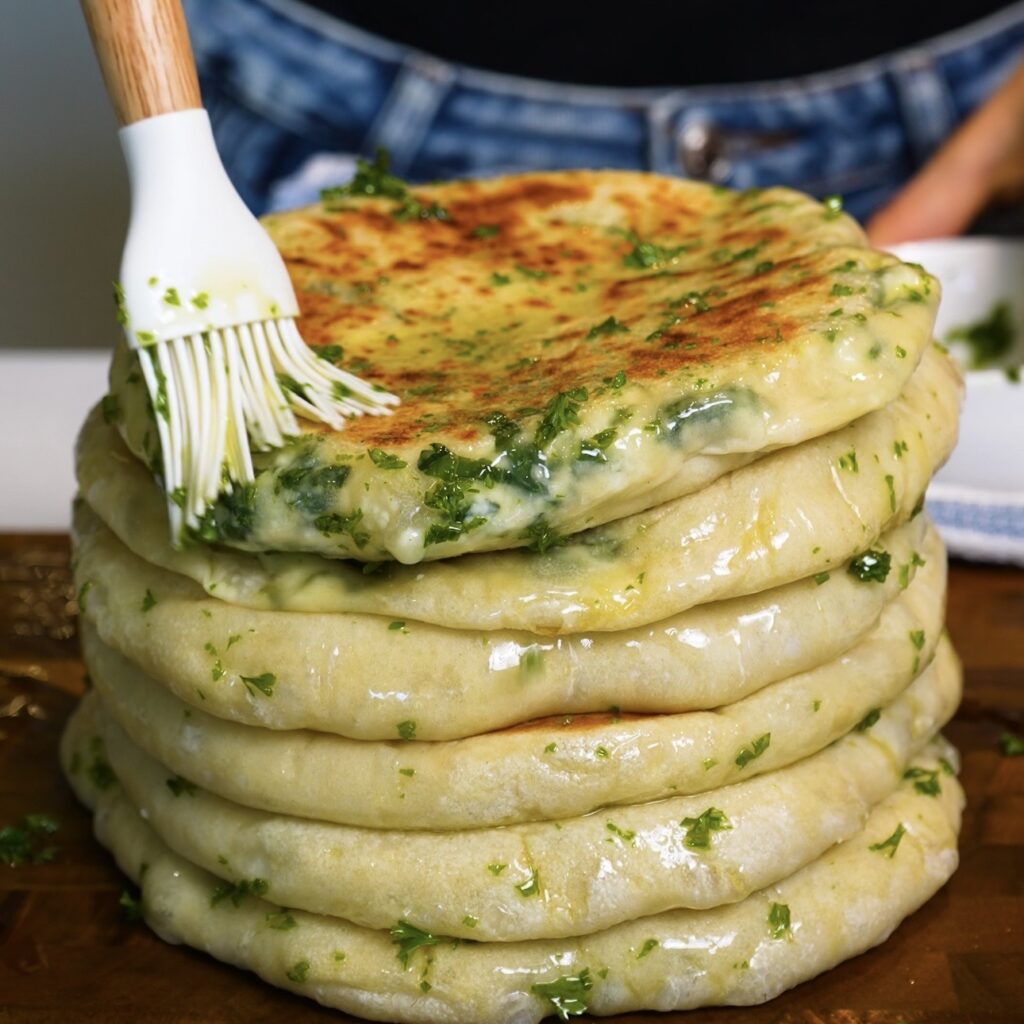
Finely chop the fresh parsley and combine it with the olive oil. As soon as each flatbread comes out of the pan, brush the top with the parsley and olive oil mixture while the bread is still warm. The warm surface will absorb some of the oil and fresh parsley flavour, giving the flatbreads a fragrant, glossy finish.
Brushing the warm flatbreads with olive oil and finely chopped parsley before serving.
Serve the Spinach and Feta Flatbreads warm, when the bread is at its softest and the mozzarella filling is beautifully melted.
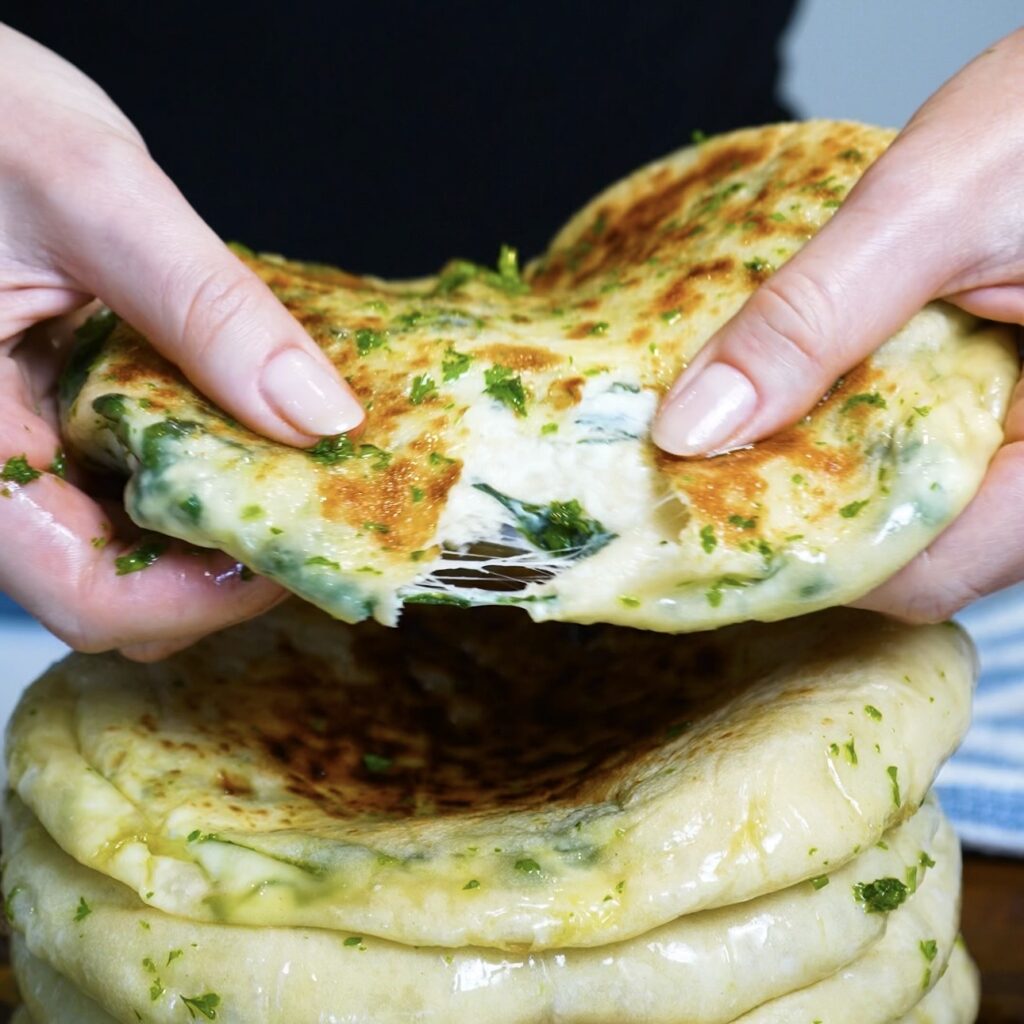
Tearing the warm flatbread open to reveal the spinach, feta and melted mozzarella filling.
Why We Love Spinach and Feta Flatbread
There is a lot to love about a recipe that gives you freshly made bread, a generous cheesy filling and a beautifully golden finish without needing an oven. The homemade dough is soft and satisfying, while the filling has just the right balance of salty feta, mild mozzarella and spinach. There is also a wonderful contrast of textures: lightly toasted on the outside, soft through the bread and creamy and cheesy in the centre. Once you learn the simple filling and sealing technique, homemade stuffed flatbread becomes surprisingly approachable, even if you have not made much bread before. If spinach and feta is already one of your favourite combinations, you should also try my Spinach Feta Rice Paper Bombs and Feta and Spinach Filo Doughnuts for two completely different ways to enjoy those flavours.
Perfect for Any Occasion
These stuffed flatbreads work just as well for a relaxed weekend breakfast as they do for lunch, brunch, dinner or a savoury snack. Make them when you are craving fresh homemade bread but don't have or do not want to use the oven, prepare a batch for a family meal, or cut them into smaller wedges for a sharing platter. They are particularly delicious straight from the pan, but leftovers can also be reheated gently in a frying pan to restore their soft centre and lightly toasted exterior. The familiar combination of bread, spinach and melted cheese makes them an easy crowd-pleaser alongside other savoury favourites such as my No-Knead Pesto Mozzarella Bread Twists and No-Knead Sun-Dried Tomato and Rosemary Bread Twists.
Instagram Tutorial & More
Want to see how these flatbreads come together? Watch our quick video on Instagram and don’t miss our other easy, simple and delicious bread and pastry recipes.
These Spinach and Feta Flatbreads are soft, golden and packed with a savoury cheese filling. The dough is easy to make and cooks directly in a dry frying pan, so there’s no oven needed. Inside, wilted spinach is mixed with salty feta and melty mozzarella for a rich, satisfying centre. Each flatbread is rolled thin, cooked until beautifully golden, then brushed with parsley-infused olive oil while still warm. They are perfect for lunch, dinner, sharing or serving alongside soups, salads and dips. Best enjoyed fresh from the pan while the filling is still warm and cheesy.
Ingredients
For the dough
300ml lukewarm water (1¼ cup)
1tsp sugar
1tsp instant yeast
500g bread flour (4 cups + 2.5 tbsp)
1tsp salt
1tbsp olive oil
For the filling
85g spinach (2¾ cups, wilted and finely chopped)
200g feta (1¾ cups, crumbled)
100g mozzarella (just under 1 cup, shredded)
For the topping
1tbsp olive oil
A handful of fresh parsley (finely chopped)
Garlic granules or minced garlic (optional)
Instructions
1
Combine the lukewarm water, sugar and instant yeast in a small bowl or glass. Stir well, then leave for 10 minutes to allow the yeast to activate. Sift the bread flour into a large bowl, add the salt and stir to combine. Pour in the yeast mixture and stir with a spoon until the dough starts to come together. Transfer it to a clean work surface and knead by hand for a few minutes, until you have a soft, smooth dough. Avoid adding extra flour, as the dough should remain soft. Return the dough to the bowl, coat it with 1 tablespoon of olive oil, cover with cling film or a clean kitchen towel and leave to rise in a warm place for 1 hour.
2
Meanwhile, prepare the filling. Add the wilted, chopped spinach, crumbled feta and shredded mozzarella to a bowl and mix until evenly combined. Once the dough has risen, gently deflate it and transfer it to a clean, lightly oiled work surface. Knead it a few times, then divide it into 6 equal portions, approximately 135 g each. Shape each portion into a ball, space them apart on the work surface and cover with a clean kitchen towel.
3
Working with one dough ball at a time, flatten it with your hands or a rolling pin. Spoon some of the spinach and cheese filling into the centre, then bring the edges of the dough together over the filling and pinch to seal. Shape it back into a ball, place it seam-side down and carefully roll it into a flat round approximately 20 cm in diameter. Roll gently to avoid tearing the dough, as any holes may allow the filling to escape during cooking. Repeat with the remaining dough and filling until you have assembled all 6 flatbreads, keeping them covered with a clean kitchen towel while you finish shaping the rest.
4
Heat a dry frying pan over medium-low heat. There is no need to add any oil. Starting with the flatbread you assembled first, place it in the pan seam-side down and cook for a few minutes, until the underside is golden. Flip and cook the other side until golden and cooked through. Repeat with the remaining flatbreads, stacking the cooked ones on a plate and keeping them covered with a clean kitchen towel so they stay soft and warm. In a small bowl, combine the olive oil and finely chopped parsley, adding a little garlic granules or freshly minced garlic if desired. Brush the warm flatbreads with the parsley oil and serve immediately.
Use lukewarm, not hot, water. The water should feel comfortably warm to the touch, around 35–40°C / 95–104°F. Water that is too hot can damage the yeast, while cold water will slow down the rising process.
Give the yeast time to activate. After mixing the water, sugar and yeast, leave it for about 10 minutes. You may notice a light foam forming on the surface. Instant yeast does not always foam dramatically, so do not worry if the mixture only looks slightly bubbly.
The dough should stay soft. It may feel slightly tacky when you first start kneading, and that is completely normal. Avoid adding extra flour unless the dough is extremely wet and impossible to handle. Adding too much flour can make the finished flatbreads dense and dry.
Knead until the dough becomes smoother and more elastic. You do not need to knead it for a very long time. A few minutes by hand should be enough for the dough to become soft, smooth and easier to handle.
Let the dough rise somewhere warm. A warm, draught-free spot works best. Depending on the temperature of your kitchen, the dough may take slightly more or less than 1 hour to rise. It should look noticeably puffier and roughly double in size.
Make sure the spinach is not too wet. After wilting the spinach, allow it to cool slightly and squeeze out any excess moisture before chopping it. Too much liquid in the filling can make the dough difficult to seal and may cause the flatbreads to split while cooking.
Mix the filling thoroughly. Crumble the feta fairly finely so it distributes evenly with the spinach and mozzarella. This makes the flatbreads easier to fill and helps you get cheese and spinach in every bite.
Divide the dough as evenly as possible. Each portion should weigh approximately 135 g. Using kitchen scales makes this much easier, but you can also divide the dough visually into 6 similar-sized pieces.
Keep unused dough covered. Dough can dry out surprisingly quickly. Keep the dough balls covered with a clean kitchen towel while you shape the flatbreads one at a time.
Do not overfill the flatbreads. It can be tempting to add lots of filling, but too much will make the dough difficult to seal and more likely to tear when rolled. Divide the filling roughly into 6 equal portions before you start assembling so each flatbread gets a similar amount.
Seal the dough well. Bring the edges together over the filling and pinch them firmly. Make sure there are no gaps before turning the dough seam-side down.
Roll gently after filling. Start by pressing the filled dough ball lightly with your hand, then use a rolling pin to gradually roll it into a round approximately 20 cm in diameter. Do not press too hard in the centre, as this can force the filling through the dough.
Small air bubbles are normal. The dough may puff slightly while you roll or cook it. You do not need to flatten every bubble unless it becomes very large.
If the dough starts to tear, stop rolling. A slightly smaller flatbread is better than one with holes. If a small tear appears, gently pinch the dough together before cooking.
Do not add oil to the pan. These flatbreads cook best in a dry frying pan. The olive oil is brushed over them after cooking.
Keep the heat at medium-low. If the pan is too hot, the outside can brown before the dough cooks through. If it is too cool, the flatbreads can become dry before they develop good colour. Adjust the heat as you go if necessary.
Cook the oldest shaped flatbread first. Start with the first one you assembled. This gives each flatbread a similar resting time before cooking.
Look for golden-brown patches rather than relying only on time. Different pans and stovetops heat differently. Each side will usually need a few minutes, but use the colour and texture of the flatbread as your main guide.
Keep cooked flatbreads covered. Stack them on a plate and cover with a clean kitchen towel as you cook the remaining batches. The trapped steam helps keep them soft rather than allowing the surface to dry out.
Brush with the parsley oil while warm. The warm bread absorbs the olive oil and flavour much better. You can add garlic granules or a small amount of freshly minced garlic if you want a stronger garlic flavour.
They are best served warm. The flatbreads are at their best straight from the pan while the dough is soft and the mozzarella is still melted.
To store: Allow the flatbreads to cool completely, then keep them in an airtight container in the refrigerator for up to 3 days.
To reheat: Warm them in a dry frying pan over low to medium-low heat for a few minutes on each side. This helps restore their soft texture much better than reheating them for too long in the microwave.
To freeze: Once completely cooled, place baking paper between the flatbreads and freeze them in an airtight container or freezer bag. Defrost before reheating in a frying pan.
Keywords:
Spinach and Feta Flatbreads, stuffed flatbread, pan-fried flatbread, spinach flatbread, feta flatbread, cheese stuffed flatbread, homemade flatbread, no oven bread, easy flatbread recipe, skillet flatbread, vegetarian flatbread, Mediterranean flatbread, spinach and feta bread, feta and mozzarella flatbread, savoury flatbread
Did you make this recipe?
Tag @shicocooks if you made this recipe. Follow @shicocooks on Instagram for more recipes.
Pin this recipe to share with your friends and followers.
Izabella Jakubec
Food Blogger and Recipe Developer
Hi there!
I’m Izabella, and I’m thrilled to have you here!
Here, you’ll discover a collection of simple, easy-to-follow recipes that are perfect for anyone who loves quick and delicious meals.