
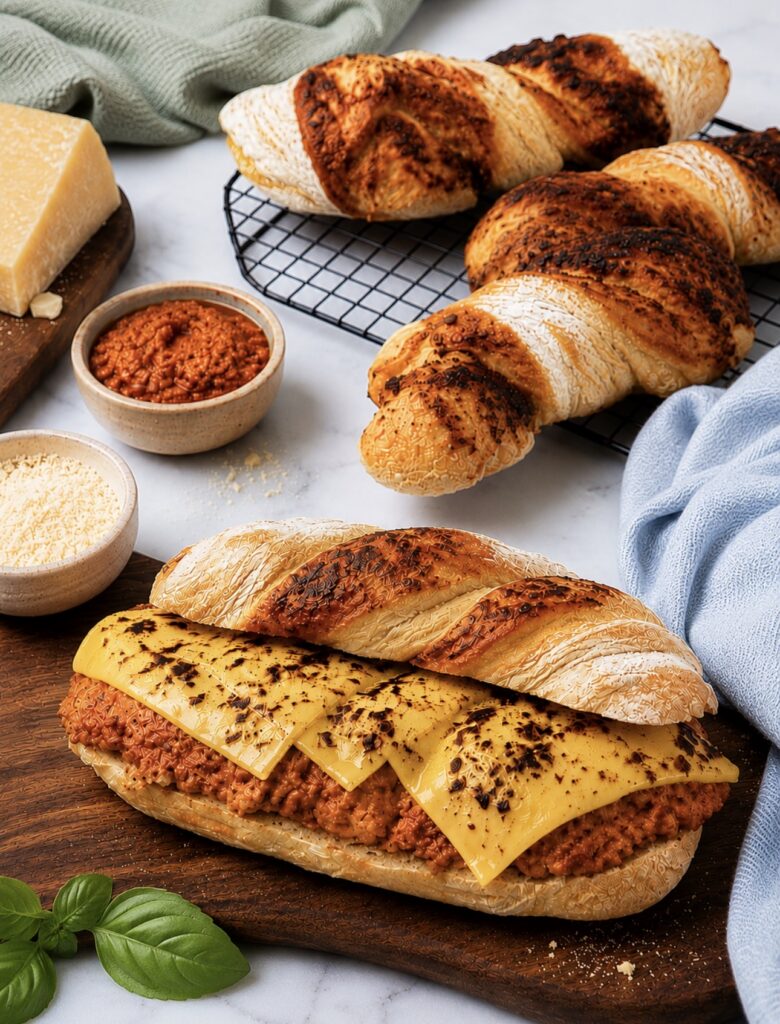

Pesto and Parmesan Twisted Baguettes: Golden, Airy and Packed with Savoury Flavour
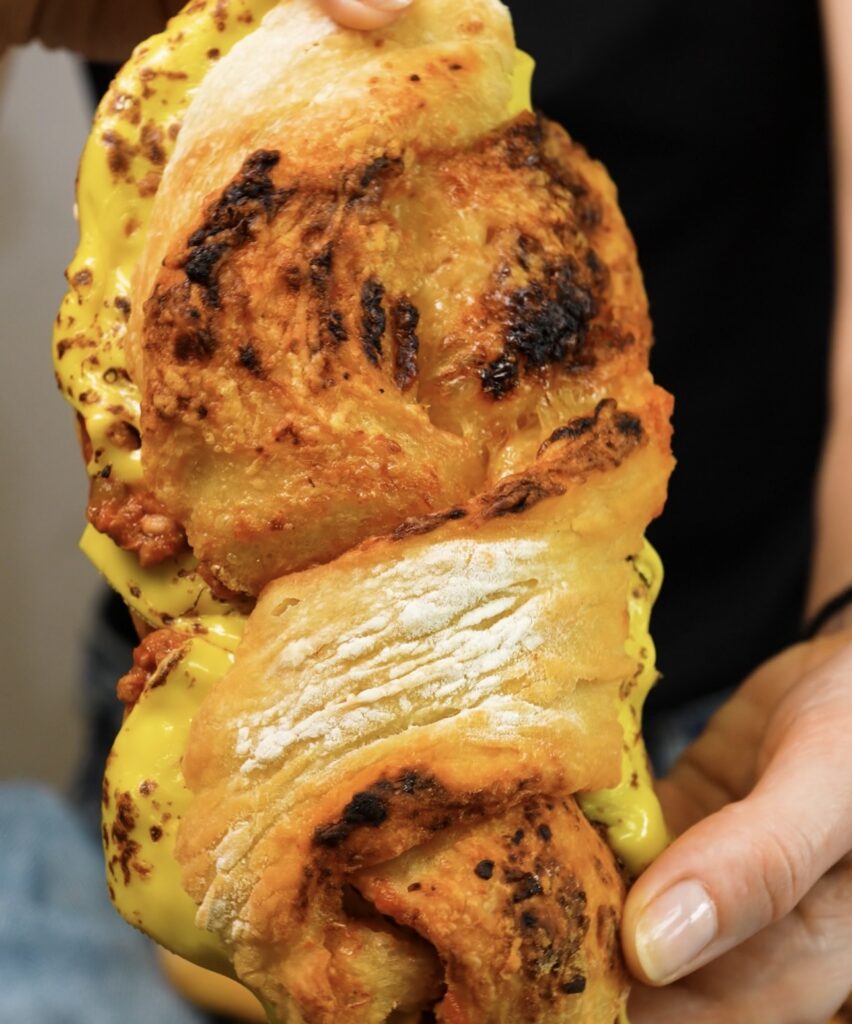
These Pesto and Parmesan Twisted Baguettes turn a simple overnight dough into four beautifully rustic loaves filled with rich sun-dried tomato pesto and finely grated Parmesan. Each baguette develops a deeply golden crust while remaining light, chewy and full of irregular air pockets inside. The twisting creates exposed layers of pesto and cheese that caramelise as the bread bakes, giving every piece its own unique shape and flavour. Like my Four Cheese Pesto Focaccia and No-Knead Pesto Mozzarella Bread Twists , this recipe delivers an impressive bakery-style result without traditional kneading.
Scroll down or tap “Jump to Recipe” for the full printable recipe card with exact measurements and instructions.
Simple Ingredients, Big Flavours
The ingredient list is short, but every component has an important role in the finished bread. Bread flour provides structure, the generous amount of water creates an open crumb, and the overnight rest allows the dough to develop flavour while requiring very little active work. The combination of pesto and Parmesan brings the same bold savoury character found in my No-Knead Sun-Dried Tomato and Rosemary Bread Twists, but here it is folded into individual twisted baguettes.
- Bread flour: Its higher protein content gives the wet dough enough strength to rise well and hold its airy internal structure.
- Lukewarm water: The large amount of water produces a soft, high-hydration dough and helps create a moist, open crumb.
- Instant yeast: It can be mixed directly with the other ingredients and provides reliable lift during the initial rests and overnight fermentation.
- Salt: Salt seasons the bread and helps strengthen the gluten structure, preventing the dough from becoming weak or flat.
- Sun-dried tomato pesto: Choose a thick pesto rather than a loose, oily one. It adds concentrated tomato flavour, herbs, richness and colour without making the dough excessively wet.
- Parmesan: Finely grated Parmesan spreads more evenly across the dough and melts into salty, golden layers during baking.
- Flour for shaping: A generous, even coating of flour prevents the high-hydration dough from sticking to the work surface while allowing it to retain its delicate air pockets.
How to Make Pesto and Parmesan Twisted Baguettes
Preparing the Dough
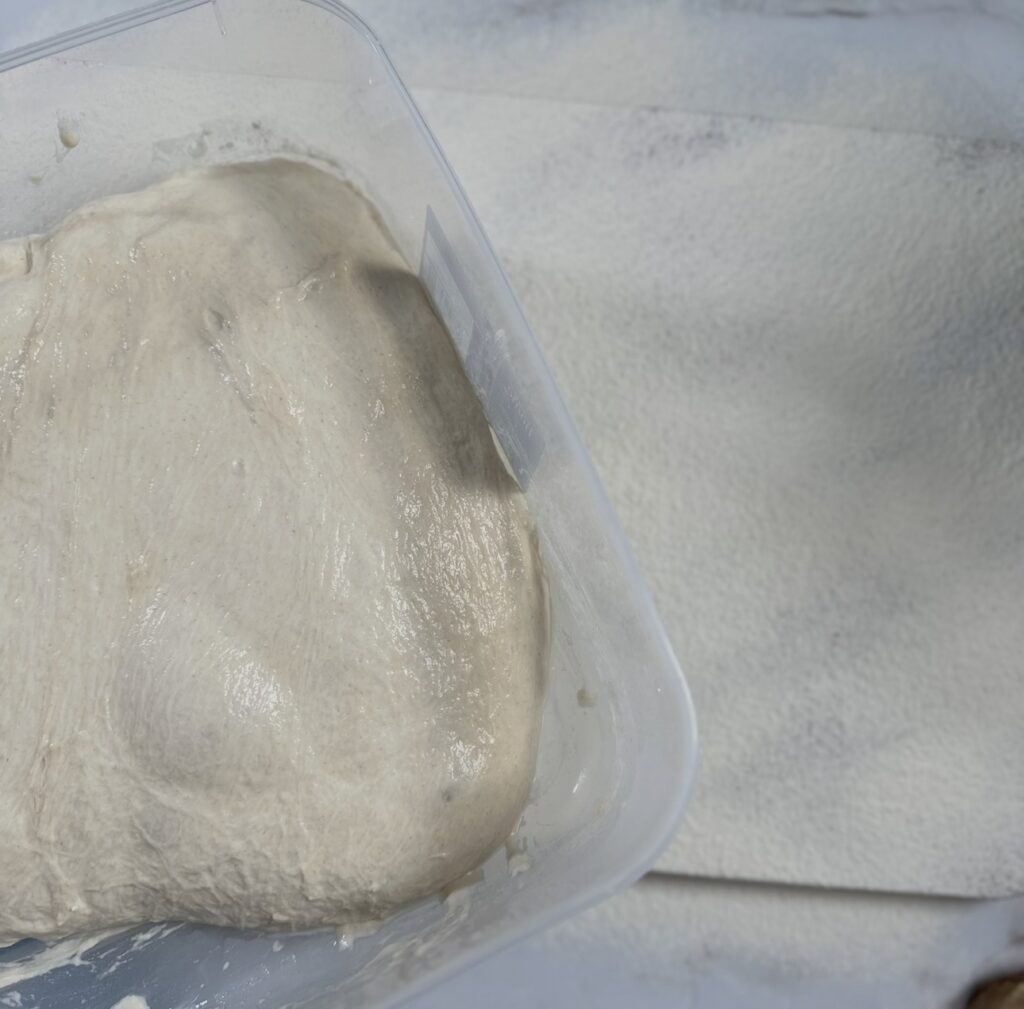
Add the lukewarm water, instant yeast and salt to a square container, then stir to combine. Using a square container will make the dough easier to shape later, although a regular bowl will also work. Add the bread flour and mix with a spoon until the ingredients are fully combined and no dry patches of flour remain. The dough will be very wet and sticky, which is normal for this high-hydration recipe. Cover the container with a lid or cling film and leave the dough to rest for 30 minutes.
After the first rest, begin the stretch-and-fold process. Take hold of one side of the dough, gently stretch it upwards and fold it over towards the opposite side. Repeat with each of the remaining three sides, completing one full round of stretch and folds. Cover the container again and leave the dough to rest for another 30 minutes. Repeat the same process three more times, completing four rounds in total and allowing the dough to rest for 30 minutes between each round. Handle the dough gently to avoid tearing it or pressing out the air developing inside. Once you have completed the fourth and final round, cover the container securely and place it in the refrigerator overnight, or for a minimum of 8 hours. This slow fermentation gives the dough time to develop flavour and structure while also making the soft, sticky dough easier to handle when chilled.
Preparing the Oven and Shaping the Dough
When you are ready to shape the baguettes, preheat the oven to 220°C/430°F with the fan on. Line a large baking tray with baking parchment. Place another empty, sturdy baking tray on the bottom shelf of the oven, as you will use this later to create steam.
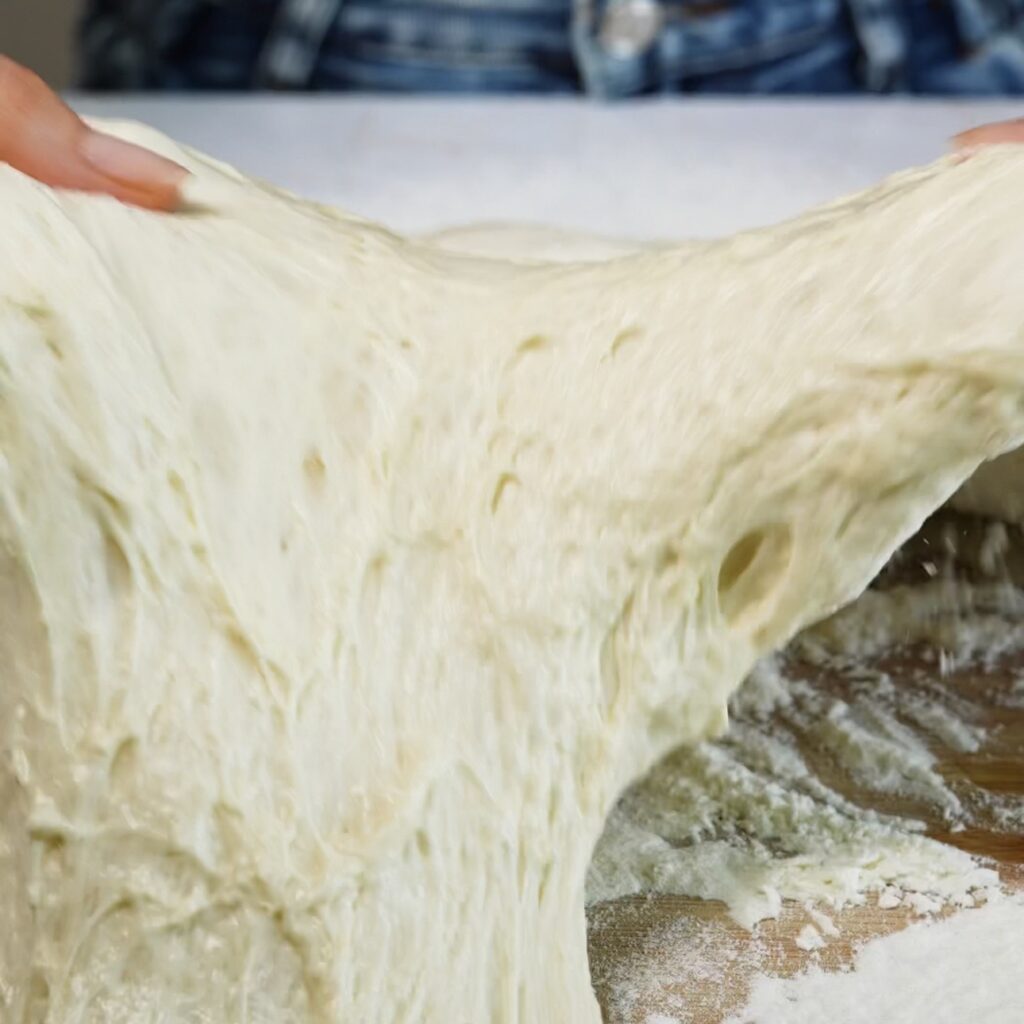
Generously dust a clean, flat work surface with flour. A fine sieve is useful for distributing the flour in a thin, even layer, but the most important thing is to ensure that the entire surface is covered to prevent the dough from sticking. Remove the chilled dough from the refrigerator and take off the lid. Turn the container upside down directly over the floured work surface and allow the dough to fall out naturally. It should release without much difficulty, although it may take a little time, so be patient and avoid pulling it out.
Lightly wet your hands to prevent the dough from sticking to them. Working quickly but gently, neaten the dough into a square shape without pressing down firmly or knocking out the air created during fermentation. If you used a square container, the dough should already have a naturally square shape and will need only minimal adjustment.
Adding the Filling, Twisting and Final Proof
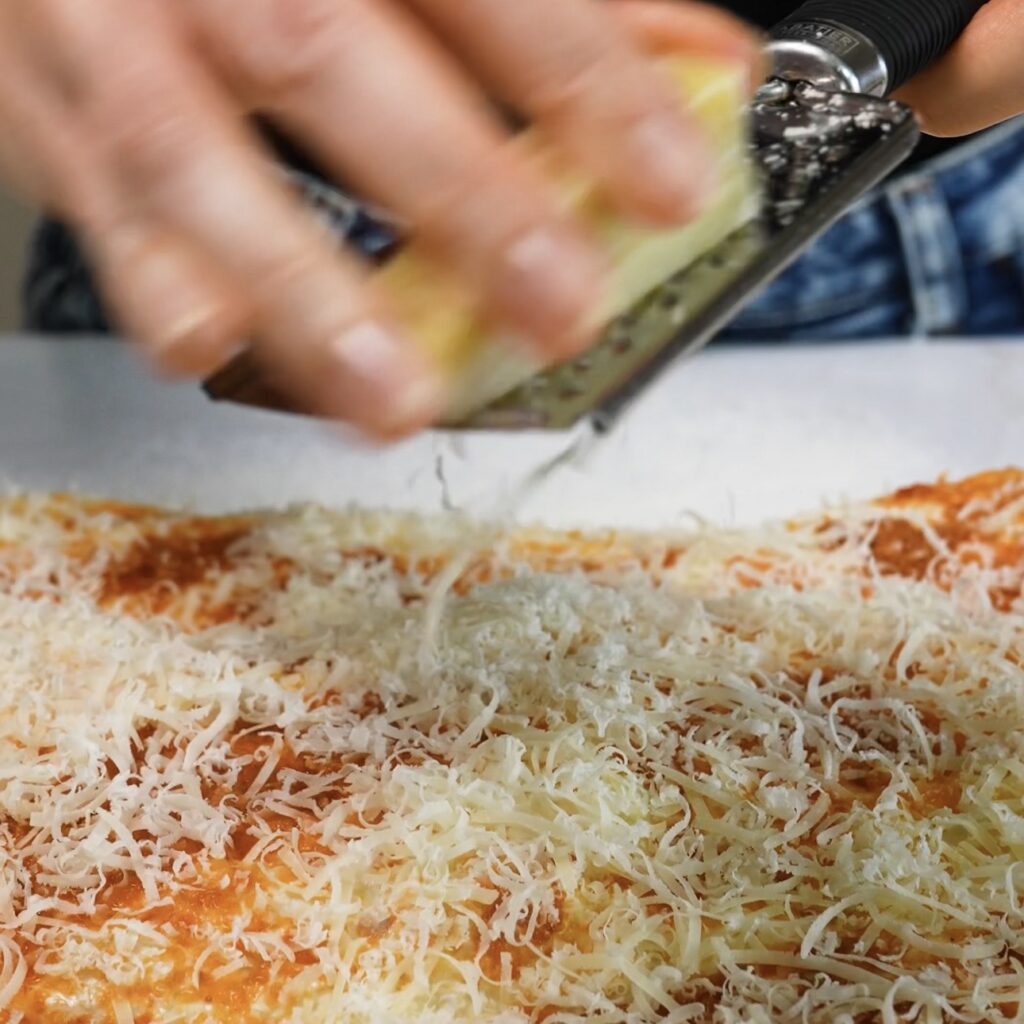
Spoon the sun-dried tomato pesto over the surface of the dough in small patches. Spreading it in separate patches first makes it easier to distribute without dragging or deflating the soft dough. Gently spread the pesto as evenly as possible, then sprinkle the finely grated Parmesan evenly over the top.
Fold the dough in half to create a rectangle, enclosing the pesto and Parmesan inside. Gently tuck in the edges to neaten the shape.
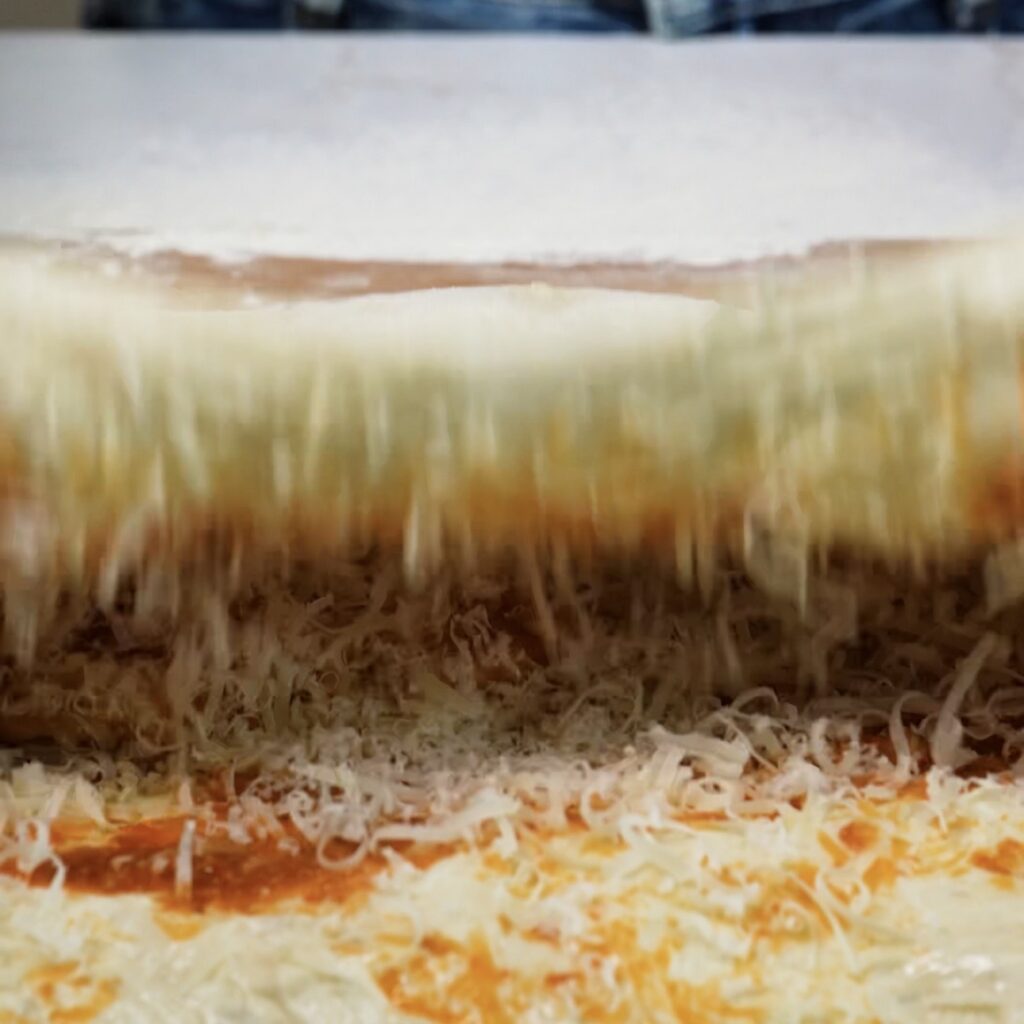
Using a dough scraper, divide the rectangle into four equal portions. A dough scraper is particularly useful because the dough is soft and sticky, and it allows you to cut and lift each piece without stretching it unnecessarily.
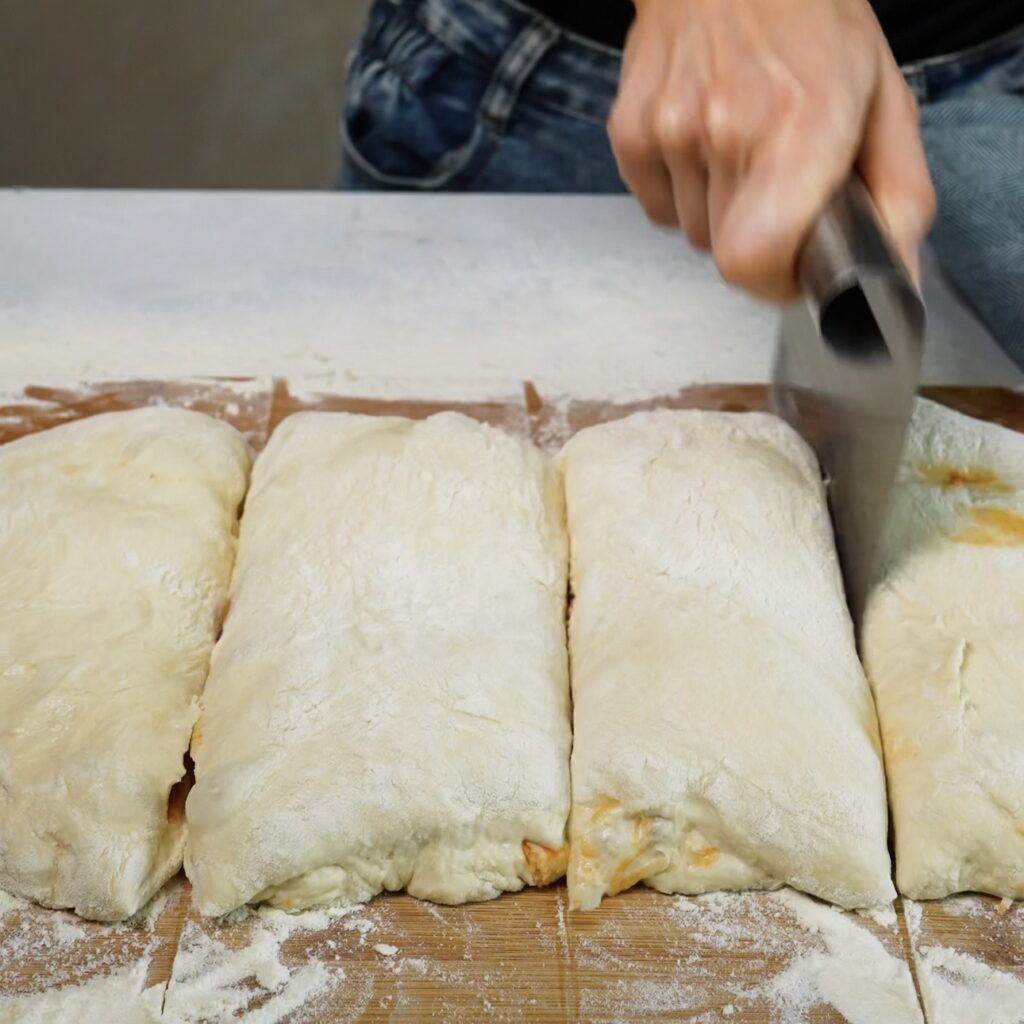
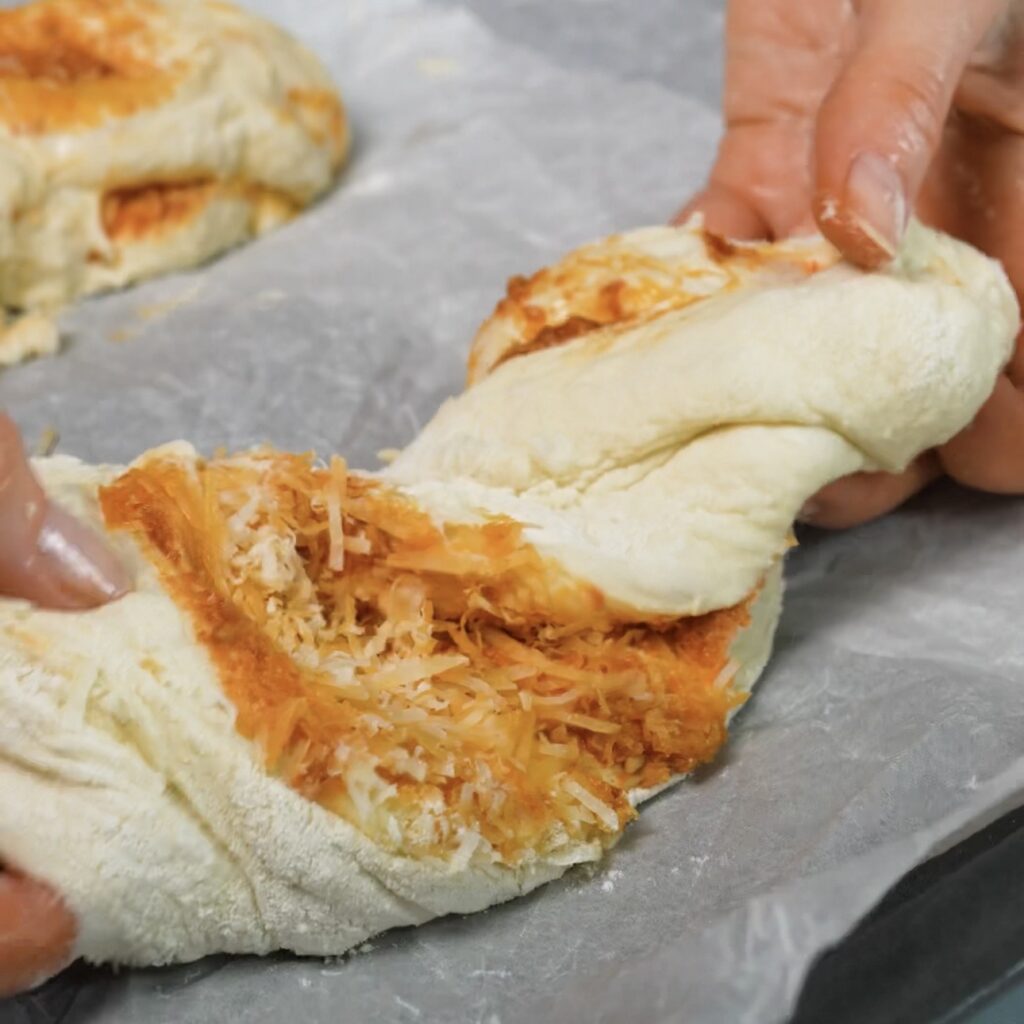
Take one portion by two opposite ends and gently twist it twice. Do not twist it too tightly, as this could compress the dough, force out the filling and reduce the rise. Transfer the shaped baguette to the prepared baking tray. Repeat the same process with the remaining three portions.
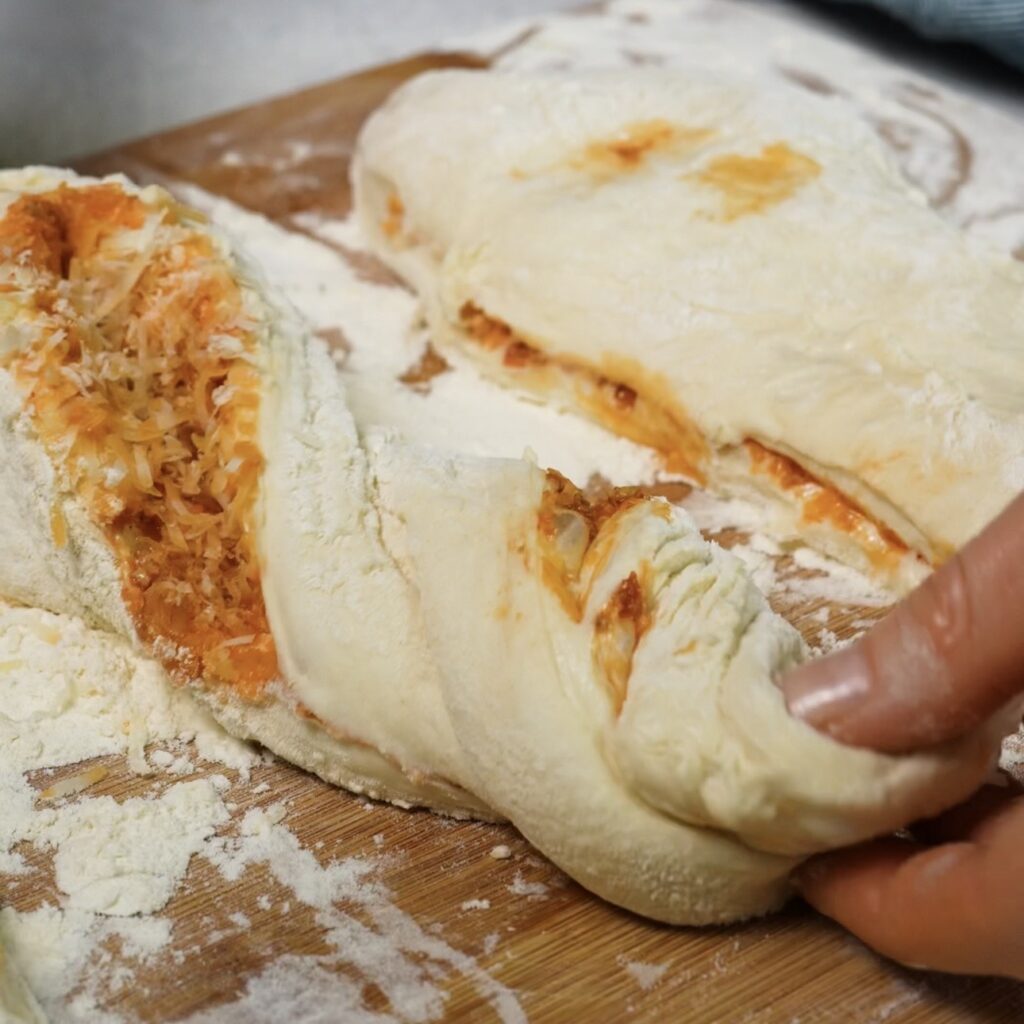
Arrange the baguettes with plenty of space between them, as they will expand during the final proof and rise further while baking. If your tray is not large enough to leave a generous gap between all four, divide them between two trays rather than placing them too close together. Loosely cover the baguettes with a clean kitchen towel and leave them to proof for approximately 20 minutes. They should become slightly puffed but do not need to double in size.
Baking and Serving
Place the tray of baguettes in the preheated oven. Immediately add a handful of ice cubes to the empty tray positioned on the bottom shelf. If you do not have ice cubes, carefully pour approximately 240 ml or 1 cup of water into the hot tray instead. Keep your hands and face away from the rising steam, then close the oven door quickly to trap it inside. The steam keeps the surface of the dough flexible during the first stage of baking, allowing the baguettes to rise rapidly before the crust sets. Bake for 20–25 minutes, or until the baguettes are deeply golden brown. The precise baking time may vary depending on your oven, so use the colour of the crust as the main guide rather than relying only on the timer.
Remove the baguettes from the oven and transfer them to a wire rack.
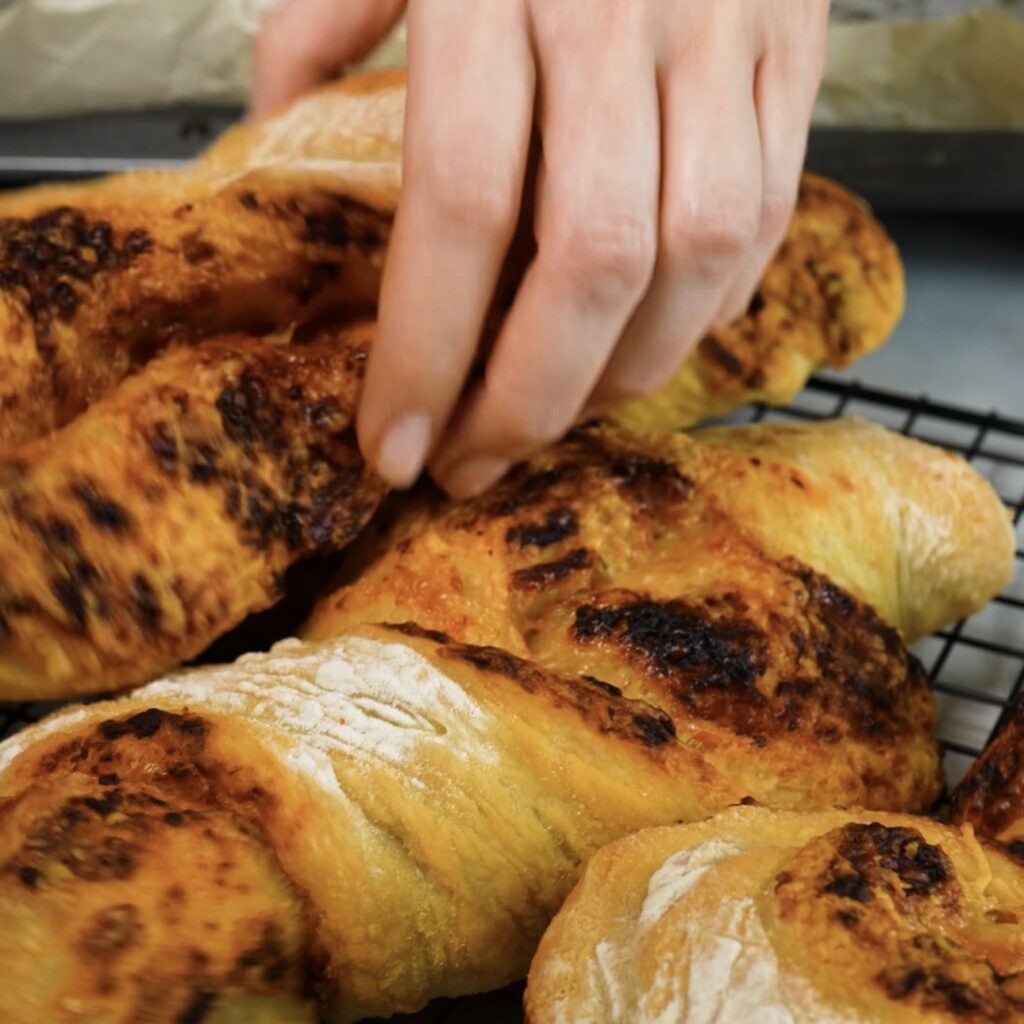
Allow them to cool before slicing, as the crumb will continue to cook and set slightly from the residual heat. Cutting the bread too soon may compress the airy interior or make it appear damp.
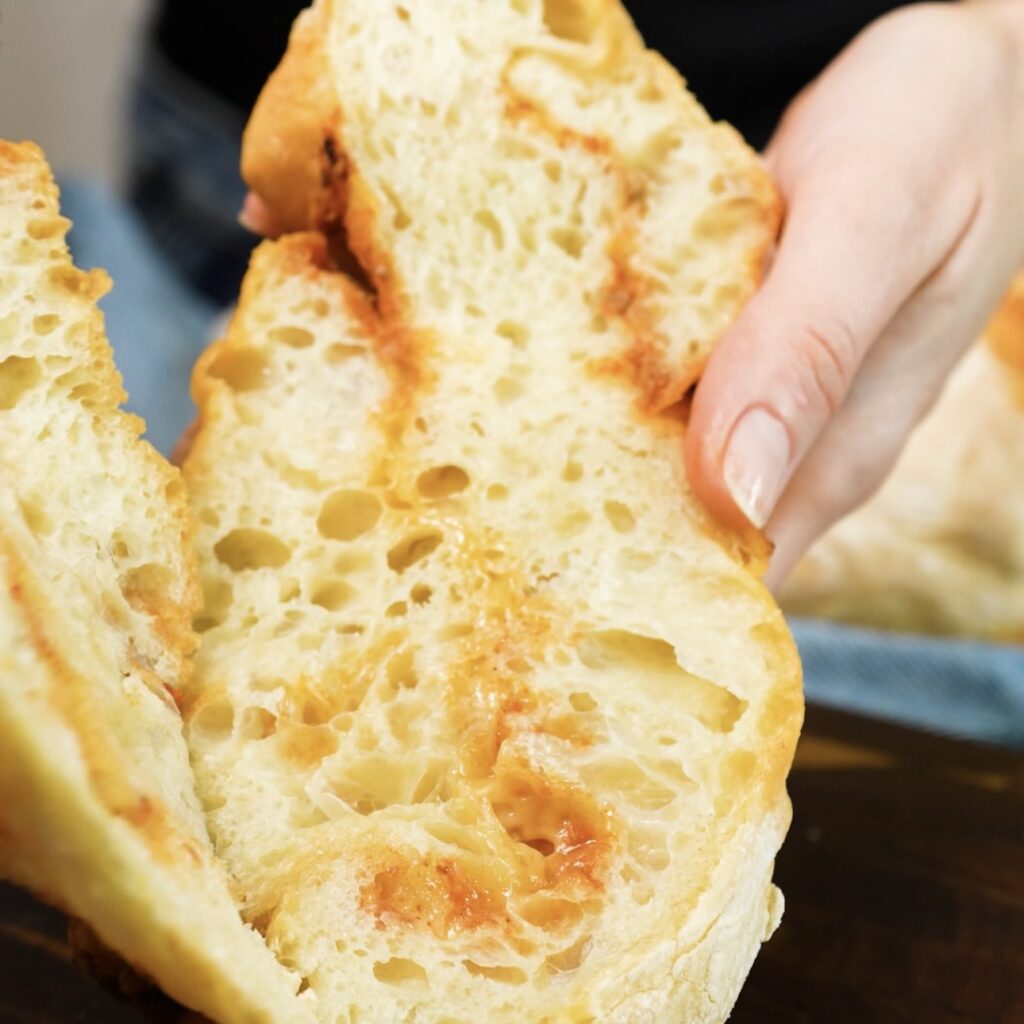
Serve the baguettes with cheese, soup, salad, pasta or a rich beef ragù from my Cheesy Beef Ragù Filo Rolls . Crisp on the outside, light and airy inside, and layered with savoury pesto and Parmesan, they are best enjoyed freshly baked.
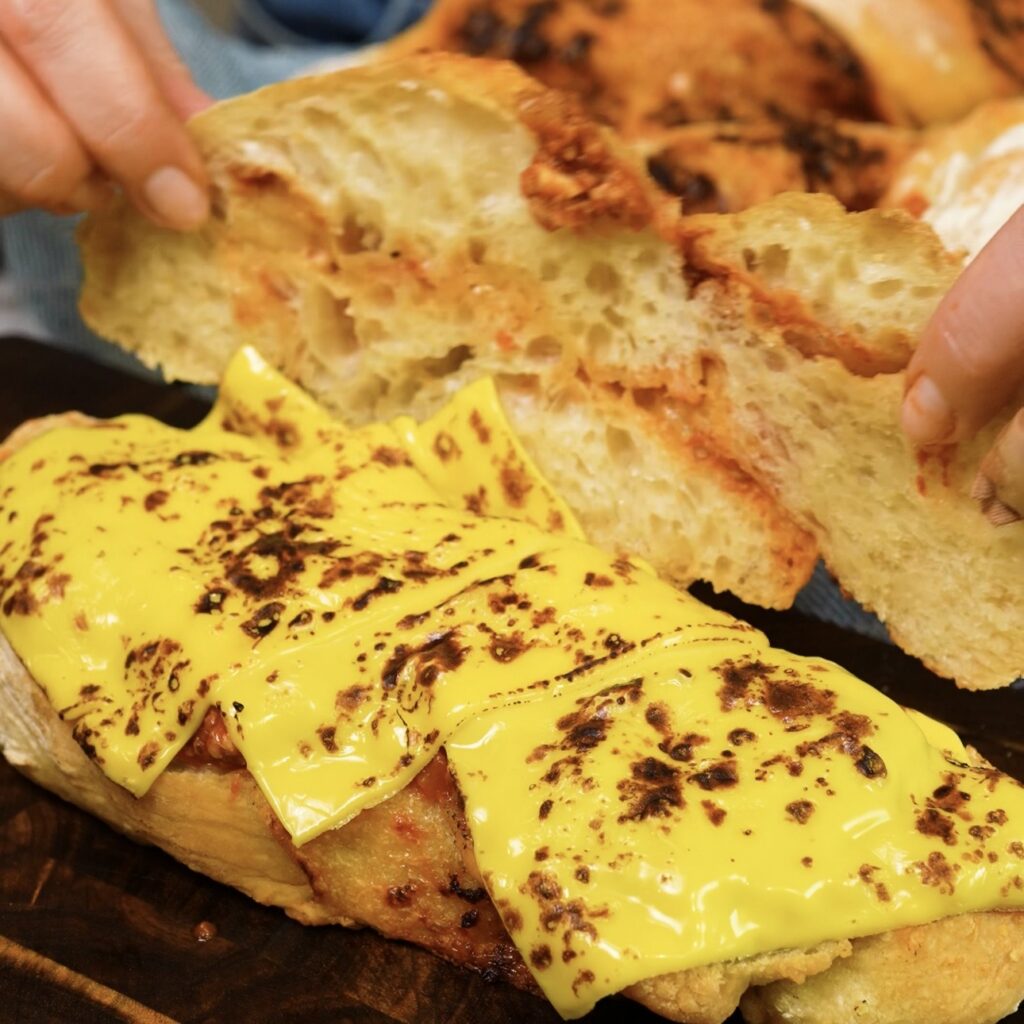
Why We Love Pesto and Parmesan Twisted Baguettes
These baguettes prove that homemade bread can look dramatic without demanding complicated equipment or advanced shaping skills. The stretch-and-fold method develops the dough gradually, while the overnight rest does most of the work without supervision. Sun-dried tomato pesto brings sweetness, acidity and herby depth, and Parmesan adds a nutty, salty finish that becomes especially delicious where it meets the hot baking tray. Every baguette looks slightly different, which is part of the appeal, and the twisting exposes extra edges that turn golden in the oven. For more easy homemade bread recipes, try my Overnight Olive and Thyme Focaccia (No-Knead) or Easy No-Knead Ciabatta (4 Ingredients).
Perfect for Any Occasion
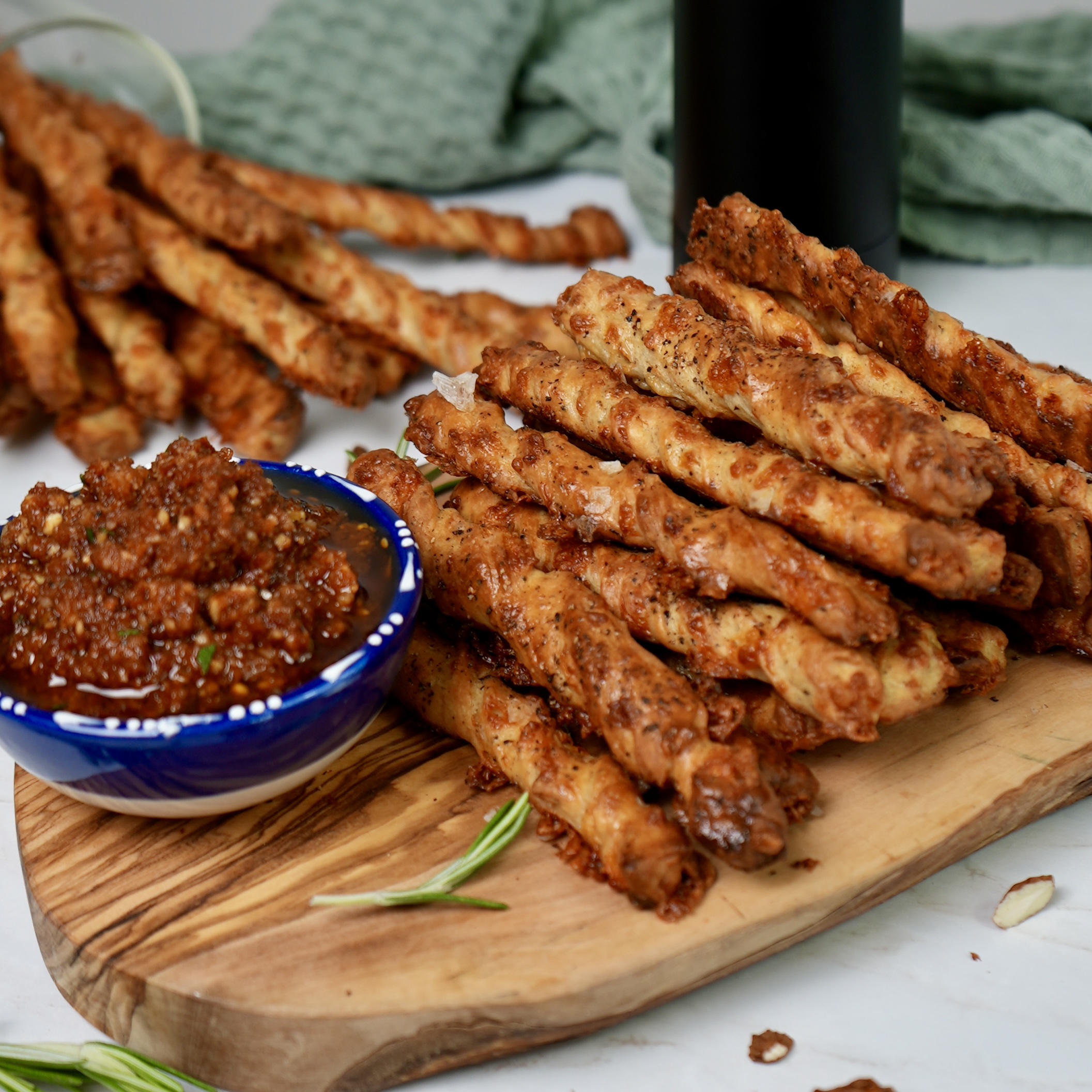
Pesto and Parmesan Twisted Baguettes work equally well for a weekend lunch, family dinner, picnic, brunch table or casual gathering with friends. Serve them whole for guests to tear apart, slice them for sandwiches or place them beside soup, pasta and salad. They are also ideal for appetiser boards with olives, roasted vegetables, cheeses and creamy dips. Leftovers can be refreshed in the oven, where the crust becomes crisp again and the pesto filling warms through. For a larger savoury spread, pair them with Pesto Puff Pastry Buns or a batch of Peppery Cheddar Breadsticks.
Instagram Tutorial & More
Watch our quick Instagram video to see how the dough is shaped into these beautiful twisted baguettes. Don’t miss our other easy and delicious bread recipes:
- Four Cheese Pesto Focaccia
- No-Knead Pesto Mozzarella Bread Twists
- Cheesy Pesto Braided Puffs
- Cheesy Pesto Puff Buns
- Cheesy Pesto Tomato Puffs
- Pesto Tomato Puffs with Garlic Yoghurt Dip
Happy baking,
Izabella
Description
These Pesto and Parmesan Twisted Baguettes are made with a high-hydration dough that rests overnight for better flavour and a beautifully open texture. The dough is folded several times rather than kneaded, making the process simple and hands-off. Sun-dried tomato pesto and grated Parmesan are layered through the dough before it is divided and twisted into individual baguettes. Steam in the oven helps them rise quickly and develop a deeply golden crust. They are perfect served warm with cheese, soup, pasta or a rich beef ragù. The result is a bakery-style bread that looks impressive but is surprisingly straightforward to make at home.
Ingredients
For the dough
For the filling
Instructions
-
Add the lukewarm water, yeast and salt to a square container and stir to combine. A square container makes shaping easier later, although a regular bowl will also work. Add the flour and mix with a spoon until fully combined and no dry patches remain. Cover with a lid or cling film and leave to rest for 30 minutes. To complete the first stretch and fold, gently pull one side of the dough upwards and fold it over towards the opposite side. Repeat with all four sides, then cover and rest for another 30 minutes. Repeat this process three more times, completing four rounds of stretch and folds in total, with a 30-minute rest between each round. After the final round, cover the container and refrigerate overnight, or for at least 8 hours.
-
When you are ready to shape the baguettes, preheat the oven to 220°C/430°F with the fan on. Line a large baking tray with baking parchment and place another empty tray on the bottom shelf of the oven. Generously dust a clean, flat work surface with flour, preferably using a fine sieve so it is evenly covered. Remove the dough from the fridge, take off the lid and turn the container upside down directly over the floured surface. Allow the dough to release naturally without pulling it. Lightly wet your hands and, working quickly and gently, neaten the dough into a square. This is where using a square container is particularly helpful.
-
Spoon the sun-dried tomato pesto over the dough in small patches, then spread it as evenly as possible. Sprinkle the grated Parmesan evenly over the top. Fold the dough in half to create a rectangle, then gently tuck in the edges to neaten the shape. Using a dough scraper, divide the dough into four equal portions. Take one portion by two opposite ends and gently twist it twice, taking care not to deflate the dough. Place it on the prepared baking tray and repeat with the remaining pieces. Leave plenty of space between each baguette so they have room to rise and expand as they proof and bake. Loosely cover the tray with a clean kitchen towel and leave the baguettes to proof for approximately 20 minutes.
-
Place the tray in the oven and immediately add a handful of ice cubes to the empty tray on the bottom shelf. Alternatively, carefully pour approximately 240 ml or 1 cup of water into it. The steam allows the bread to rise quickly before the crust sets. Bake for 20–25 minutes, or until the baguettes are deeply golden brown, keeping in mind that the exact timing may vary depending on your oven. Transfer them to a wire rack and allow them to cool before slicing, as the bread will continue to cook slightly from the residual heat. I served mine with the beef ragù from my Cheesy Beef Ragù Filo Rolls recipe and some cheese. Crisp on the outside and beautifully airy inside, this is the kind of bread you will keep coming back to.
Nutrition Facts
Servings: 4 ServingCalories:539.25kcalTotal Fat:7.85gCholesterol:8.5mgSodium:612.18mgPotassium:155.67mgTotal Carbohydrate:93.6gDietary Fiber: 4.03gSugars: 1.15gProtein:20.53gVitamin A: 43.87IUVitamin C: 1.65mgCalcium: 175.33mgIron: 5.84mgVitamin D: 0.06IUVitamin E: 0.52IUVitamin K: 0.59mcgVitamin B6: 0.08mgVitamin B12: 0.15mcgPhosphorus: 220.74mgMagnesium: 38.92mgZinc: 1.57mg
Note
Notes
- The dough will be very wet: This is a high-hydration dough, so it will feel sticky and loose. Do not add extra flour directly to the dough, as this may make the finished baguettes dense. Wet your hands before each round of stretch and folds to prevent sticking.
- Use bread flour: Bread flour has a higher protein content than plain flour, which helps the wet dough develop enough gluten structure to hold its shape and create a light, airy crumb.
- Measure the ingredients accurately: For the best result, weigh the flour, water, salt and yeast using digital kitchen scales. Small differences are particularly noticeable in high-hydration doughs.
- Use lukewarm, not hot, water: The water should feel slightly warm to the touch. Water that is too hot can damage the yeast, while cold water may slow down the initial fermentation.
- Do not skip the stretch and folds: The four rounds of stretch and folds strengthen the dough without traditional kneading. Handle the dough gently and avoid tearing it as you stretch each side.
- Allow 30 minutes between each round: These resting periods give the flour time to absorb the water and allow the gluten to relax, making the dough easier to stretch during the next round.
- Chill the dough for at least 8 hours: The overnight fermentation improves the flavour and texture of the baguettes. The dough can remain refrigerated for up to approximately 24 hours, but it may become harder to shape if left much longer.
- A square container is helpful but not essential: It encourages the dough to hold a square shape, making it easier to add the filling and divide it evenly. A regular bowl or rectangular container will still work.
- Flour the work surface generously: Make sure the entire surface is covered before turning out the dough. Use enough flour to prevent sticking, but avoid working excessive flour into the dough while shaping.
- Be patient when releasing the dough: Turn the container upside down and allow gravity to release the dough naturally. Pulling or scraping it out aggressively may knock out the air developed during fermentation.
- Work quickly and gently: Cold dough is easier to handle, but it will soften and become stickier as it warms. Shape it without pressing down firmly so you retain as many air bubbles as possible.
- Choose a thick pesto: A thick sun-dried tomato pesto works better than a loose or very oily pesto. Stir it well before using, and avoid adding excess oil, as this can make the dough slippery and difficult to seal.
- Spread the filling gently: Add the pesto in small patches before carefully spreading it across the dough. Avoid pressing too firmly, as this can deflate the dough. Sprinkle the Parmesan evenly so each baguette contains a similar amount of filling.
- Do not worry about a little exposed filling: Some pesto and Parmesan may remain visible after twisting. This creates deeply golden, flavourful sections as the baguettes bake.
- Use a dough scraper: The dough will be too soft and sticky to divide neatly with a regular knife. A dough scraper makes it easier to cut, lift and transfer each portion without pulling or tearing it.
- Twist each portion only twice: Over-twisting can compress the dough, force out the filling and prevent the baguettes from rising properly. Two gentle twists are enough to create the shape.
- Leave plenty of space between the baguettes: Arrange them well apart on the baking tray, as they will spread and rise during the final proof and in the oven. Use two trays if your baking tray is not large enough to space them comfortably.
- The final proof may vary: Approximately 20 minutes should be enough because the dough has already fermented overnight. In a cool kitchen, it may need slightly longer. The baguettes should look slightly puffed but should not double in size.
- Create steam carefully: Add the ice cubes or water to the hot tray immediately after placing the baguettes in the oven, then close the door quickly. Keep your face and hands away from the opening, as the steam will be extremely hot.
- Do not pour water onto the oven floor: Always add the water or ice to a separate sturdy baking tray. Pouring it directly into the oven may damage the appliance.
- Bake until deeply golden: The baguettes should have a rich golden-brown crust rather than a pale surface. If they brown too quickly, reduce the temperature slightly or loosely cover them with foil towards the end of baking.
- Cool before slicing: Transfer the baguettes to a wire rack so air can circulate underneath. Cutting them while very hot may compress the crumb and make the centre appear slightly gummy, as the bread continues to set while cooling.
- Serving suggestions: Serve the baguettes with cheese, soup, pasta, salad or the beef ragù from the Cheesy Beef Ragù Filo Rolls recipe. They are also delicious sliced and lightly toasted.
- Storage: Keep cooled baguettes in an airtight container or sealed food bag at room temperature for up to 2 days. The crust will soften during storage, but it can be refreshed in the oven.
- Reheating: Place the baguettes in an oven preheated to 180°C/350°F for approximately 5–8 minutes, or until warmed through and crisp on the outside.
- Freezing: Freeze the fully cooled baguettes in an airtight freezer bag for up to 2 months. Defrost at room temperature, then reheat in the oven before serving.