

Lasagna-Stuffed Caccavelle Pasta Bake: Giant Pasta Shells Layered with Rich Ragù and Béchamel
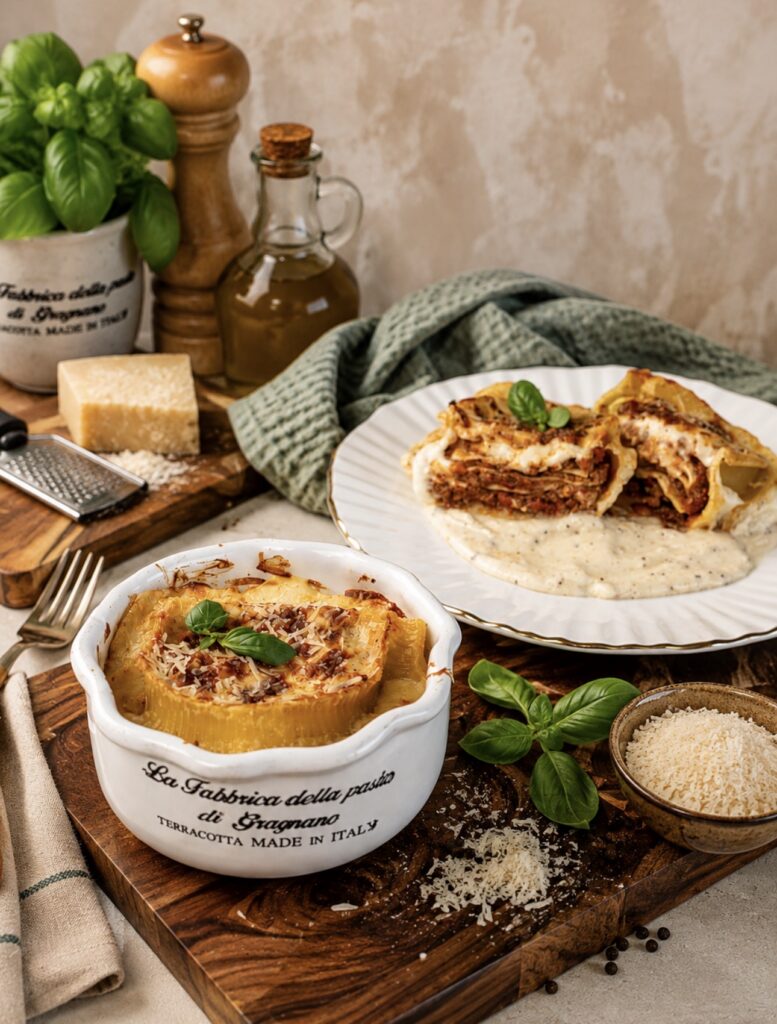
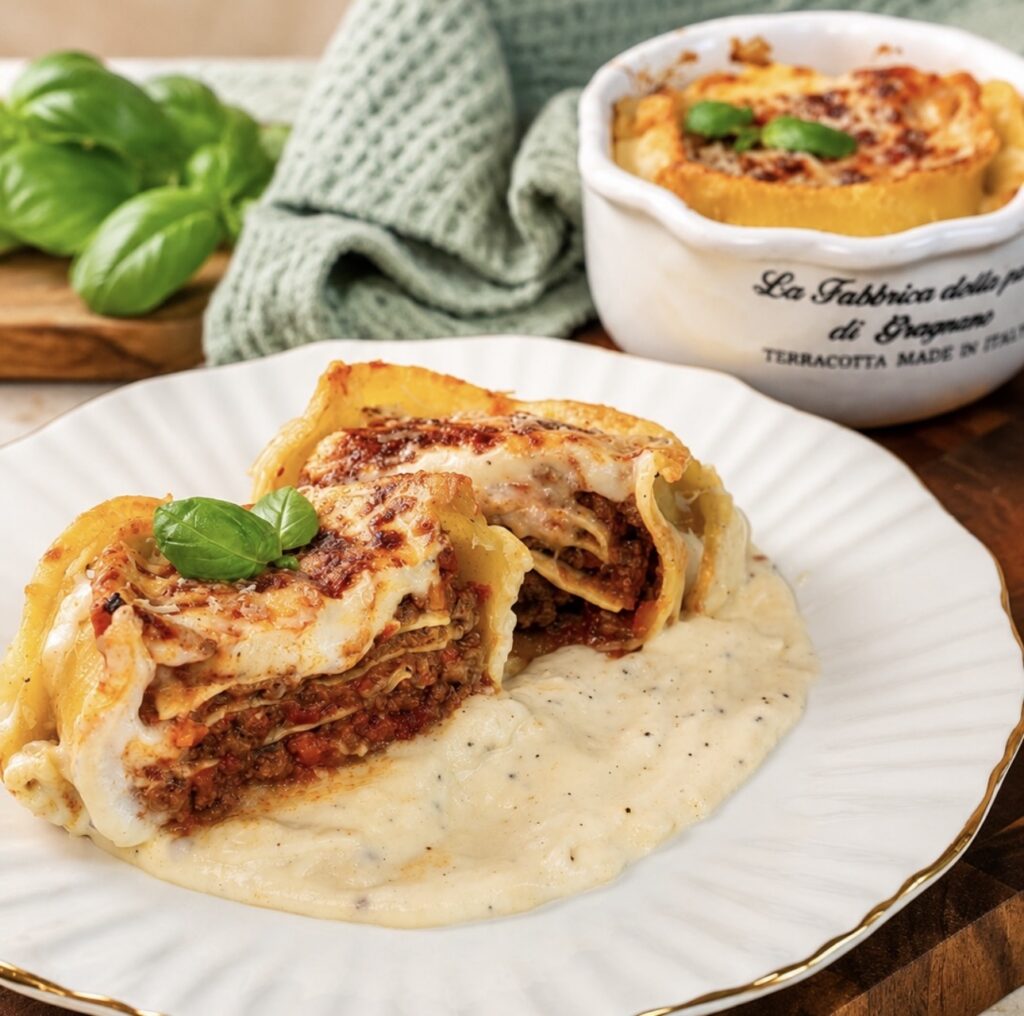
Lasagna-Stuffed Caccavelle Pasta Bake takes everything people love about traditional lasagna and builds those familiar layers inside spectacular, oversized pasta shells. Each Caccavelle is filled with slow-cooked beef ragù, small lasagna sheets and creamy Parmesan béchamel before being baked until golden and bubbling. It has the generous, comforting character of Baked Ricotta Stuffed Shells in Meat Sauce with the beautiful layered presentation of Easy Spinach and Ricotta Lasagna. The result is a rich and impressive pasta bake that feels perfect for a special dinner but is still made with dependable, familiar ingredients.
Scroll down or tap “Jump to Recipe” for the full printable recipe card with exact measurements.
Simple Ingredients, Big Flavours
This recipe is all about giving classic pasta ingredients a more dramatic presentation. The beef ragù cooks slowly until rich and concentrated, while the Parmesan béchamel adds a smooth, velvety layer between the pasta and meat sauce. Much like my Stuffed Caccavelle Pasta Bake with Ricotta and Beef and Baked Cannelloni with Beef and Mozzarella, every element has a purpose, from the aromatic vegetable base to the cheese that forms the golden finish.
Caccavelle pasta shells
These extra-large pasta shells create individual edible bowls for the lasagna layers. Cook them carefully until al dente so they remain firm enough to fill without tearing.
Mini lasagna sheets
Small lasagna sheets fit neatly inside the Caccavelle and create the layered structure. Larger sheets can be cut into pieces that sit comfortably inside the shells.
Minced beef
Beef gives the ragù its hearty, savoury base. Browning it before adding the tomatoes develops a deeper flavour and prevents the finished sauce from tasting flat.
Onion, carrot and celery
This finely chopped vegetable mixture forms the foundation of the ragù. Cooking it gently at the beginning brings natural sweetness and depth to the sauce.
Tomato paste and chopped tomatoes
Tomato paste adds concentration, while canned chopped tomatoes provide the main body of the ragù. Water allows the sauce to simmer slowly without becoming too thick too soon.
White wine vinegar
A small amount brightens the tomato sauce and balances the richness of the beef. It gives the ragù gentle acidity without adding an obvious vinegar flavour.
Milk
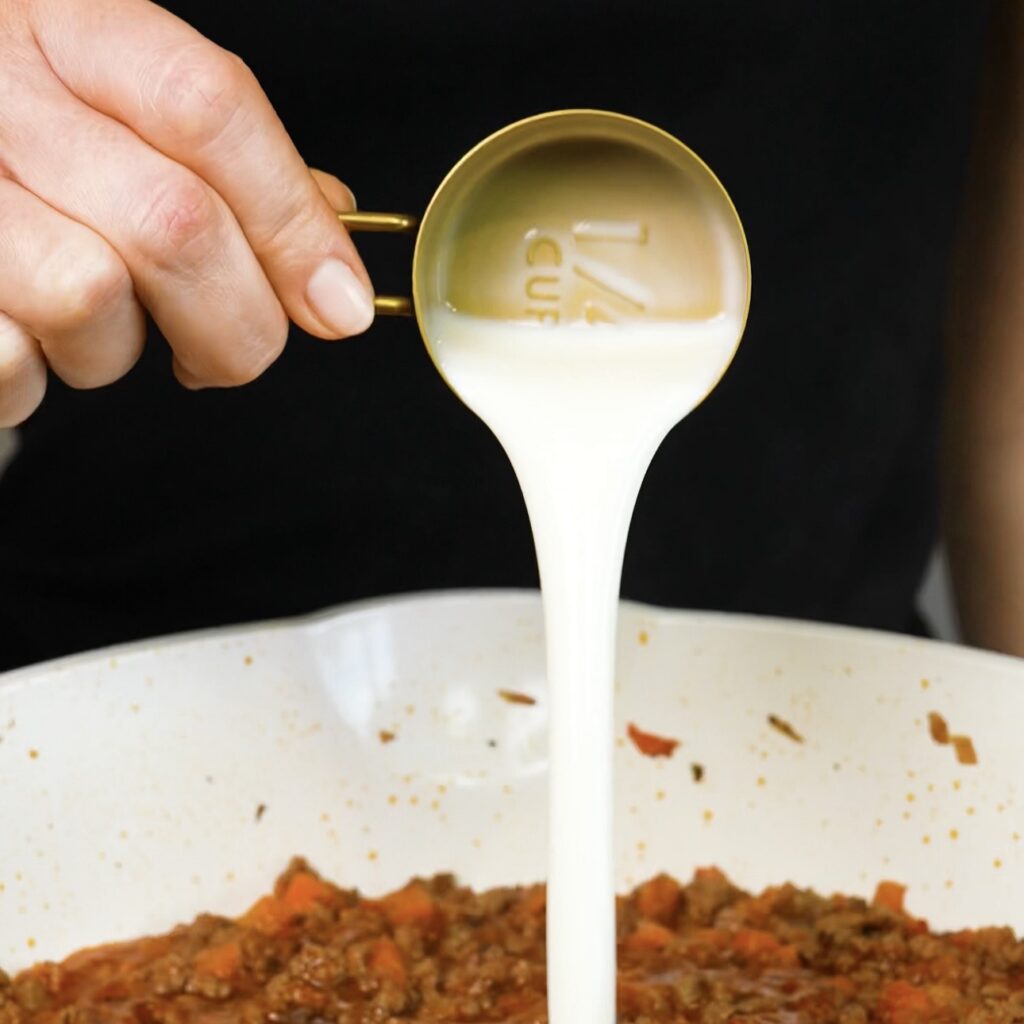
Milk is stirred into the ragù near the end of cooking. It softens the acidity of the tomatoes and gives the sauce a rounder, more balanced finish.
Butter, flour and milk
These three ingredients create the béchamel. Whisking the milk in gradually produces a smooth sauce that is thick enough to hold its place between the layers.
Shallot, bay leaf and cloves
The shallot is studded with cloves and a bay leaf, then used to infuse the béchamel as it thickens. This adds a delicate aromatic flavour without leaving pieces of onion or spice in the finished sauce.
Nutmeg and Parmesan
Nutmeg brings gentle warmth to the béchamel, while Parmesan adds saltiness and savoury depth. The cheese also helps give the sauce a rich, luxurious consistency.
Fresh basil
Basil is added after baking for freshness, colour and a light aromatic contrast to the rich ragù and béchamel.
How to Make Lasagna-Stuffed Caccavelle Pasta Bake
Start with the Parmesan Béchamel
Begin with the béchamel so it is ready when you come to assemble the Caccavelle. Melt the butter in a saucepan over a medium heat, then add the flour and whisk quickly until you have a smooth mixture. Start pouring in the milk gradually, whisking constantly as you go. Taking your time here will help you create a silky sauce without any lumps.
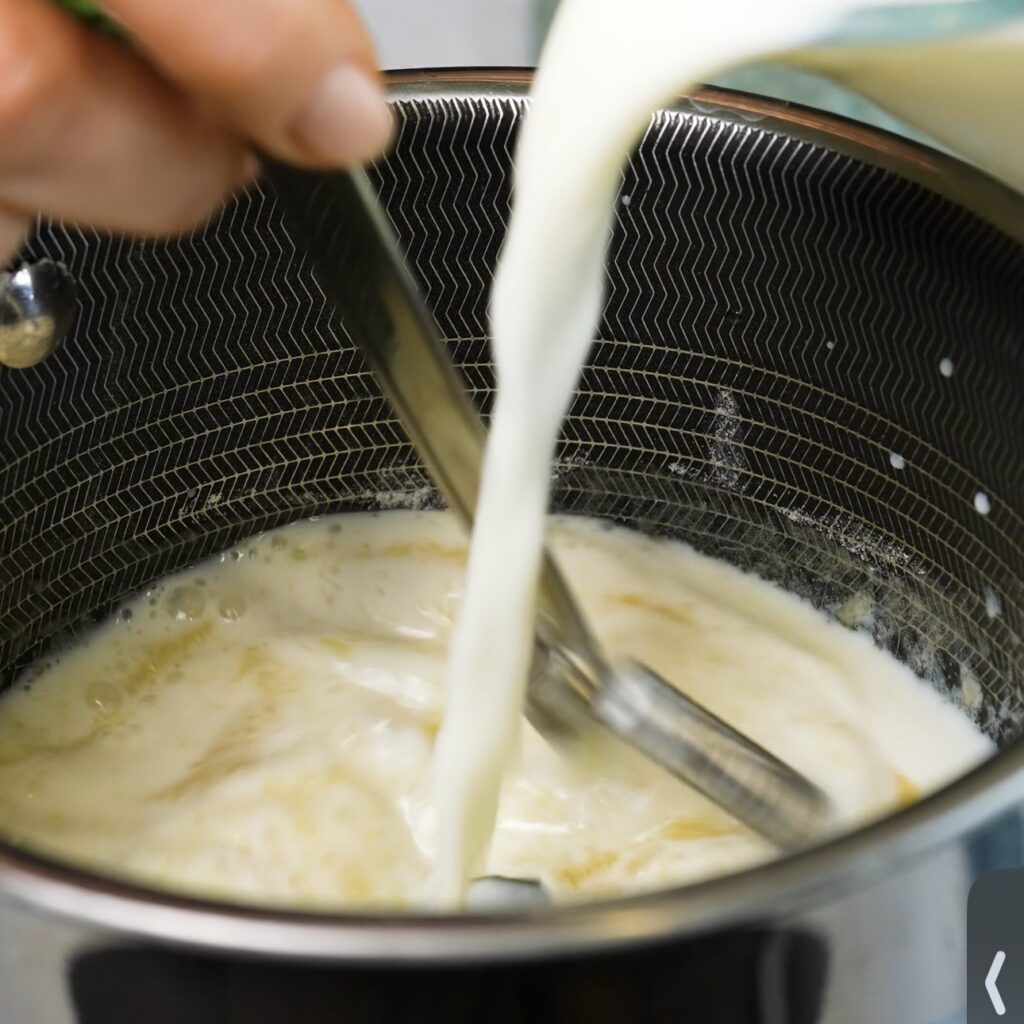
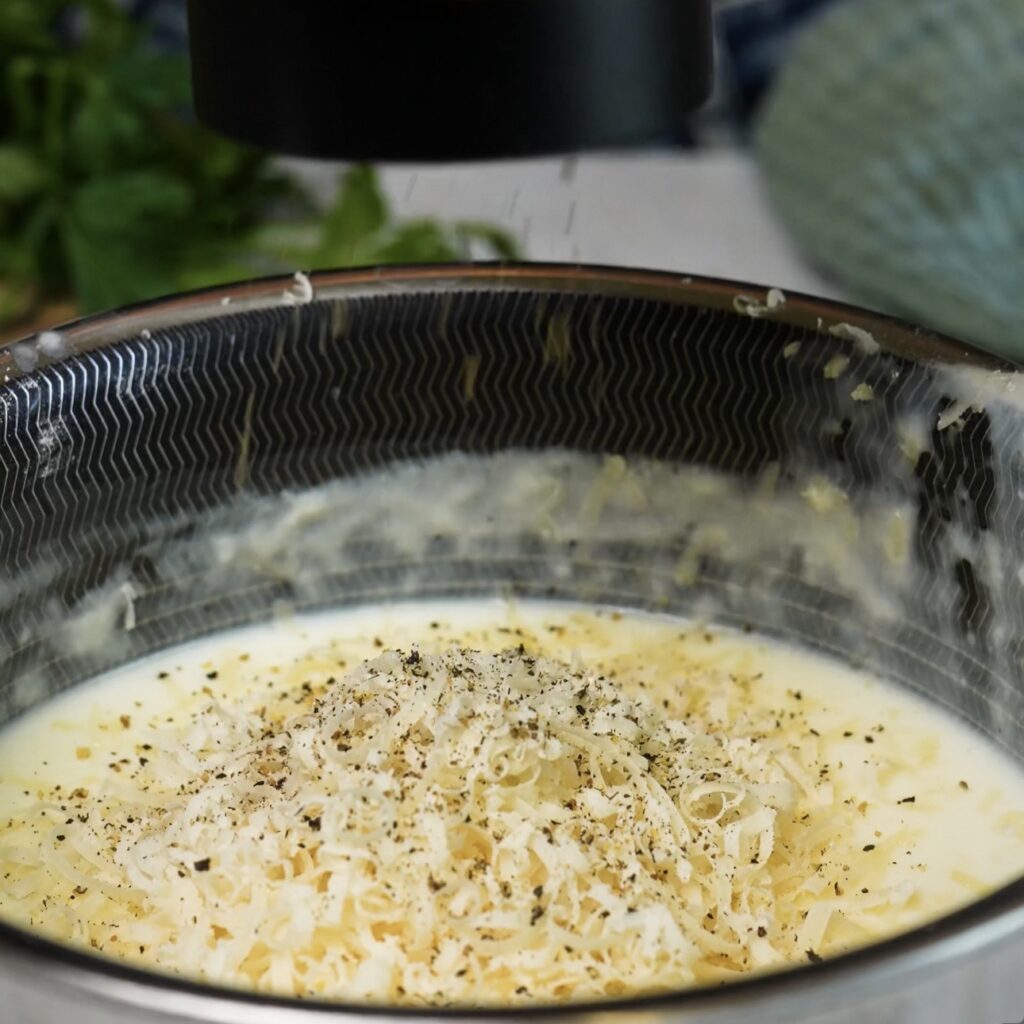
Attach the bay leaf to the shallot using the two whole cloves, then place the shallot into the saucepan. Turn the heat down low and continue cooking the sauce, stirring constantly, until it has thickened. Once the béchamel is ready, remove and discard the shallot, bay leaf and cloves. Season the sauce with salt, black pepper and ground nutmeg, then add the grated Parmesan and stir until everything is beautifully smooth and combined. Cover the saucepan and set it aside while you make the ragù.
Let the Beef Ragù Cook Slowly
Heat the olive oil in a large frying pan or casserole, then add the finely chopped onion, carrot and celery. Give everything a good stir and cook for a few minutes, just until the vegetables begin to soften. Now add the minced beef, season it with salt and black pepper, and break it up as it cooks. Leave it over the heat for around 8 minutes, stirring occasionally, until the meat is lightly browned. Stir in the tomato paste and dried oregano, making sure they are evenly mixed through the beef, then add the chopped tomatoes and water.
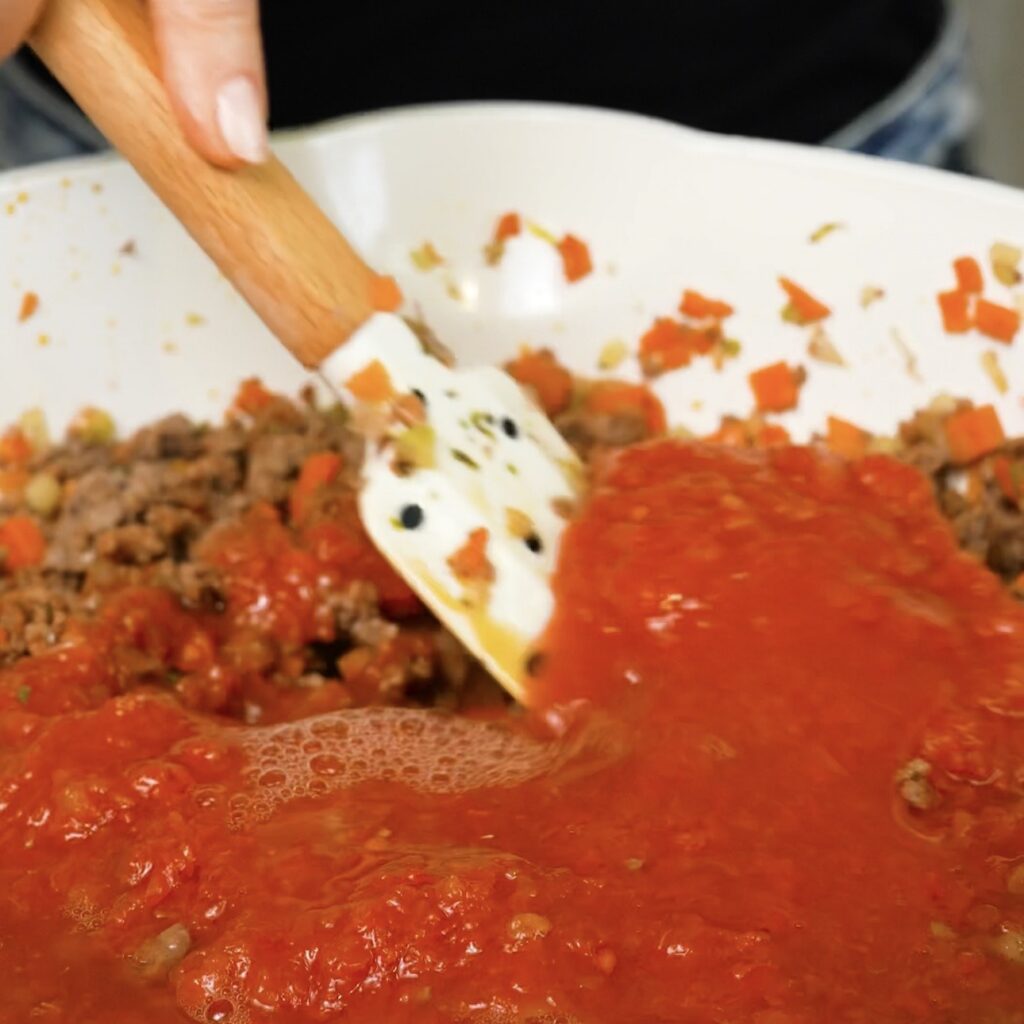
Once everything is combined, stir in the white wine vinegar and add the bay leaves. Cover the pan with a lid, turn the heat down low and let the ragù cook gently for 2½ to 3 hours. Give it a stir from time to time and check that it is not catching on the bottom of the pan. If it starts looking too dry before the cooking time is finished, simply add a small splash of water.
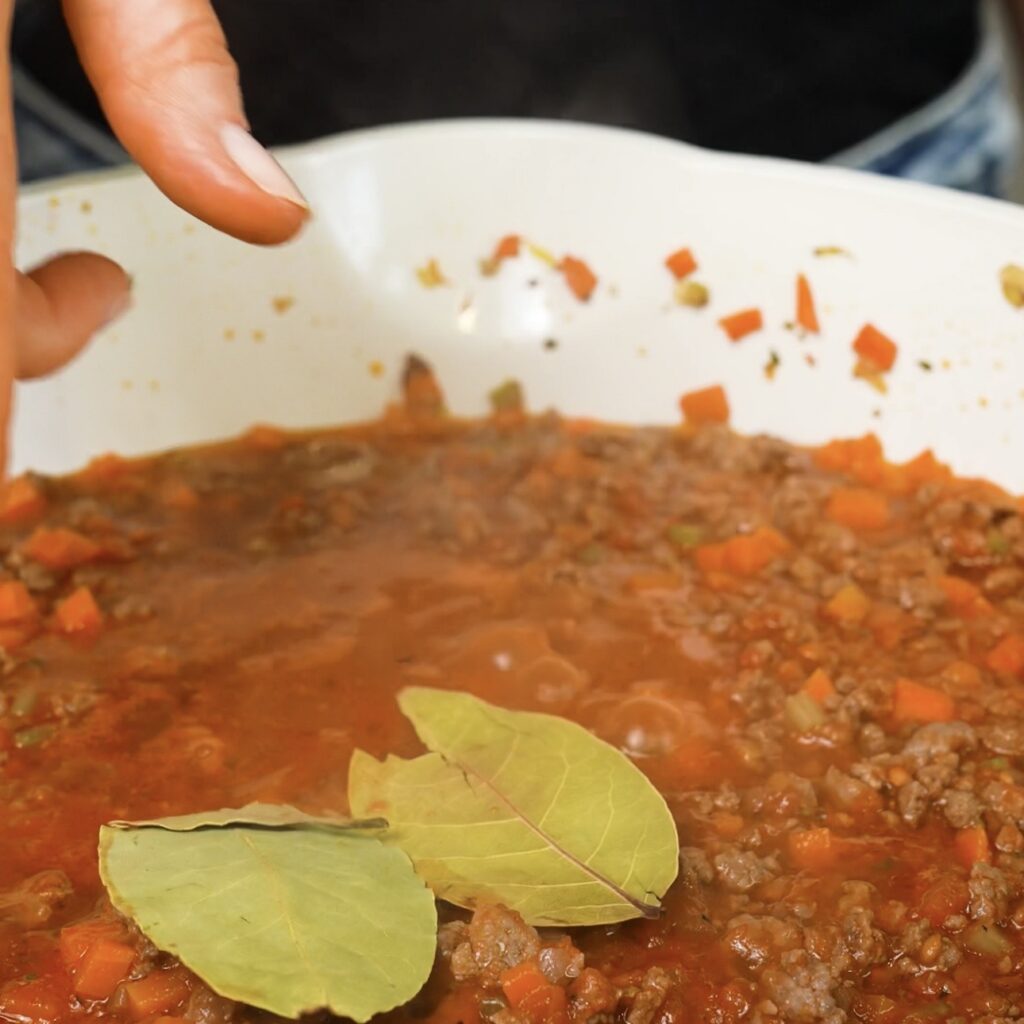
When the ragù is rich and thick, pour in the milk and mix it through. Let it cook for another 5 to 10 minutes, then taste the sauce and adjust the salt and black pepper if needed. Do not forget to remove the bay leaves before you begin assembling the pasta.
Cook the Caccavelle
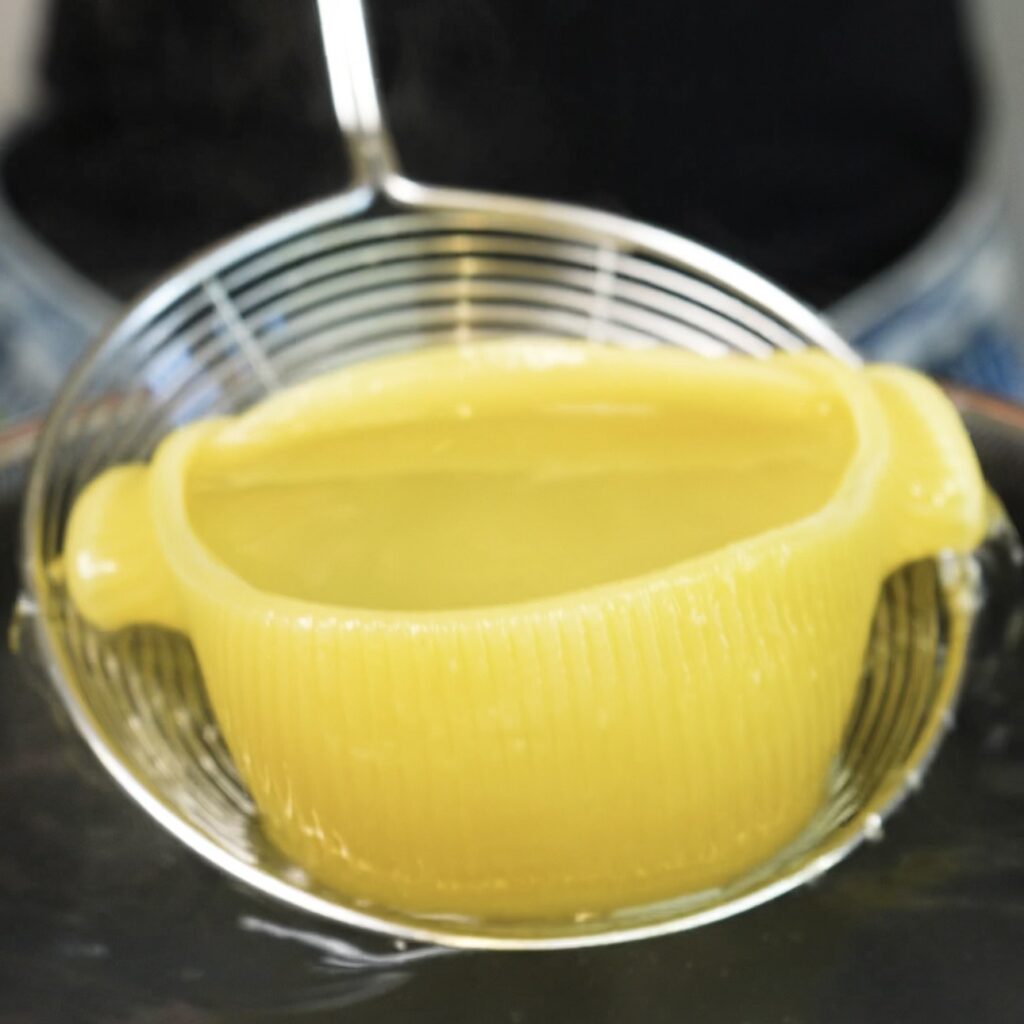
Bring a large saucepan of salted water to the boil and cook the Caccavelle until al dente, following the instructions on the packet. These shells are very large and can become delicate as they soften, so handle them gently and try not to overcook them. They still need to hold their shape while you fill them, and they will continue cooking in the oven. Carefully lift the Caccavelle from the water and leave them to drain. The Lasagna Fingers I used did not require pre-cooking, but check the instructions on your lasagna sheets. If yours need to be cooked first, prepare them at this stage. Standard-sized lasagna sheets can simply be cut into smaller pieces that fit inside the Caccavelle.
Build the Lasagna Layers
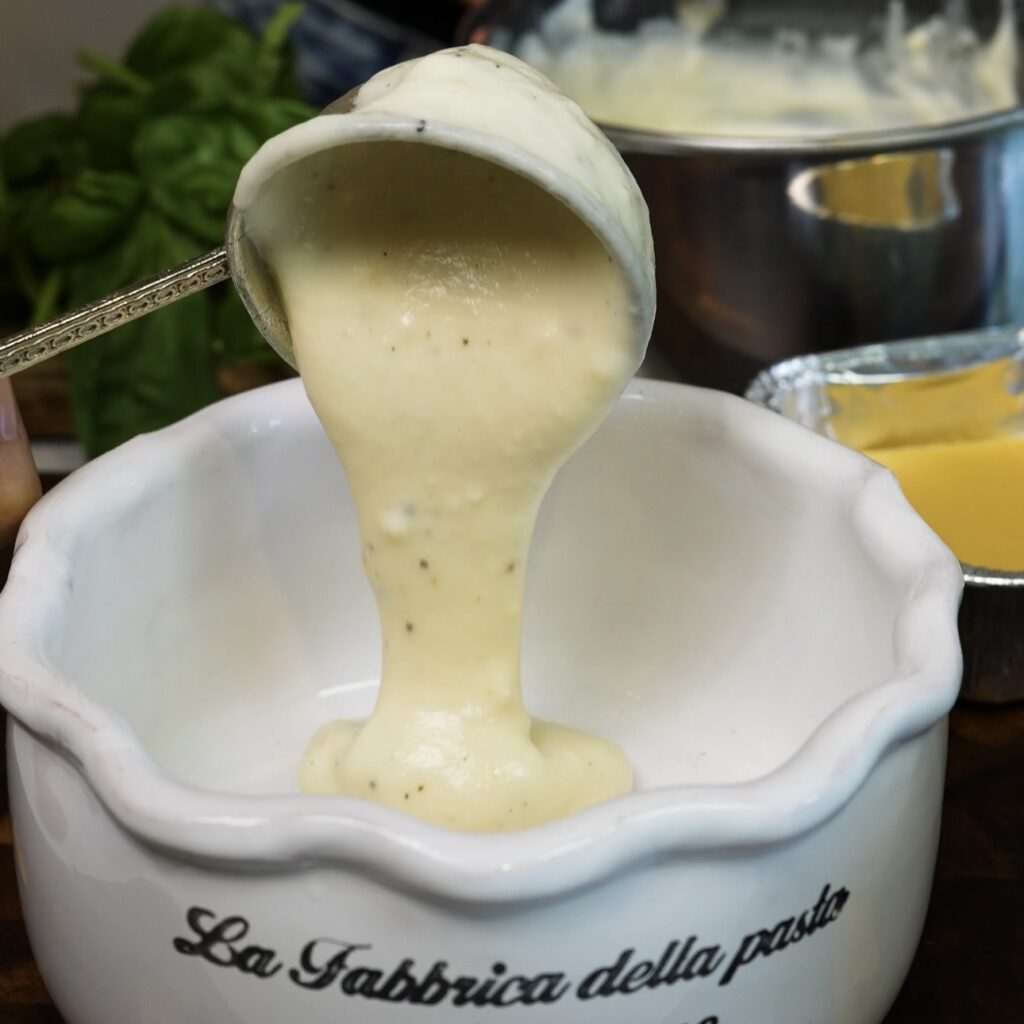
Preheat the oven to 190°C/375°F. Spoon a generous amount of béchamel over the bottom of your baking dish. You can use one large dish or four individual ovenproof dishes if you would like to serve each Caccavelle separately.
Place the cooked Caccavelle upright in the béchamel, then begin layering. Add a little beef ragù inside each shell and place one mini lasagna sheet on top. Follow it with more ragù, then add a second lasagna sheet. Spoon over another layer of ragù, add the third lasagna sheet and finish with one final layer of beef ragù.
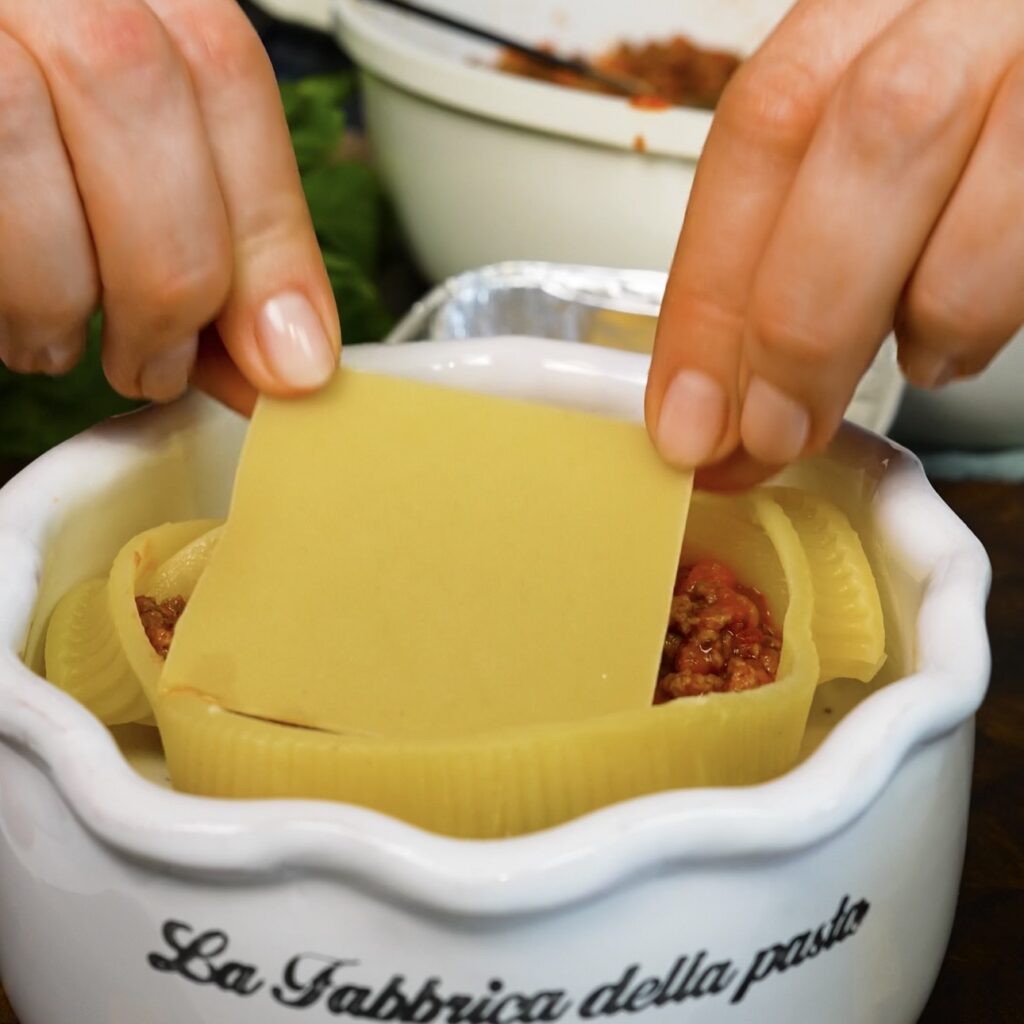
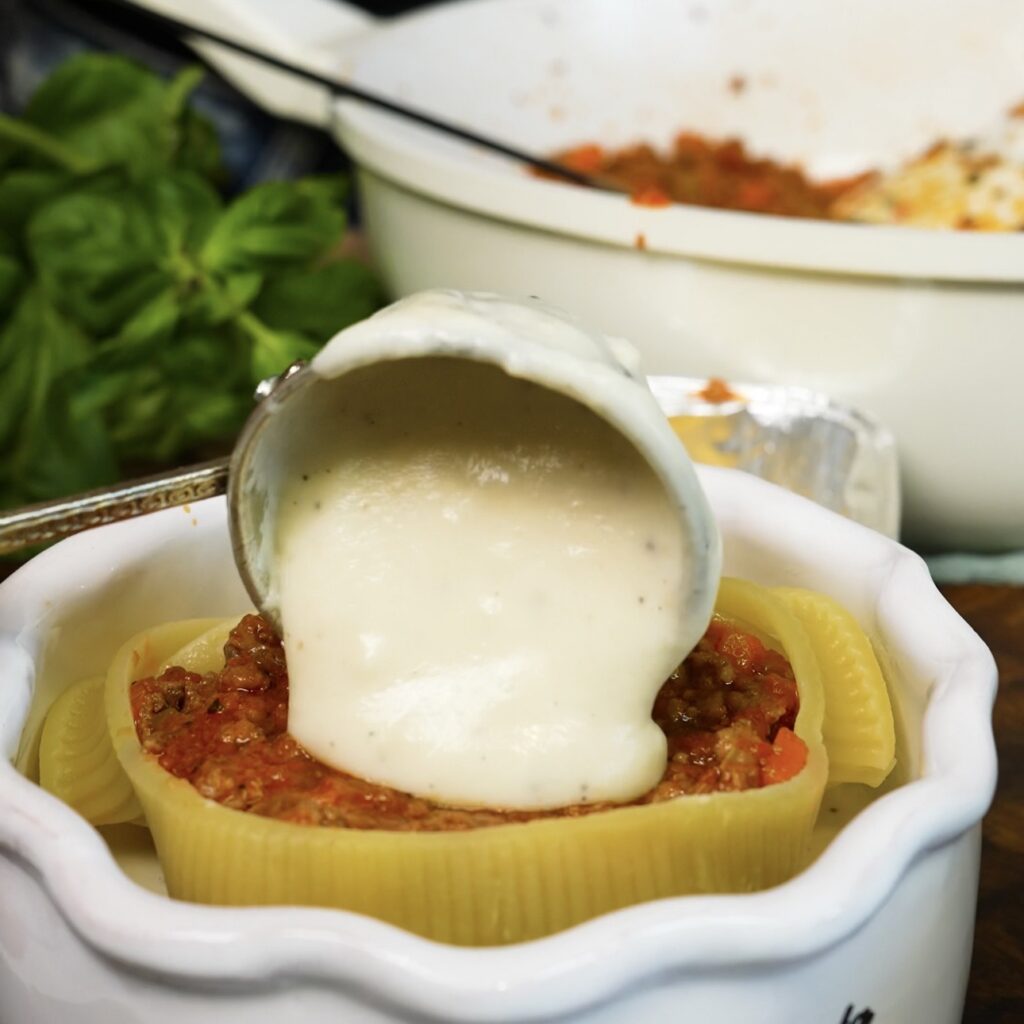
Cover the top of each filled Caccavelle with a little béchamel sauce, then repeat the same process with the remaining shells. If you have any béchamel left, pour it around the Caccavelle in the baking dish. It will keep the pasta moist as it bakes and give you extra creamy sauce to spoon around each serving.
Bake Until Golden and Bubbling
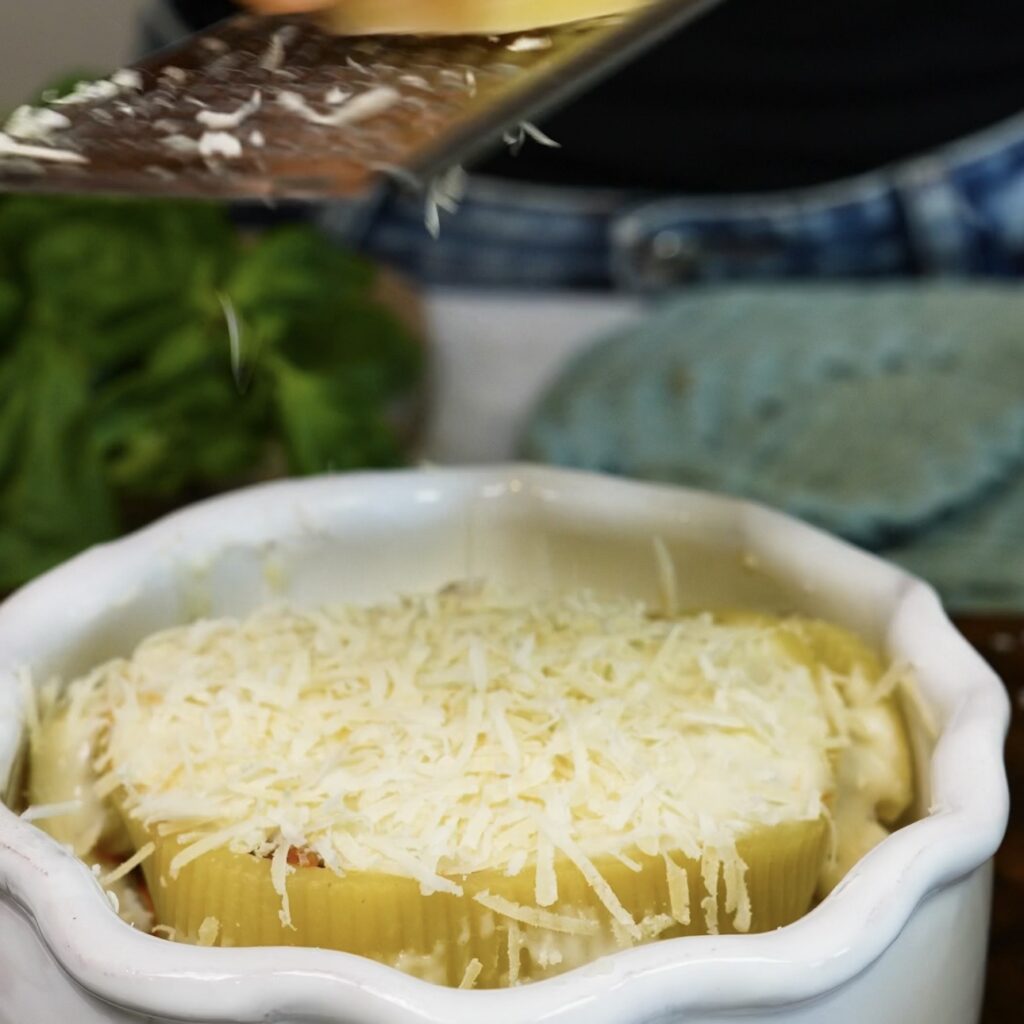
Finish everything with a generous sprinkling of grated Parmesan, then place the dish in the oven. Bake for 20 to 25 minutes, or until the béchamel is bubbling and the tops are golden.
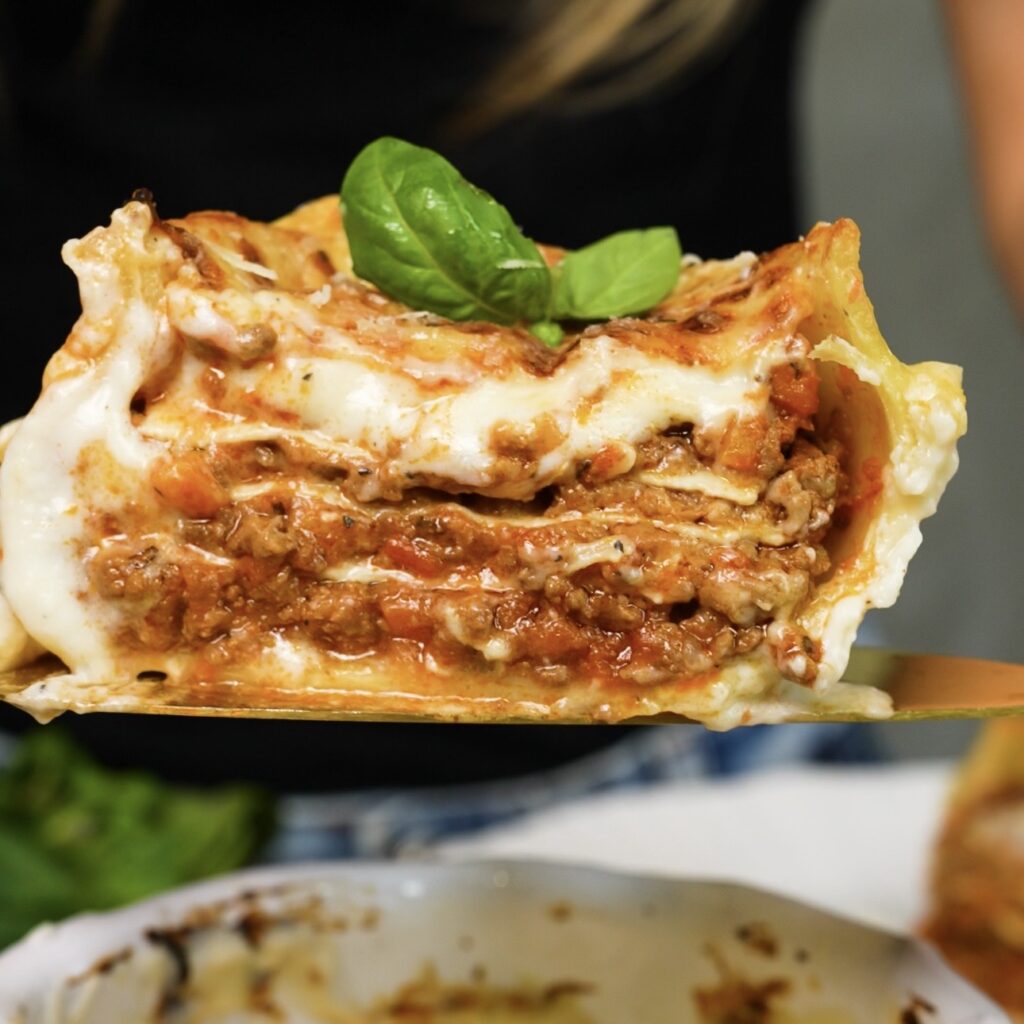
Once the pasta bake comes out of the oven, leave it to cool slightly before serving. This gives the layers a little time to settle and makes the filled shells easier to lift from the dish. Garnish with more grated Parmesan and fresh basil leaves, then serve while still warm.
Why We Love Lasagna-Stuffed Caccavelle Pasta Bake
This recipe gives traditional lasagna a completely different shape without losing the comforting qualities that make it such a favourite. The giant shells turn each serving into its own miniature lasagna, with visible layers of pasta, slow-cooked beef ragù and creamy béchamel tucked inside. The ragù brings richness and savoury depth, while the béchamel keeps the filling soft and prevents the pasta from becoming dry in the oven. It also looks incredibly impressive when served, but the assembly is straightforward once all three components are ready. Fans of oven-baked pasta will also enjoy my Stuffed Pasta Shells with Mushrooms, Ricotta and Spinach and Roasted Tomato Four-Cheese Stuffed Pasta, which use similarly generous fillings and golden baked finishes.
Perfect for Any Occasion
Lasagna-Stuffed Caccavelle Pasta Bake works beautifully for Sunday dinners, celebrations, date nights or relaxed meals with family and friends. Because each shell creates a natural individual portion, serving is much easier and neater than cutting a large tray of lasagna at the table. The ragù and béchamel can both be prepared in advance, making the final assembly more manageable when entertaining. Leftovers can be stored in the refrigerator and reheated gently until hot throughout, with a spoonful of extra sauce or a splash of water added if necessary. For easier everyday pasta inspiration, save my One-Pot Meatball Pasta and Roasted Tomato and Ricotta Pasta for your next dinner plan.
Instagram Tutorial & More
Want to see how this Lasagna-Stuffed Caccavelle Pasta Bake comes together? Watch our quick video tutorial on Instagram, and make sure you do not miss our other easy and delicious pasta recipes:
- 20-Minute Spinach Ricotta Pasta
- One-Pan Tomato Meatball Pasta
- Beetroot Cottage Cheese Pasta
- High-Protein Pea and Mint Pasta
- High-Protein Cottage Cheese Pesto Pasta
- One-Pan Tomato Meatball Pasta
- Butternut Squash Ricotta Pasta
- Courgette and Cottage Cheese Pasta
- Roasted Tomato and Cottage Cheese Fusilli
- Roasted Pepper and Ricotta Pasta
Happy cooking,
Izabella
Description
This Lasagna-Stuffed Caccavelle Pasta Bake turns oversized pasta shells into individual layered pasta bakes. Each shell is filled with rich, slow-cooked beef ragù and mini lasagna sheets, then finished with a creamy Parmesan béchamel sauce. The pasta is baked until the top is golden and the sauce is bubbling around the edges. It makes an impressive main course while still using familiar, comforting flavours. Serve it with a simple green salad or crusty bread for a generous family-style meal. It is also a great choice for entertaining because each Caccavelle creates its own ready-made portion.
Ingredients
For the Caccavelle
For the béchamel sauce
For the beef ragù
To garnish
Instructions
-
Prepare the béchamel sauce. Melt the butter in a saucepan over a medium heat. Add the flour and whisk quickly until smooth. Gradually pour in the milk, whisking constantly to prevent any lumps from forming. Secure the bay leaf to the shallot using the two cloves, then add it to the sauce. Reduce the heat to low and cook, stirring regularly, until the sauce has thickened. Remove and discard the shallot, bay leaf and cloves. Season with salt, black pepper and nutmeg, then stir in the grated Parmesan. Cover and set aside.
-
Prepare the beef ragù. Heat the olive oil in a large frying pan or casserole over a medium heat. Add the onion, carrot and celery, then cook for a few minutes, stirring occasionally, until the vegetables begin to soften. Add the minced beef, season with salt and black pepper, and cook for approximately 8 minutes, stirring and breaking up the meat, until lightly browned. Stir in the tomato paste and oregano, then add the chopped tomatoes and water. Mix well before adding the white wine vinegar and bay leaves. Cover with a lid and cook over a low heat for 2½ to 3 hours, stirring occasionally. Add the milk and continue cooking for another 5 to 10 minutes. Taste and adjust the seasoning as needed, then remove and discard the bay leaves.
-
Cook the Caccavelle in salted boiling water until al dente, following the packet instructions, then drain carefully. The Lasagna Fingers I used did not require pre-cooking. If your lasagna sheets do, cook them according to the packet instructions at this stage.
-
Preheat the oven to 190°C/375°F. Spoon a generous layer of béchamel sauce over the bottom of a baking dish. You can use four individual serving dishes or one large baking dish. Arrange the al dente Caccavelle in the dish.
-
Spoon a little beef ragù into each Caccavelle shell, then place one mini lasagna sheet on top. Add another layer of ragù, followed by a second lasagna sheet and more ragù. Top with the third lasagna sheet, another spoonful of ragù and enough béchamel sauce to cover the top. Repeat with the remaining Caccavelle, lasagna sheets, beef ragù and béchamel sauce. Pour any remaining béchamel around the pasta shells.
-
Sprinkle generously with grated Parmesan and bake for 20 to 25 minutes, or until golden and bubbling. Leave to cool slightly before serving, then garnish with additional grated Parmesan and fresh basil leaves.
Nutrition Facts
Servings: 4 ServingCalories:886.37kcalTotal Fat:38.64gCholesterol:155.88mgSodium:511.83mgPotassium:1411.61mgTotal Carbohydrate:84.46gDietary Fiber: 6.41gSugars: 22.05gProtein:51.21gVitamin A: 439.91IUVitamin C: 18.4mgCalcium: 530.59mgIron: 5.1mgVitamin D: 3.72IUVitamin E: 2.42IUVitamin K: 16.3mcgVitamin B6: 1.16mgVitamin B12: 4.22mcgPhosphorus: 761.85mgMagnesium: 119.85mgZinc: 9.43mg
Note
- Caccavelle pasta: Caccavelle are very large, delicate pasta shells, so handle them carefully while cooking and draining. Cook them only until al dente, as they will continue to soften in the oven. Avoid overcooking them, or they may tear and become difficult to fill.
- Cooking the pasta: Use a large saucepan with plenty of salted boiling water so the Caccavelle have enough room to move without sticking together. Stir very gently during cooking, then lift each shell out individually using a slotted spoon rather than tipping everything into a colander.
- Lasagna sheets: I used Lasagna Fingers from La Fabbrica della Pasta, which did not require pre-cooking. Check the instructions on your lasagna sheets, as some varieties must be cooked before assembling. Larger sheets can be cut into pieces that fit comfortably inside the Caccavelle.
- Beef ragù cooking time: Cook the ragù slowly over a low heat for 2½ to 3 hours to develop a deep, rich flavour and tender texture. Stir it occasionally and check that it is not catching on the bottom of the pan. Add a small splash of water if it becomes too dry before the cooking time is complete.
- Ragù consistency: The finished ragù should be thick enough to layer inside the pasta without releasing too much liquid. If it still looks watery after adding the milk, cook it uncovered for a few extra minutes until it thickens.
- Adding milk to the ragù: The milk is added near the end of cooking to soften the acidity of the tomatoes and give the sauce a rounder, richer flavour. Stir it in well and allow the ragù to cook for another 5 to 10 minutes before tasting and adjusting the seasoning.
- Béchamel consistency: The béchamel should be smooth, creamy and thick enough to coat the back of a spoon. Keep whisking while gradually adding the milk to prevent lumps. If the sauce becomes too thick while standing, whisk in a small splash of milk before assembling the dish.
- Infusing the béchamel: Securing the bay leaf to the shallot with the whole cloves makes the aromatics easy to remove after cooking. Make sure you discard the shallot, bay leaf and both cloves before adding the Parmesan.
- Seasoning: Taste both the ragù and béchamel before assembling the pasta. Parmesan is naturally salty, so season gradually and adjust the salt only after the cheese has been added.
- Assembling the Caccavelle: Do not overfill the shells with each layer. Add just enough ragù to cover each lasagna sheet, leaving room for all three pasta layers and the béchamel topping.
- Choosing the baking dish: The recipe can be prepared in four individual ovenproof dishes or one large baking dish. Make sure the Caccavelle sit upright and fit closely enough that they remain stable while baking.
- Extra béchamel sauce: Pour any remaining béchamel around the Caccavelle before baking. This prevents the bottoms of the pasta shells from drying out and creates a creamy sauce for serving.
- Make-ahead option: The beef ragù and béchamel can be prepared one day in advance and stored separately in airtight containers in the refrigerator. Reheat the béchamel gently and whisk in a little milk if needed before assembling the dish.
- Baking from chilled: If the entire dish is assembled in advance and refrigerated, allow it to stand at room temperature while the oven preheats. It may require an additional 5 to 10 minutes of baking time to become thoroughly heated and bubbling.
- Serving: Allow the pasta bake to rest for 5 to 10 minutes after removing it from the oven. This helps the layers settle slightly and makes the Caccavelle easier to serve without falling apart.