

Meat-Stuffed Flatbread (Azerbaijani Qutab): Thin, Golden and Packed with Juicy Beef
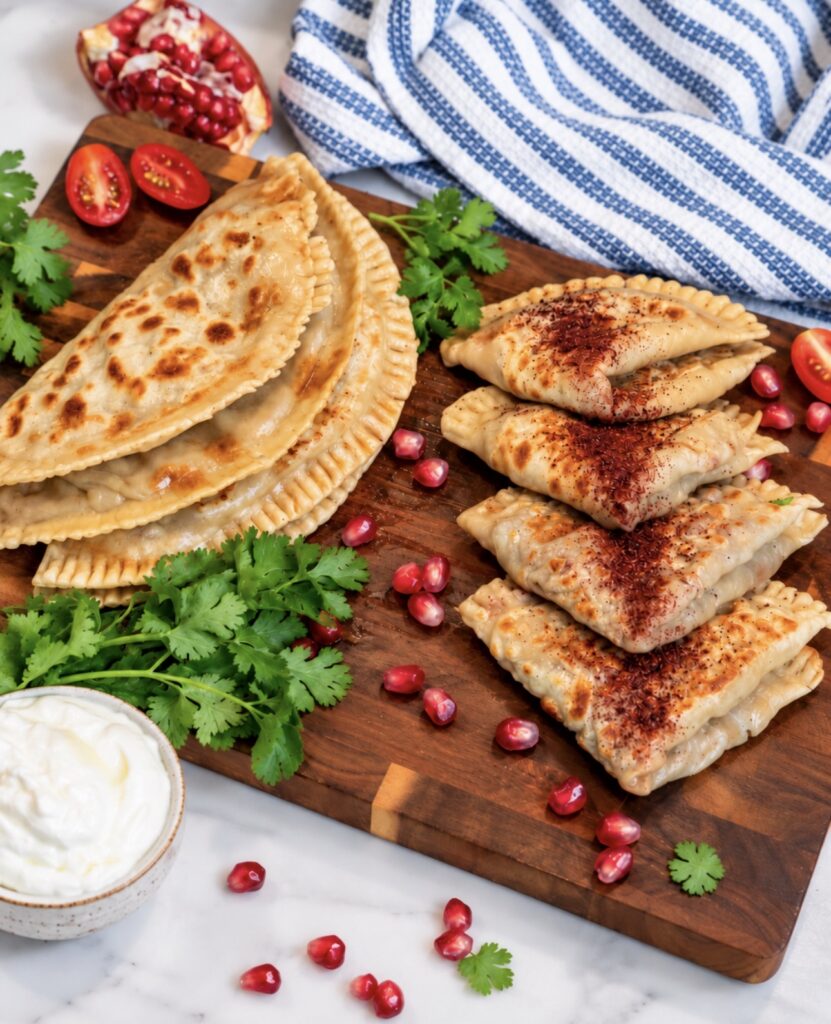
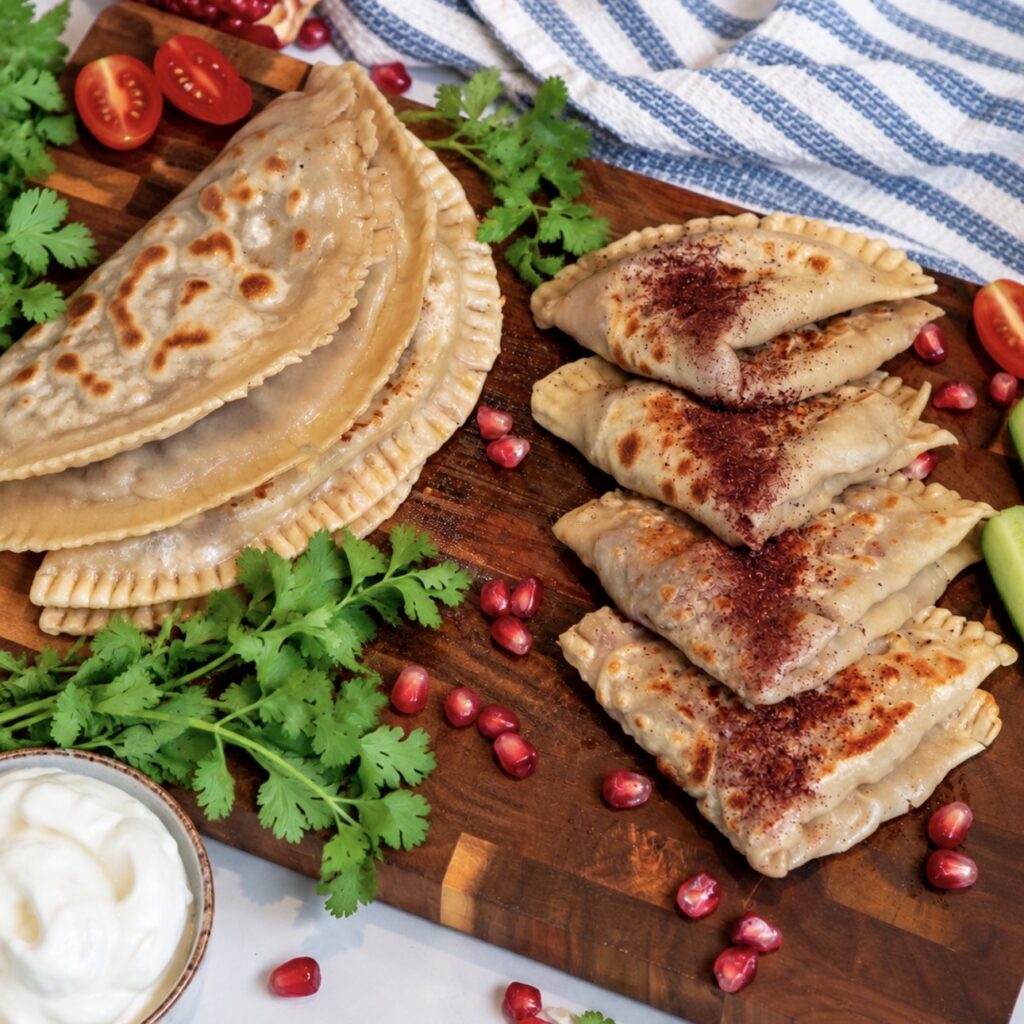
If you love stuffed breads, this Meat-Stuffed Flatbread, better known as Azerbaijani Qutab, deserves a place on your must-try list. A paper-thin layer of homemade dough is wrapped around seasoned minced beef, grated onion and little bursts of fresh pomegranate, then cooked in a dry frying pan until beautifully golden. Finished with melted butter and tangy sumac and served with cool plain yoghurt, every bite combines savoury, buttery, fresh and slightly tart flavours. Meat qutab is a well-known Azerbaijani preparation traditionally made with thin folded dough and beef or lamb, often accompanied by pomegranate, sumac and yoghurt. If homemade stuffed breads are your thing, you should also try my Spinach and Feta Flatbreads or the homemade pita in my Greek Chicken Souvlaki.
Scroll down or tap ‘Jump to Recipe’ for the full printable recipe card with exact measurements and step-by-step instructions.
Simple Ingredients, Big Flavours
One of the things I love most about Azerbaijani Qutab is how such a short ingredient list can create so much flavour. There is no yeast, no lengthy proofing and no complicated sauce. The dough needs only flour, water and salt, while the filling relies on good beef, onion, seasoning and pomegranate to do the work. If you enjoy recipes where a simple dough becomes the star, my No-Knead Sun-Dried Tomato and Rosemary Bread Twists and Peppery Cheddar Breadsticks are two more recipes worth trying.
- Bread flour – Gives the dough enough strength and elasticity to be rolled extremely thin without tearing easily. Keep a little extra nearby for dusting the work surface.
- Water – Brings the dough together. Different flour brands absorb liquid differently, so you may need slightly more or less than the stated amount.
- Salt – A small amount is all you need to season the simple dough and bring out its flavour.
- Minced beef – Forms the savoury heart of the qutab. Spread it in a very thin layer so it cooks completely while the flatbread becomes golden.
- Onion – Grated onion blends directly into the minced beef, adding moisture, flavour and subtle sweetness to the filling.
- Pomegranate seeds – These little juicy bursts add freshness and a slightly sweet-tart contrast to the rich beef. Fold them through gently so they remain intact.
- Butter – Brushing each hot qutab with melted butter softens the surface slightly and gives it a beautifully rich finish.
- Sumac – Its bright, tangy flavour cuts through the richness of the beef and butter and is the perfect finishing seasoning.
- Plain yoghurt – Cool and creamy yoghurt balances the warm, savoury flatbread and makes a simple dipping sauce without needing any extra preparation.
How to Make Meat-Stuffed Flatbread (Azerbaijani Qutab)
Making Azerbaijani Qutab is straightforward, but a few small details make a big difference. The dough needs to be soft and elastic, it should be rolled exceptionally thin, and the beef filling must be spread in a very thin layer. Keeping the remaining dough covered while you work and controlling the temperature of the frying pan will also help you achieve evenly cooked, beautifully golden flatbreads.
Prepare the Dough
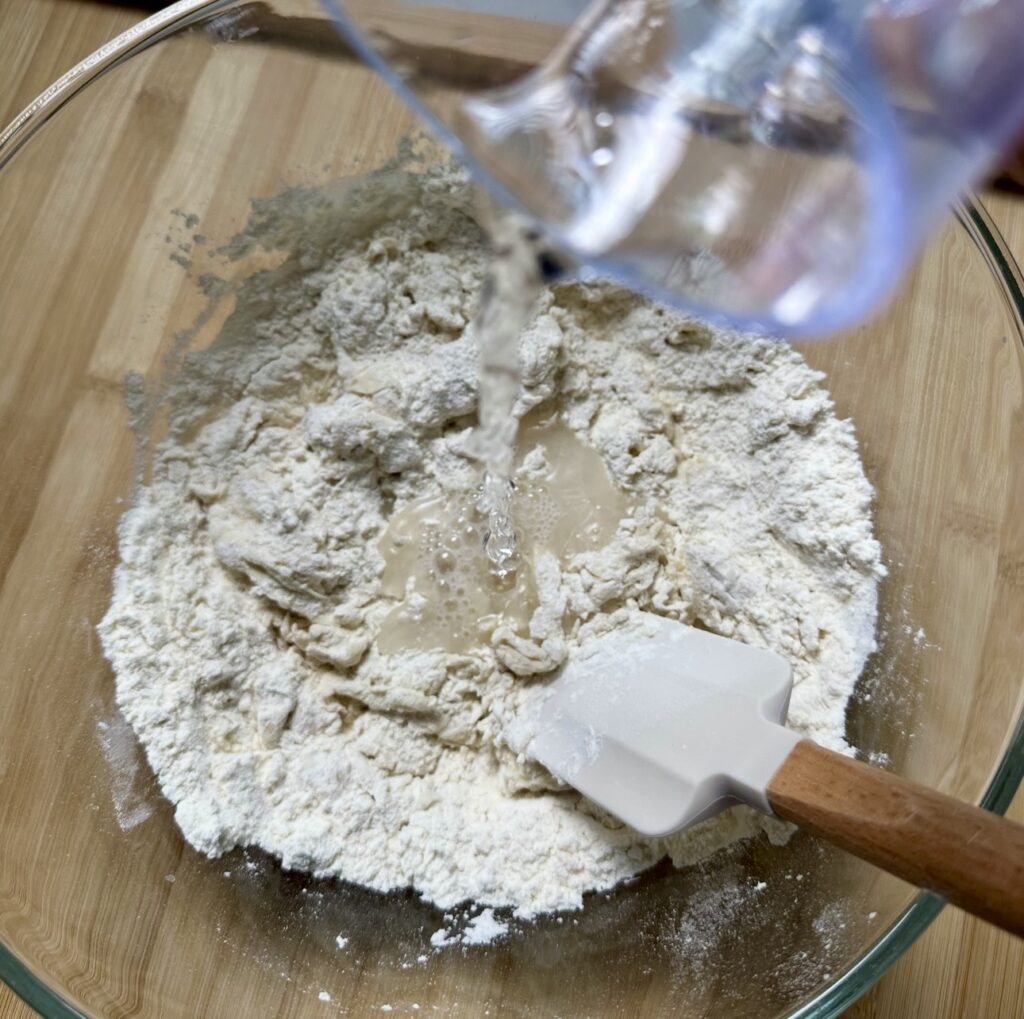
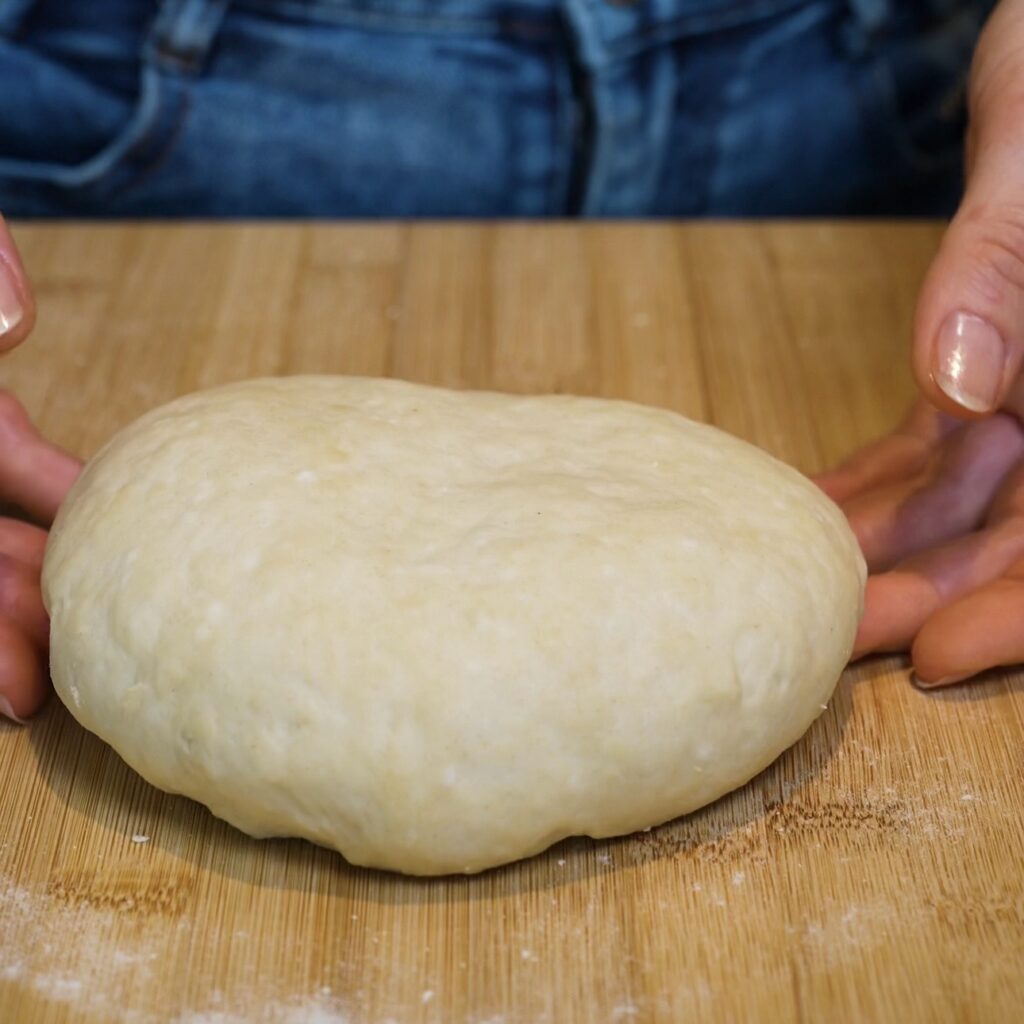
Add the bread flour and salt to a large bowl and mix well. Gradually pour in the water, mixing first with a spoon as the flour begins to absorb the liquid. Once the mixture starts coming together, continue mixing with your hands until a rough dough forms. The exact amount of water can vary slightly depending on the brand of flour you use, as different flours absorb moisture differently. If the mixture still feels too dry, add a little more water, approximately 1 tablespoon at a time. Avoid adding too much at once. You want a soft dough that comes together easily without becoming overly sticky.
Transfer the dough to your work surface and knead for approximately 5–10 minutes. Continue until it becomes smooth, soft and elastic. Once kneaded, cover the dough and leave it to rest for 20–30 minutes. Resting is important because it relaxes the gluten, which makes the dough considerably easier to roll into the very thin rounds needed for qutab.
Prepare the Beef and Pomegranate Filling
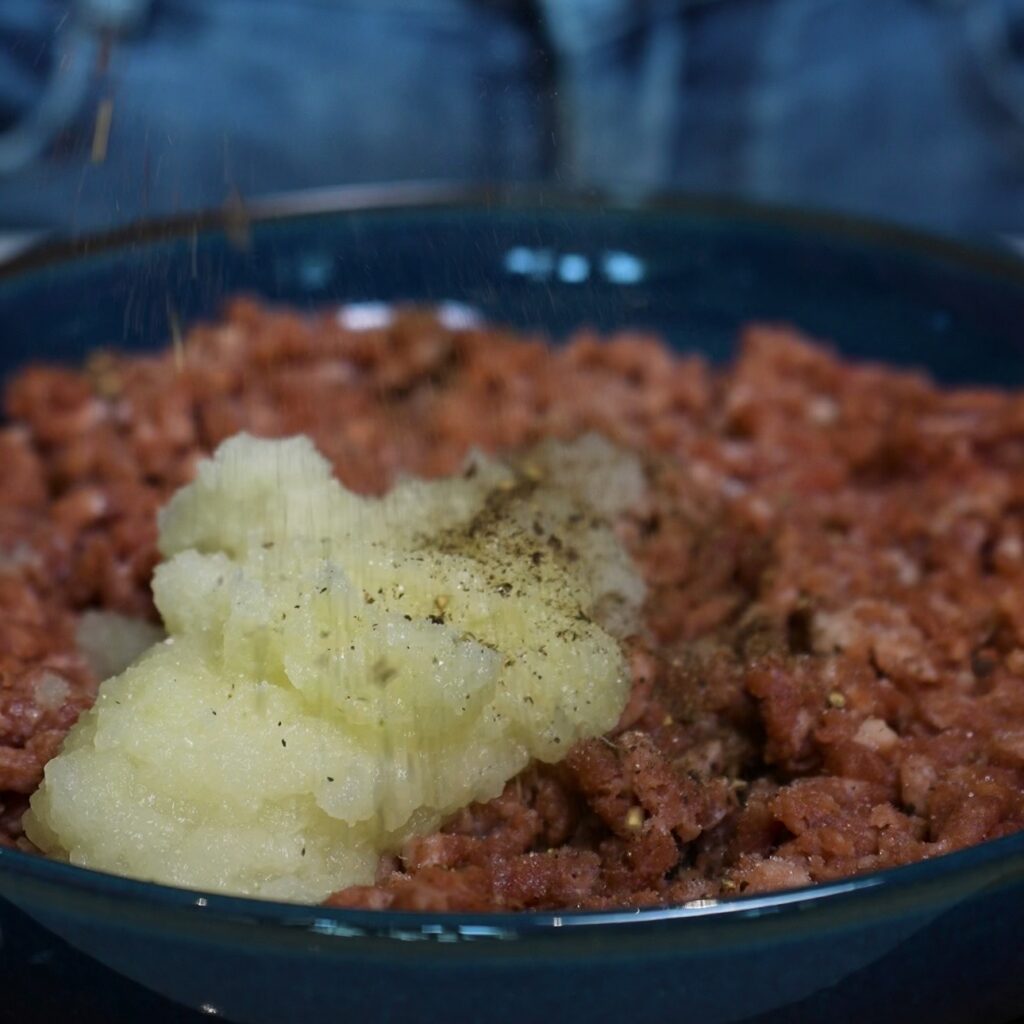
While the dough is resting, prepare the filling. Place the minced beef in a bowl and add the grated onion. Season with salt and black pepper to taste, then mix thoroughly so the onion and seasoning are evenly distributed throughout the beef.
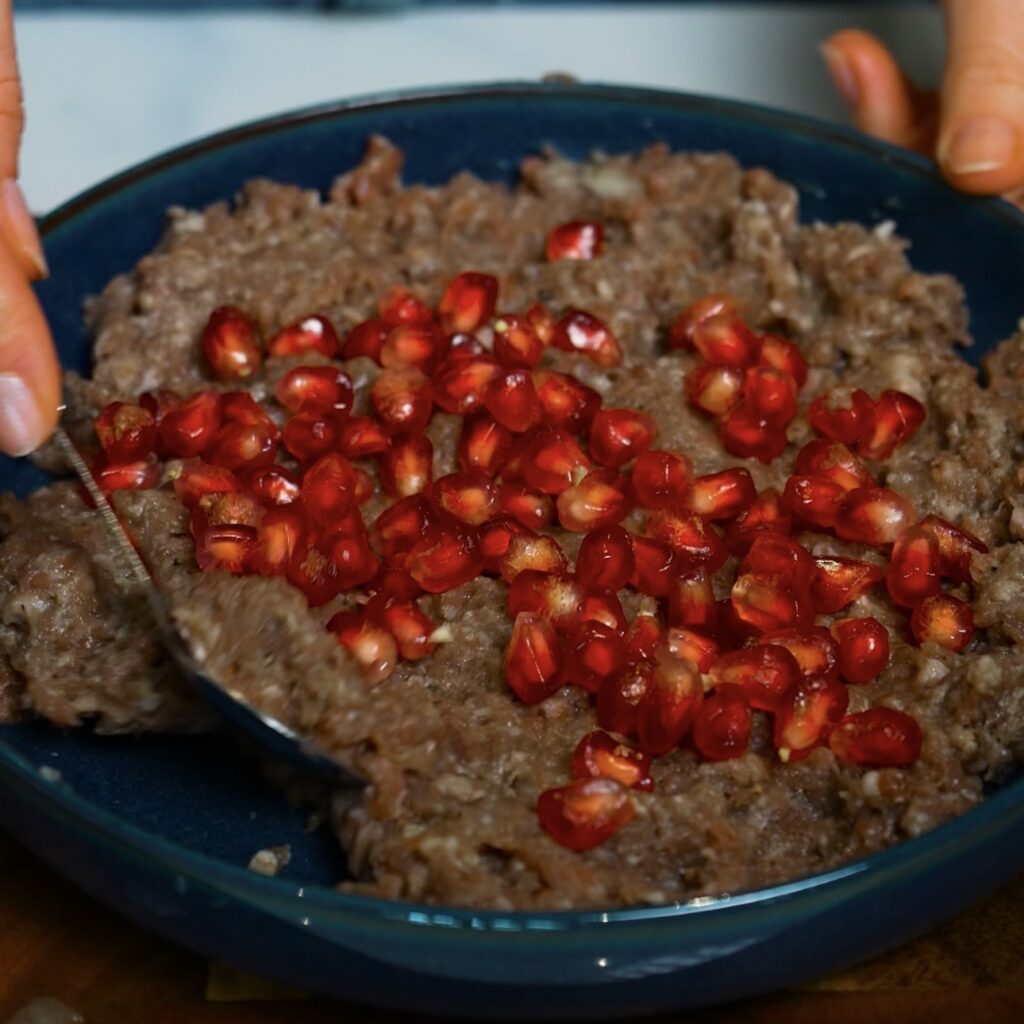
Add the pomegranate seeds and gently fold them into the mixture. Try not to crush them as you mix, as keeping the seeds intact gives the cooked qutab little bursts of fresh, slightly sweet and tart flavour. Set the filling aside while you finish preparing the dough.
Divide and Shape the Dough
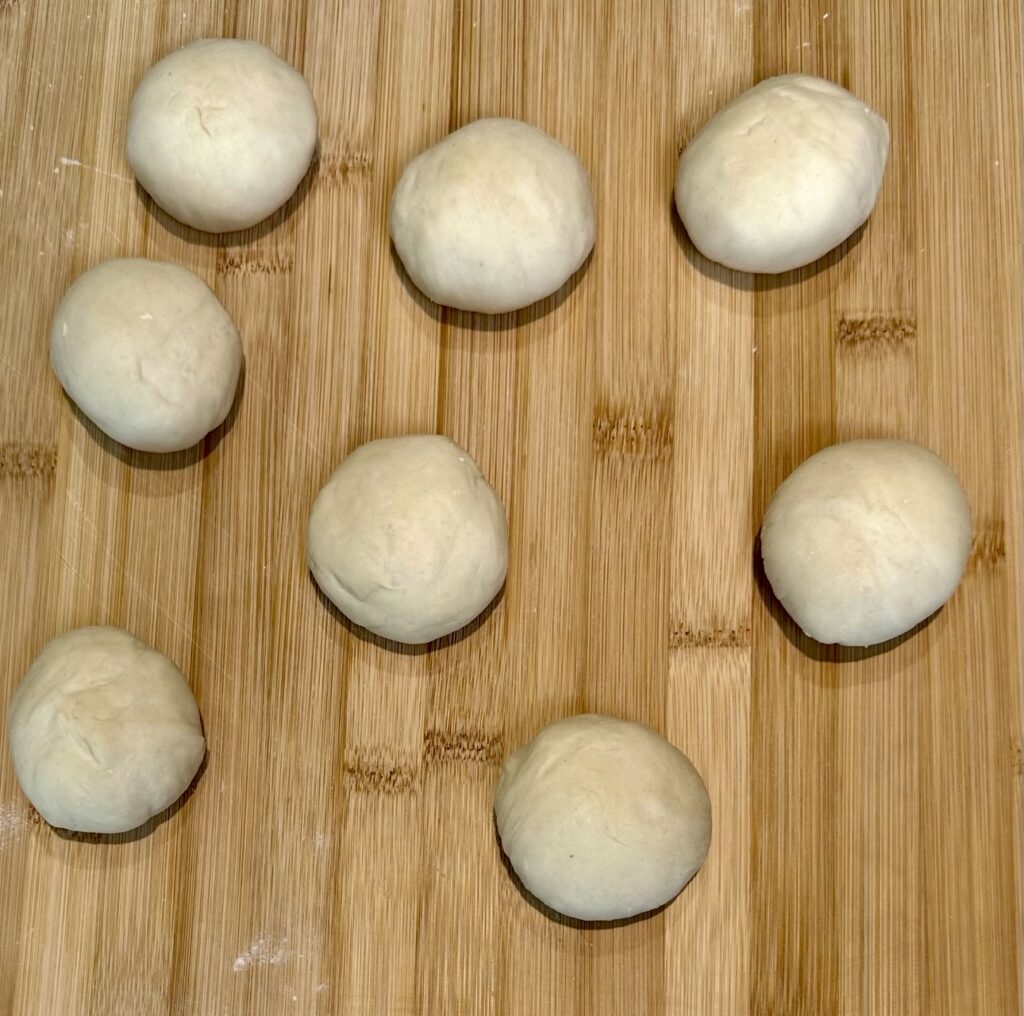
Once the dough has rested, give it a light knead. Divide it into 8 equal portions and shape each portion into a smooth ball. Work with one dough ball at a time and keep all the remaining pieces covered while you roll and fill each qutab. This is important because the small pieces of dough can dry out quite quickly when exposed to the air. The rested dough should feel soft, smooth and elastic. Lightly dust your work surface with flour before rolling. You only need a small amount, so add more flour whenever you notice the dough beginning to stick rather than covering the surface heavily from the beginning.
Roll the Dough Very Thinly
Using a rolling pin, roll one dough ball into a very thin circle approximately 20–22 cm in diameter. The dough should be around 0.5–1 mm thick. The thinness of the dough is one of the most important parts of making qutab. You want the finished flatbread to have a delicate layer of dough rather than a thick, bread-like casing around the filling.
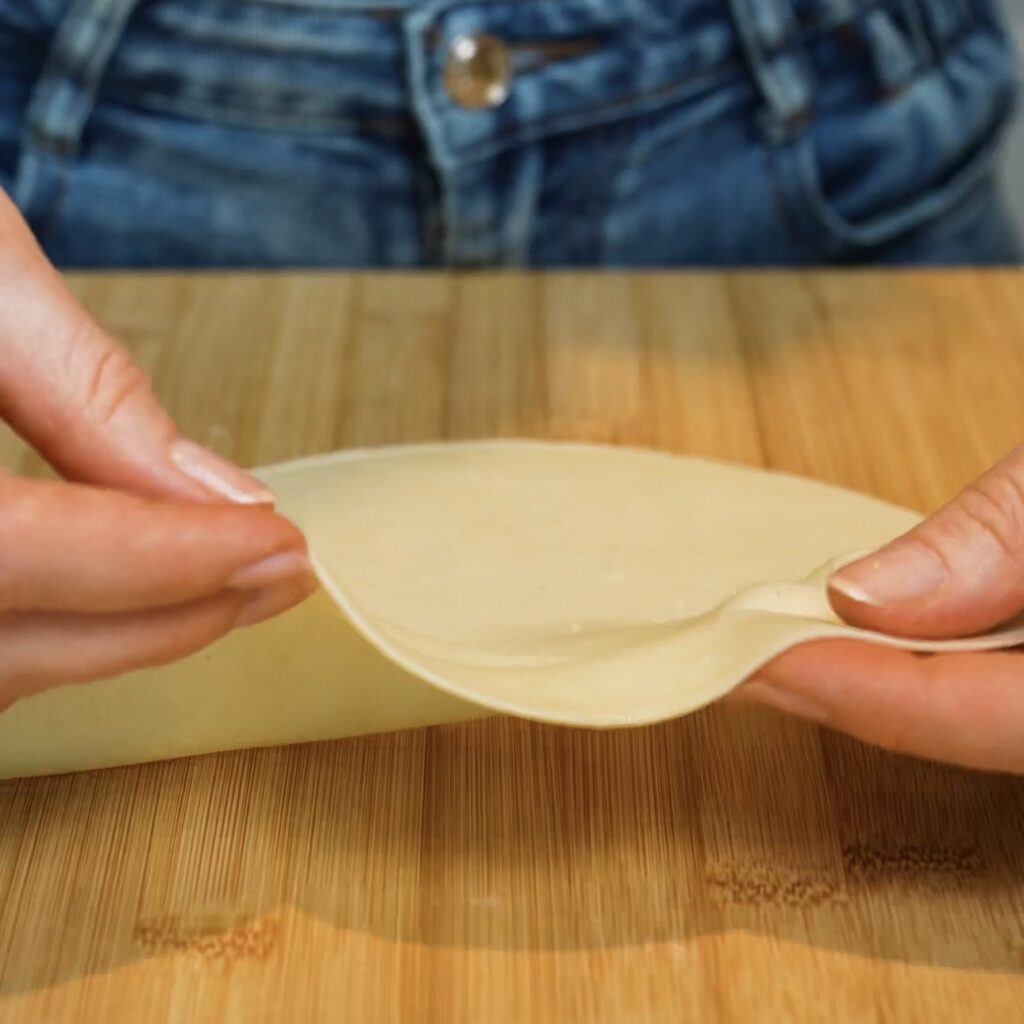
For a particularly neat and uniform appearance, place a plate measuring approximately 20–22 cm over the rolled dough. Use a sharp knife to cut around the edge of the plate, creating a clean, even circle. Repeat this process for each portion of dough, remembering to keep any dough you are not currently working with covered.
Fill and Fold the Qutab
Place a small amount of the beef filling over one half of the rolled dough circle. Spread it into a very thin, even layer, making sure the meat reaches close to the edges while still leaving enough clear dough around the outside to create a good seal. Do not add too much filling. Because the qutab cook relatively quickly in a frying pan, the beef layer needs to remain thin enough to cook completely before the dough becomes too dark. Fold the empty half of the dough over the filling to create a half-moon shape. Carefully press the edges together firmly with your fingers to seal the flatbread.
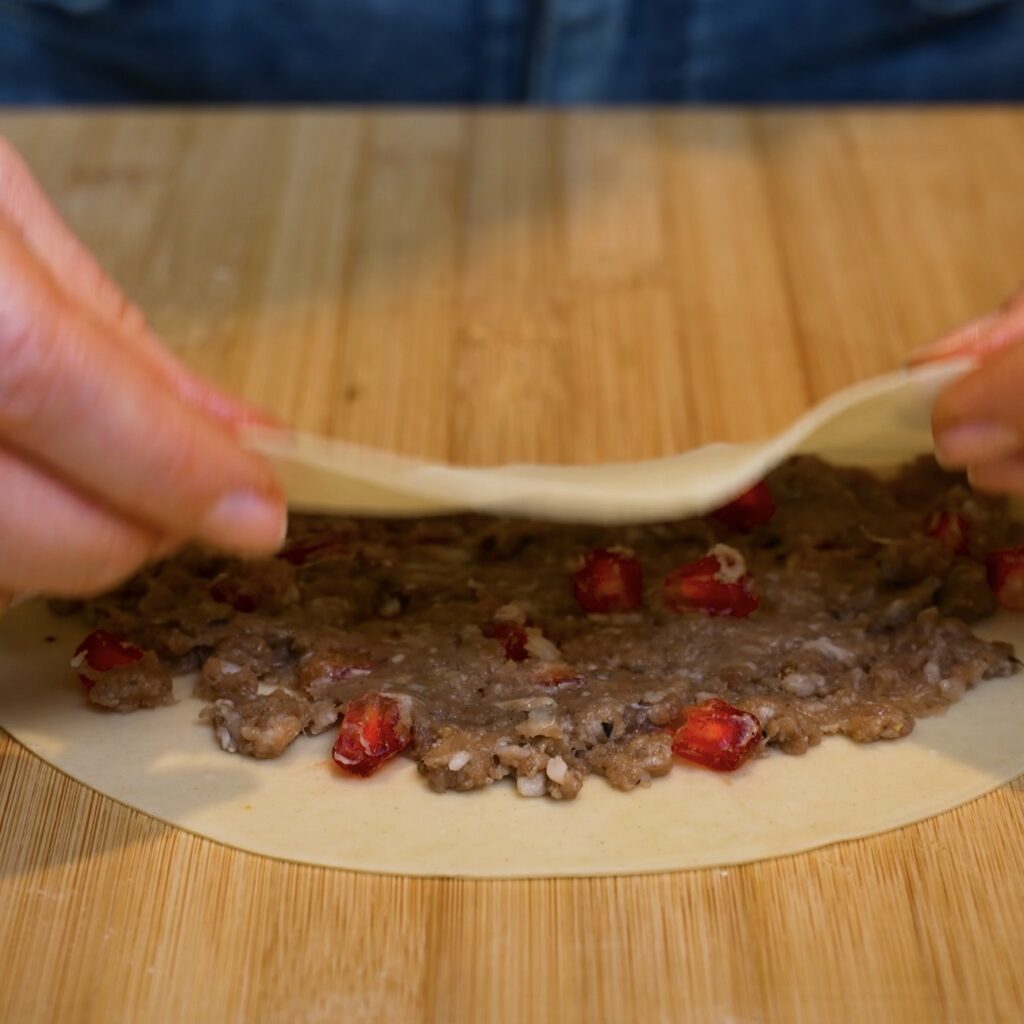
Use a fork to crimp around the curved edge. This gives the qutab a neat finish while helping to secure the seal. If you want an especially clean appearance, use a sharp knife to trim the curved edge into a smooth, even line after crimping.
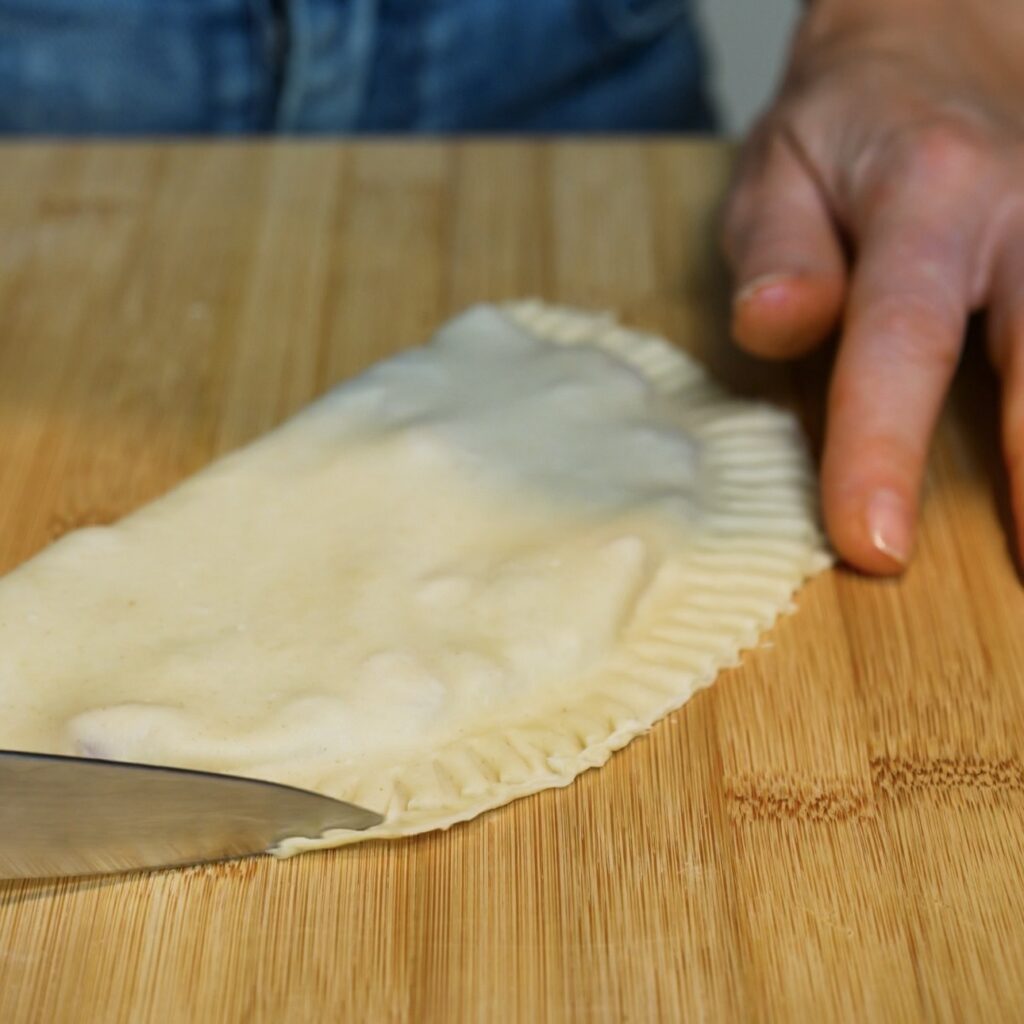
Continue rolling, filling, folding and sealing until you have prepared all 8 qutab.
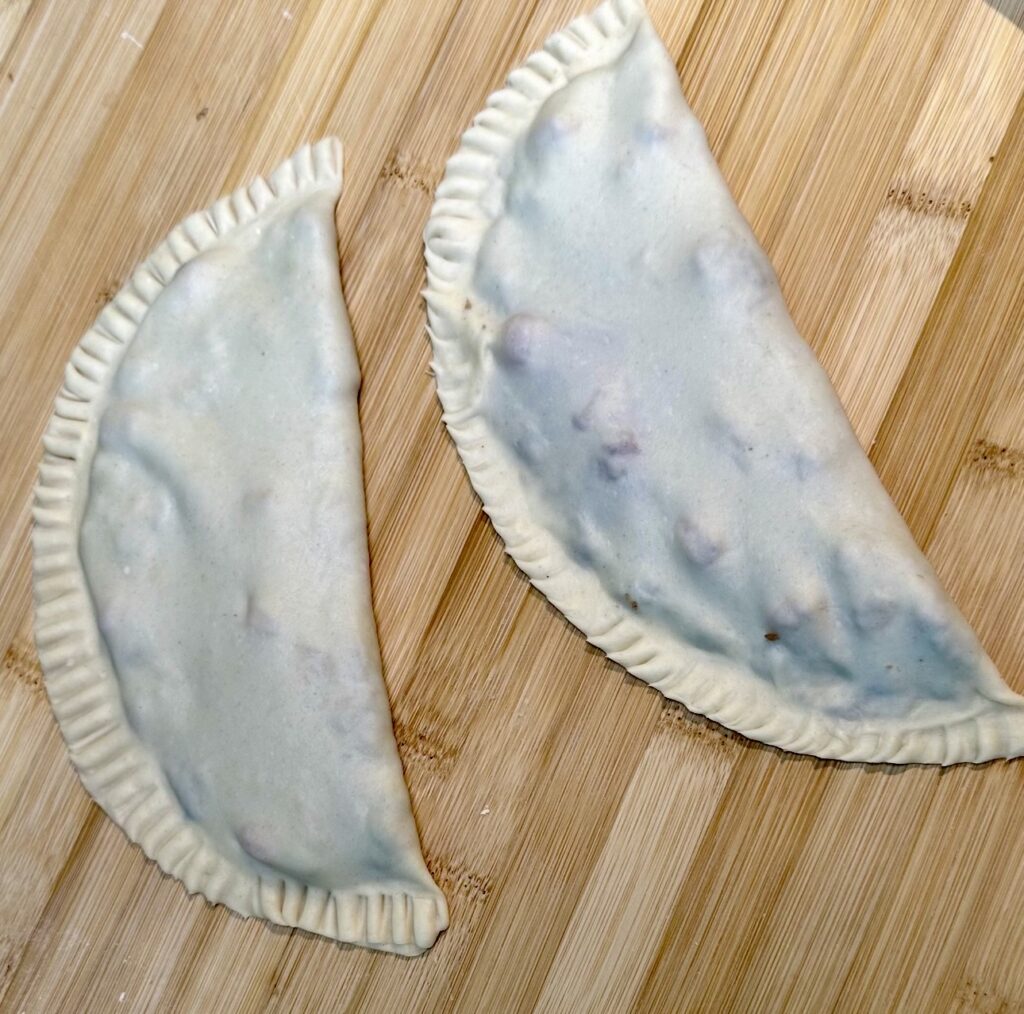
Keep the Shaped Qutab from Sticking
As you shape the qutab, place them on a sheet of baking paper or on a lightly floured surface to prevent the uncooked dough from sticking. Keep the shaped qutab covered with a clean kitchen towel or a piece of cling film while you prepare the rest of the batch. This prevents the thin dough from drying out before cooking. Avoid stacking the uncooked qutab directly on top of one another unless you separate each one with baking paper, as the soft dough can easily stick together.
Cook in a Dry Frying Pan
Place a frying pan over medium-low heat and allow it to warm up. There is no need to add oil or butter to the pan because qutab are cooked dry. Place one qutab into the hot frying pan and cover the pan with a lid. Cook for approximately 2–3 minutes on the first side. Turn the qutab over and cook for another 2–3 minutes on the other side, again keeping the pan covered. The dough should develop beautiful golden patches and the thin layer of beef inside should be completely cooked through.
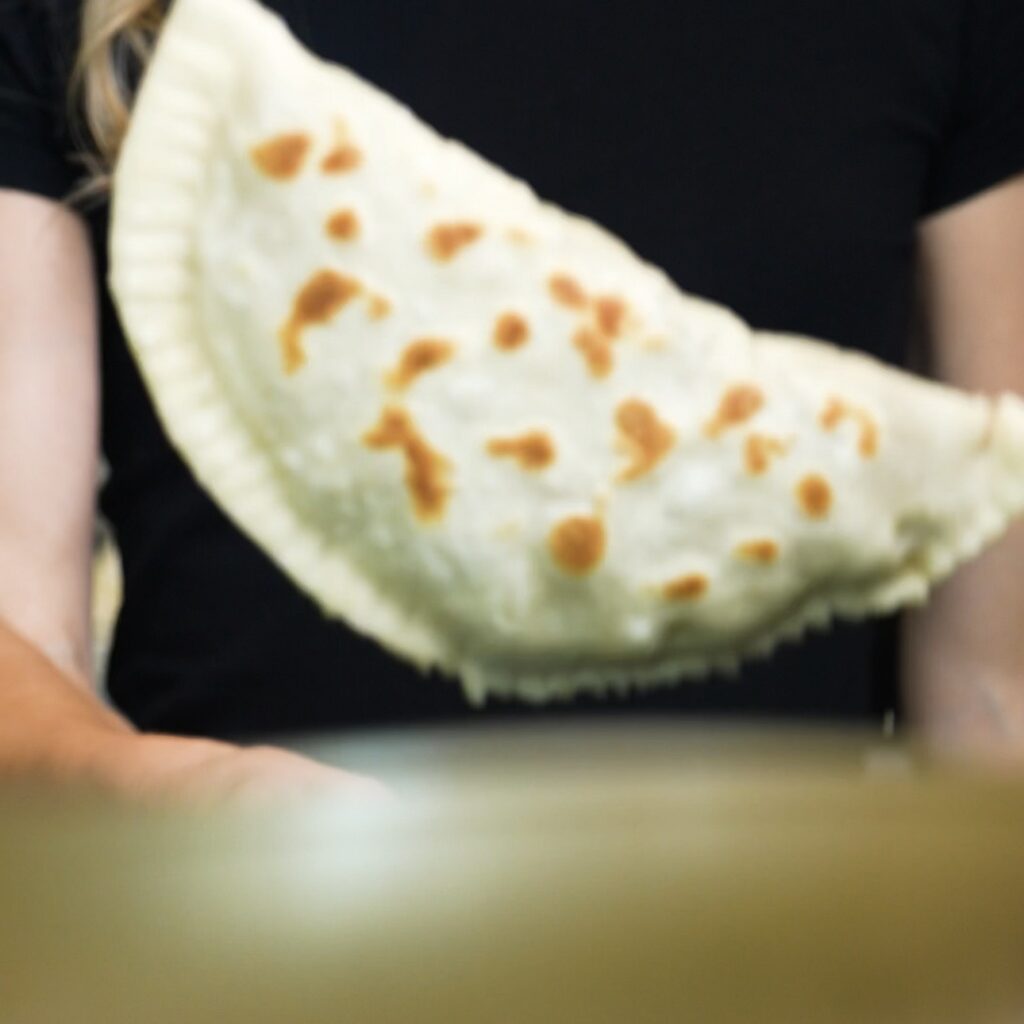
Keep an eye on the heat throughout cooking. If the outside is browning too quickly before the meat has had time to cook, reduce the heat slightly. Medium-low heat works best because it gives the filling time to cook without burning the thin dough. Repeat with the remaining qutab.
Stack and Butter the Qutab
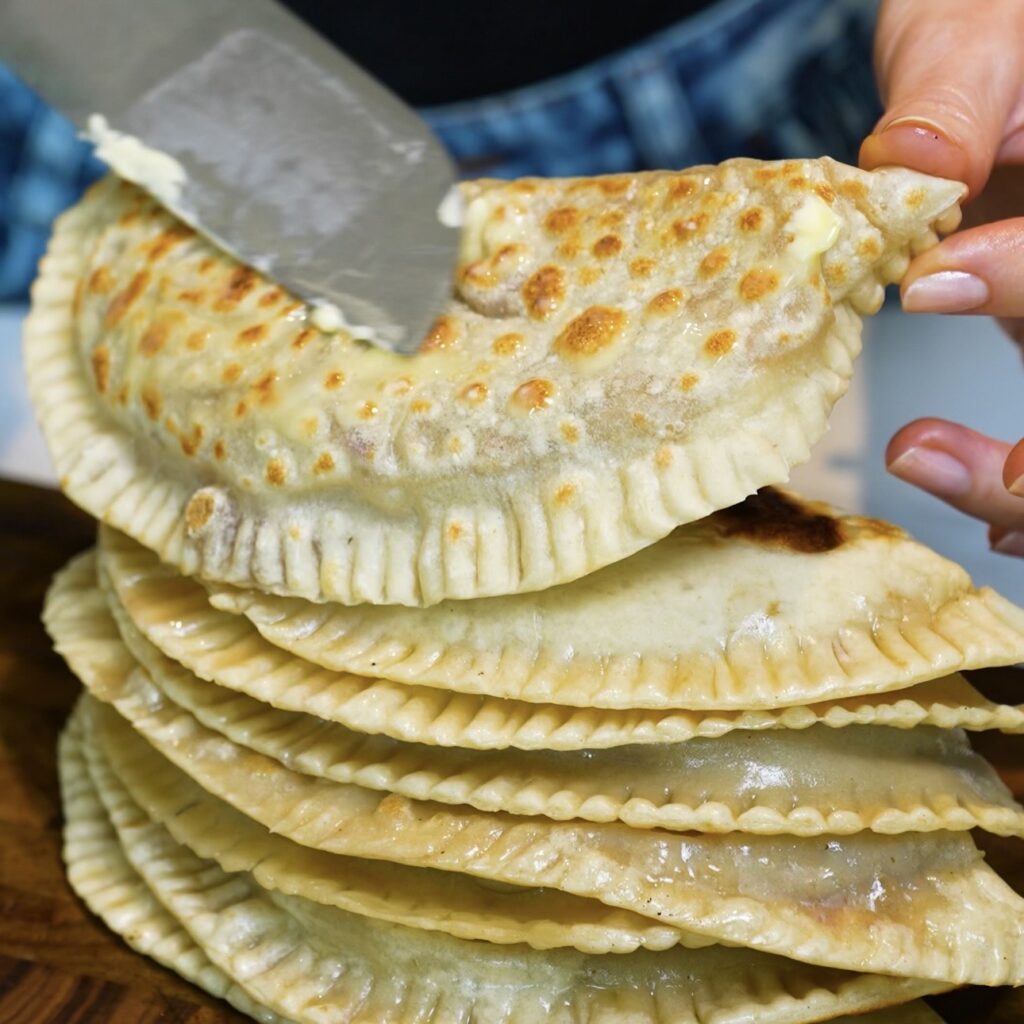
As soon as each qutab comes out of the pan, place it onto a serving plate or board and lightly brush the surface with melted butter.
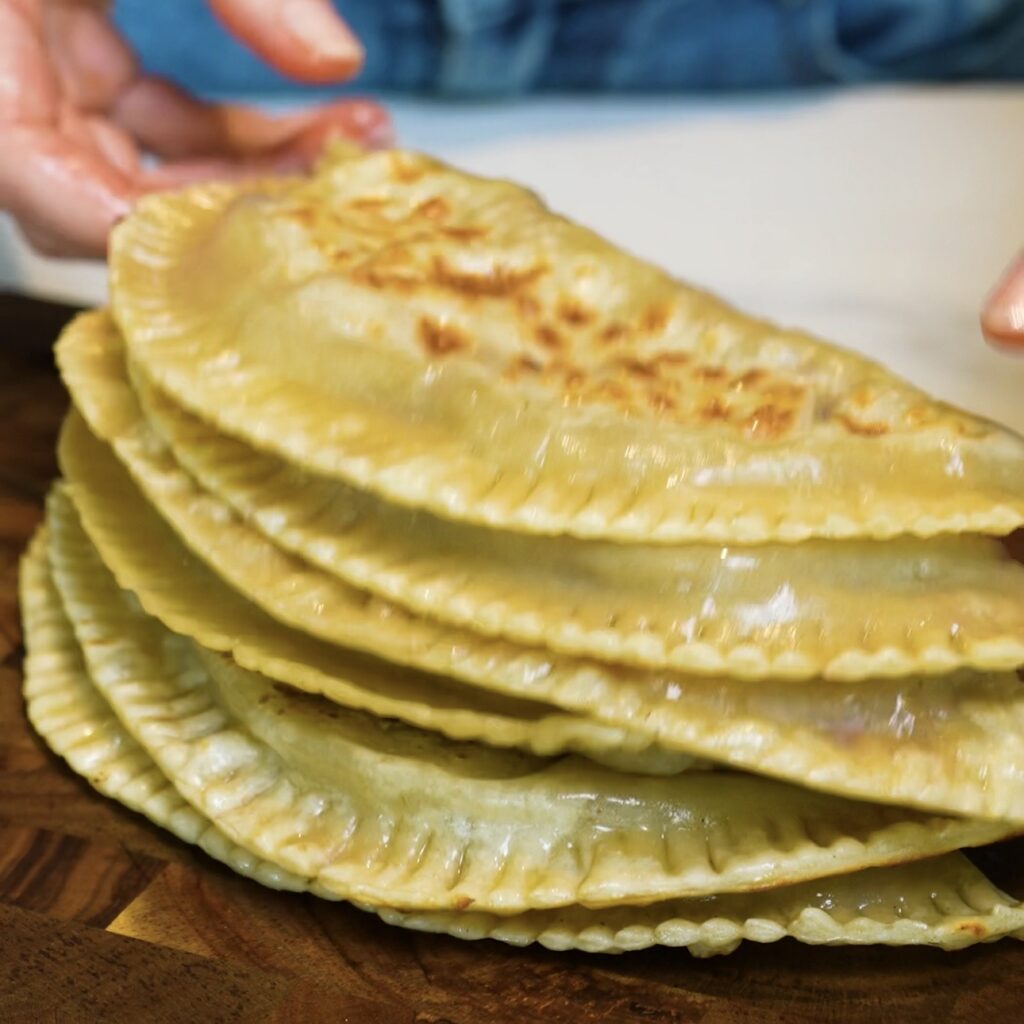
Place each newly cooked qutab directly on top of the previous one, creating a stack. The warmth and gentle steam trapped between the flatbreads help keep them soft while you continue cooking the rest of the batch. Brush every qutab with a little melted butter as you add it to the stack.
Serve
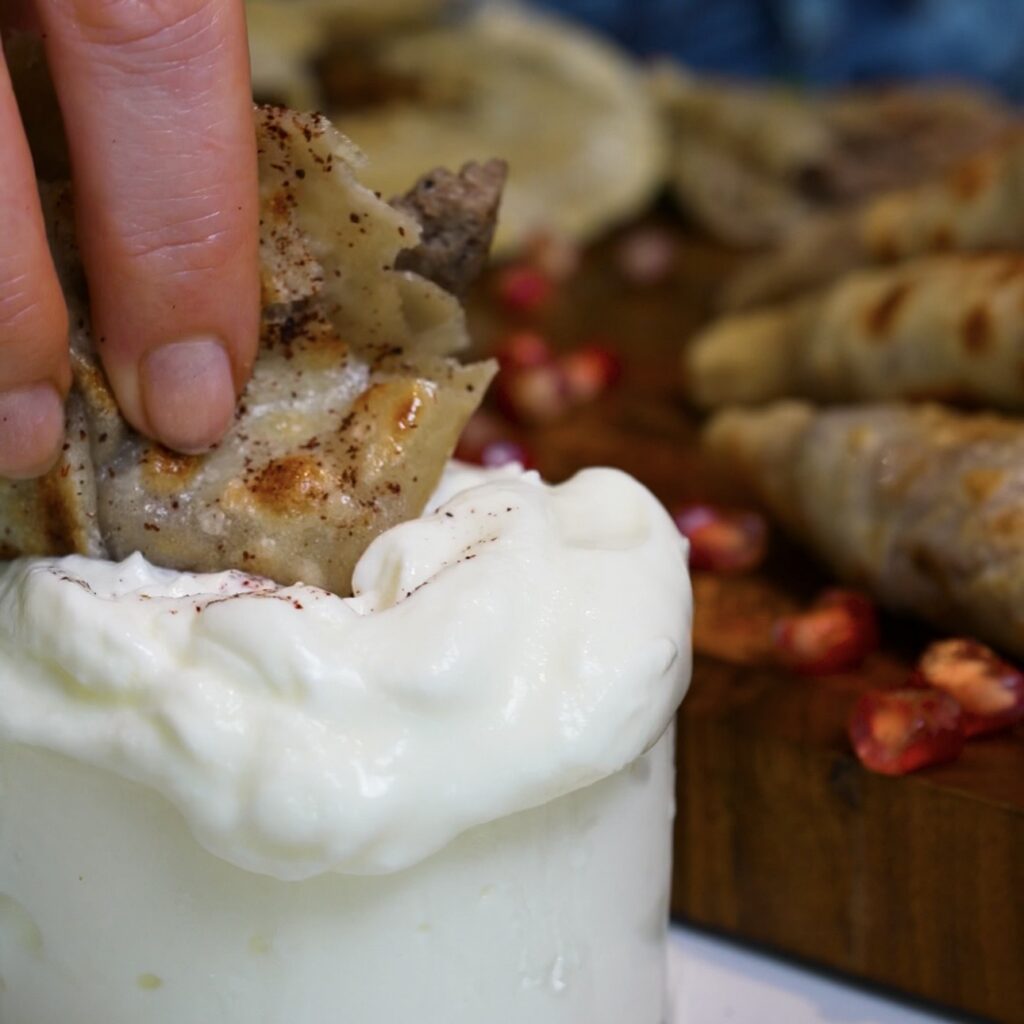
Serve the qutab while they are still warm. Sprinkle them generously with sumac just before serving and place a bowl of plain yoghurt alongside for dipping.
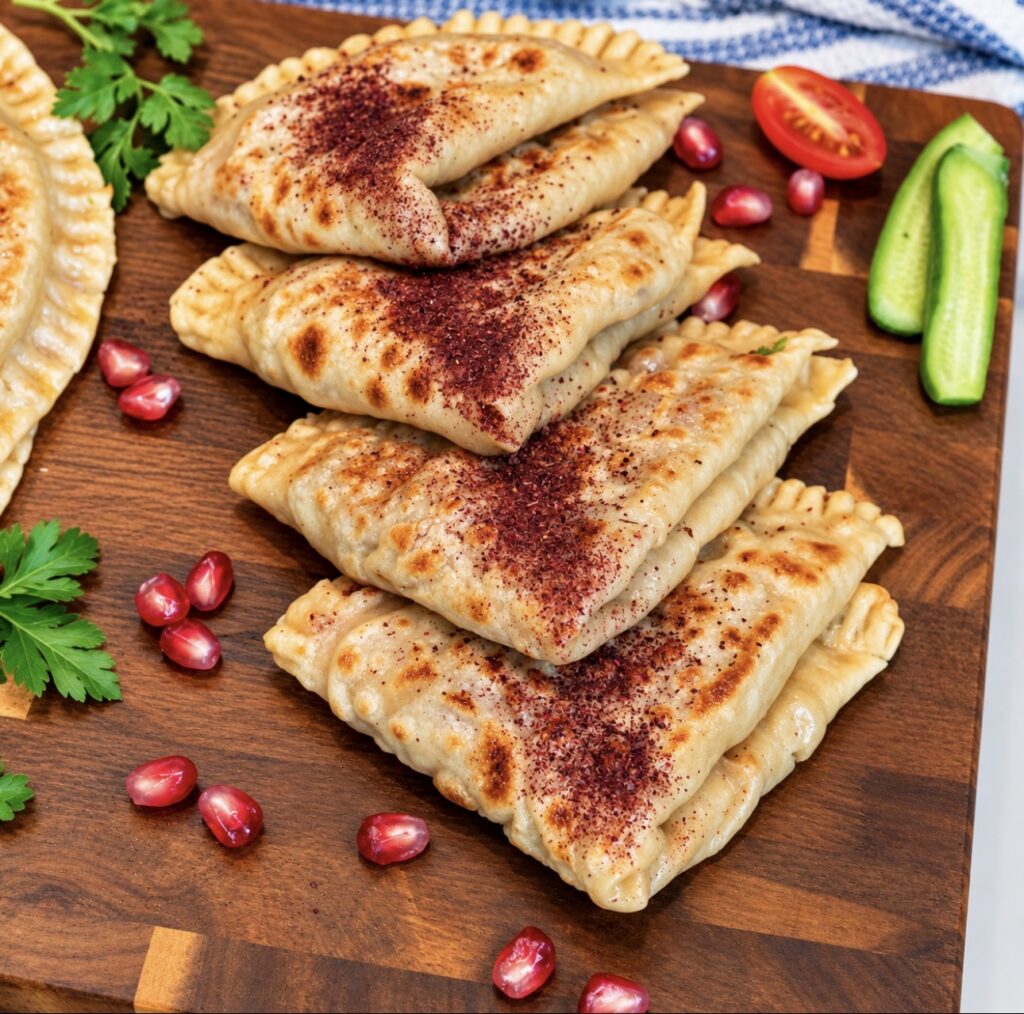
The combination of warm, buttery flatbread, juicy beef and pomegranate filling, tart sumac and cool yoghurt gives you a wonderful balance of flavours and textures in every bite.
Why We Love Azerbaijani Qutab
There is something particularly satisfying about a recipe that turns such basic ingredients into food that feels genuinely special. The dough contains only flour, water and salt, yet once rolled paper-thin, wrapped around the beef filling and toasted in a hot pan, it becomes soft, lightly golden and wonderfully flavourful. The pomegranate seeds make the filling particularly interesting, cutting through the richness of the beef with little pops of freshness, while butter, sumac and yoghurt bring everything together at the table. There is also no yeast and no oven involved, making this an approachable homemade bread recipe even when you do not want to spend hours waiting for dough to rise. For more savoury homemade bread inspiration, try my No-Knead Pesto Mozzarella Bread Twists or Cheesy Sweet Potato Buns (Air Fryer).
Perfect for Any Occasion
Azerbaijani Qutab works just as well for a casual lunch as it does for a family dinner or relaxed sharing table. Serve one or two with salad and yoghurt for a simple meal, or prepare the full batch and pile them onto a platter so everyone can help themselves. They can also be prepared ahead, and both cooked and uncooked qutab freeze well when separated with baking paper, making them convenient to keep on hand for another day. If you are building a sharing-style spread, pair them with my Beetroot and Feta Dip or Delicious Roasted Red Pepper and Feta Dip Recipe for extra colour and flavour.
Instagram Tutorial & More
Want to see how these flatbreads come together? Watch our quick tutorial on Instagram and don’t miss our other easy and delicious recipes:
- Cheesy Chicken Tortilla Pockets
- Peppery Cheddar Breadsticks
- Pesto and Parmesan Twisted Baguettes
- Roasted Red Pepper Olive Dip
- Roasted Garlic Dip
- Roasted Tomato and Garlic Labneh Dip
- Cheesy Beef Ragù Filo Rolls
- Cheesy Beef Filo Swirls
- Four Cheese Pesto Focaccia
- Overnight Olive and Thyme Focaccia (No-Knead)
- Easy No-Knead Ciabatta (4 Ingredients)
Happy cooking,
Izabella
Description
Azerbaijani Qutab is a simple yet flavour-packed flatbread made with thin, soft dough and a savoury beef filling. Grated onion keeps the meat juicy, while pomegranate seeds add a fresh, slightly sweet contrast in every bite. The flatbreads are cooked in a dry pan until golden, then brushed with melted butter while still warm. A sprinkle of sumac adds a tangy finish that works beautifully with the rich filling. Serve them with plain yoghurt on the side for dipping. They are best enjoyed warm, straight from the pan.
Ingredients
For the dough:
For the filling:
To serve:
Instructions
-
In a large bowl, combine the flour and salt. Gradually add the water, mixing first with a spoon and then with your hands until the dough comes together. Depending on the flour you use, you may need slightly more or less water, so add any extra a little at a time, about 1 tablespoon at a time. Knead the dough for 5–10 minutes, until smooth and elastic. Cover and leave to rest for 20–30 minutes.
-
Meanwhile, prepare the filling. Add the minced beef, grated onion, salt and pepper to a bowl and mix well. Add the pomegranate seeds and gently fold them through the mixture so they remain intact. Set aside until needed.
-
Give the rested dough a light knead, then divide it into 8 equal pieces. Shape each piece into a ball. Work with one ball at a time, keeping the remaining dough covered so it does not dry out. The dough should feel soft and elastic. Lightly dust your work surface with flour whenever the dough begins to stick.
-
Roll each dough ball into a very thin round, approximately 0.5–1 mm thick and 20–22 cm in diameter. For a neat finish, place a 20–22 cm plate over the dough and cut around it to create a perfect circle. Spread a small amount of filling in a very thin, even layer over one half of the dough, leaving the edges clear. Fold the other half over the filling to create a half-moon shape, then press the edges firmly to seal. Crimp the edge with a fork, then trim it neatly with a knife if needed. Repeat with the remaining dough and filling to make 8 flatbreads. Keep the shaped qutab on baking paper or a lightly floured surface so they do not stick.
-
Heat a dry frying pan over medium-low heat. Cook the qutab, covered with a lid, for about 2–3 minutes on each side, or until cooked through and beautifully golden. As each one is ready, stack it on top of the previous qutab and brush lightly with melted butter. Serve warm, sprinkled with sumac and with plain yoghurt on the side.
Nutrition Facts
Servings: 8 ServingCalories:186.68kcalTotal Fat:2.21gCholesterol:19.68mgSodium:172.47mgPotassium:188.91mgTotal Carbohydrate:29.67gDietary Fiber: 1.38gSugars: 1.55gProtein:11.5gVitamin A: 0.62IUVitamin C: 1.65mgCalcium: 14.16mgIron: 2.35mgVitamin D: 0.03IUVitamin E: 0.24IUVitamin K: 1.66mcgVitamin B6: 0.21mgVitamin B12: 0.7mcgPhosphorus: 110.42mgMagnesium: 18.26mgZinc: 2.05mg
Note
- Water amount: Different brands of flour absorb water differently, so you may need slightly more or less than 160 ml. Add any extra water gradually, about 1 tablespoon at a time, until the dough comes together and feels soft but not sticky.
- Kneading the dough: Knead for 5–10 minutes, until the dough becomes smooth and elastic. Proper kneading helps you roll it very thin without it tearing easily.
- Resting is important: Allow the dough to rest for 20–30 minutes before rolling. This relaxes the gluten and makes the dough much easier to stretch and roll thinly.
- Keep the dough covered: Once divided into 8 portions, keep the pieces you are not working with covered. The dough dries out quickly and can become difficult to roll and seal.
- Roll it very thin: Qutab dough should be approximately 0.5–1 mm thick. You should almost be able to see the work surface through it. Use a little flour for dusting whenever needed, but avoid adding too much, as this can make the dough dry.
- For even-sized qutab: Roll each piece to approximately 20–22 cm in diameter. For a cleaner, more uniform finish, place a plate of the same size over the dough and trim around it with a knife.
- Keep the filling thin: Spread the beef mixture in a very thin, even layer over one half of the dough. Avoid overfilling, as a thick layer may prevent the meat from cooking through before the flatbread becomes too dark.
- Pomegranate seeds: Fold the pomegranate seeds gently into the beef mixture so they stay as intact as possible. They add little bursts of sweetness and freshness to the savoury filling.
- Seal well: Leave a small border around the filling, then press the edges firmly together before crimping with a fork. This helps prevent the filling and juices from escaping during cooking.
- Cook in a dry pan: There is no need to add oil or butter to the frying pan. Cook the qutab over medium-low heat for approximately 2–3 minutes on each side, covered with a lid, until the dough is golden and the beef is cooked through.
- Adjust the heat if necessary: If the flatbread is browning too quickly before the filling has cooked, reduce the heat slightly. A steady medium-low heat works best.
- Stack after cooking: Place the cooked qutab on top of each other as they come out of the pan and brush each one lightly with melted butter. Stacking them helps keep the flatbreads soft and warm.
- Serving: Qutab is best served warm, sprinkled generously with sumac and with plain yoghurt on the side for dipping.
- Storage: Leftover cooked qutab can be stored in an airtight container in the refrigerator for up to 2 days. Reheat in a dry frying pan over low heat until warmed through.
- Freezing: Qutab can be frozen either before or after cooking for up to 2 months. For uncooked qutab, arrange them in a single layer on a baking-paper-lined tray and freeze until firm, then transfer to a freezer-safe bag or container with baking paper between each one. Cooked qutab should be cooled completely before freezing in the same way. Thaw overnight in the refrigerator before cooking or reheating. If freezing uncooked qutab, make sure the beef is fully cooked through when you fry them.